Xi Jinping Positions China to Lead a New Global AI Order with Open-Source Models
Published by AINave Editorial • Reviewed by Ramit
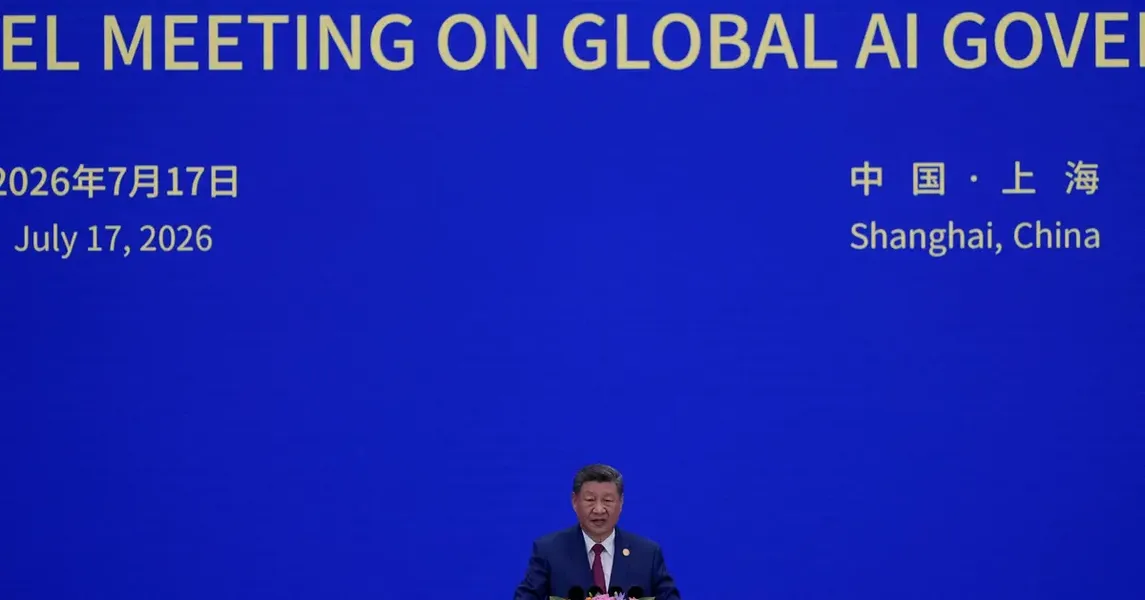
Chinese leader Xi Jinping has cast Beijing as the leader of a new global AI order, vowing to challenge US dominance through the release of open-source models. In his first visit to the World AI Conference in Shanghai, Xi warned that "new historical injustices" were emerging from unequal access to AI technology and called on countries to seize the "historic opportunity" of open models. For AI builders, this signals a potential shift in how open-source AI models are governed, deployed, and accessed globally.
What happened
Xi Jinping delivered the keynote at the World AI Conference on July 17, 2026, framing China as the champion of open AI models. He argued that unequal access to AI creates new historical injustices and urged developing nations to adopt open models as a path to inclusion. Underscoring the message, Chinese tech firm Moonshot unveiled what it claims is the world's biggest open AI model at the same event. While US systems remain the most advanced, experts note that China's advantages in chips and energy access could give its champions an edge across the AI stack.
Why AI builders should care
The push for open-source AI models at a geopolitical level could reshape the landscape for developers and startups. If China's open-model strategy gains traction, it may influence AI governance frameworks, licensing norms, and cross-border data policies. For teams building on open models, this could mean more options for large-scale models with different cost structures. China's potential advantages in chip supply and energy could also affect deployment costs and model performance for international AI projects.
Practical implications
For AI product teams, the emphasis on open models may create new collaboration or licensing dynamics. Developers should watch for specific model releases from Chinese firms like Moonshot and evaluate their capabilities, licensing terms, and deployment requirements. The geopolitical framing around AI could also influence international partnerships, export controls, and data residency considerations. If China's chip and energy advantages materialize, global AI supply chain strategies may need to account for lower-cost inference options from Chinese providers.
Caveats
The coverage relies on conference briefings and official statements rather than independently verified technical details. The official messaging emphasizes openness and governance but omits specifics about Moonshot's model capabilities, licensing terms, or deployment timelines. Claims about China's chip and energy advantages are expert assessments, not confirmed benchmarks. Builders should treat the open-model announcements as directional signals and wait for concrete technical documentation before making integration decisions.
FAQs
Sources
- Xi Jinping casts himself as leader of new AI world order
- China’s Xi Jinping launches new AI alliance: What is it? | Al Jazeera
- Xi Jinping of China Pitches ‘Openness’ in Push to Shape the Path of A.I.
- Russia and China Move to Shape a Fairer Global AI Order
- Google News - 2026 World AI Conference in Shanghai - Overview
- Xi Jinping casts himself as leader of new AI world order
- Xi promotes China as leader of new global AI order
- Xi pitches China as leader of new global AI order, challenging US dominance
- Xi Jinping's Vision for a New Global AI Order
- Xi pitches China as leader of new global AI order
- FULL Opening Ceremony: Xi Jinping Opens World AI... - YouTube
- Xi pitches China as leader of new global AI order, challenging US dominance
- China's Xi Jinping calls for AI development cooperation
- China’s Xi Jinping launches new AI alliance: What is it?