Waterloo Futures Lab: What a university-industry AI prototyping program tells us about preparing graduates for an automated world
Published by AINave Editorial • Reviewed by Ramit
Google and the University of Waterloo launched the Waterloo Futures Lab, an eight-week program where students from diverse majors build AI prototypes with expert mentorship. The initiative teaches practical skills like hands-on 'vibe coding', design thinking, and user testing, while also focusing on communication and teamwork. For AI builders and educators, the program offers a blueprint for rapidly developing real-world AI skills outside traditional curricula.
What happened
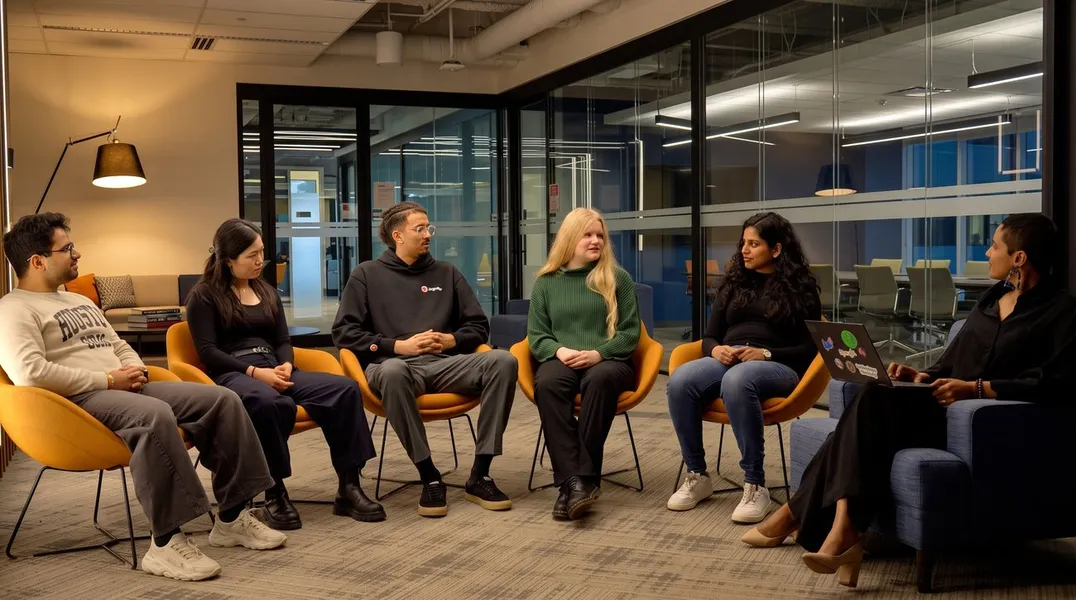
The Futures Lab is a partnership between Google and the University of Waterloo that runs in eight-week sessions. Students from diverse majors, including biology, finance, and environmental conservation, collaborate in interdisciplinary teams to design and build real-life AI prototypes that address everyday learning challenges. Past projects include SignFluent, an American Sign Language learning tool with real-time feedback, and Kanji Garden, an app that teaches Japanese through AI-generated stories and visuals. Students work with Google mentors and emphasize hands-on 'vibe coding', practical application of design thinking, user testing, and developing communication skills through rapid 30-second pitches and translating technical concepts for non-technical audiences.
Why AI builders should care
For AI builders, this program demonstrates a model for delivering practical AI education outside traditional curricula. The Futures Lab focuses on real-world problem solving and mentorship, not just technical skills. It teaches collaboration across disciplines, mirroring real-world work environments. Alumni report increased career readiness and credibility, using their project work as leverage in co-op interviews. This suggests that project-based learning with industry mentors can produce graduates who are more prepared for AI-enabled workplaces.
Practical implications
Institutions could adopt a similar eight-week AI prototyping format to build practical skills rapidly. Mentorship from industry partners and real-world projects help students translate theory into usable tools. Interdisciplinary teams enhance collaboration across domains, which is increasingly important as AI products require input from diverse expertise. The program also emphasizes communication skills, which are critical for builders who need to explain their work to non-technical stakeholders.
Caveats
This article is based on a single source, Google's blog post about the Futures Lab. No independent verification of the program's outcomes or scalability claims was available. The program's long-term impact and ability to scale beyond the initial cohort remain unconfirmed. Details about specific mentor involvement, project selection criteria, and program costs were not provided in the source material.