Illinois ISBE AI guidelines for K-12: built with AI draft work to inform responsible adoption
Published by AINave Editorial • Reviewed by Ramit
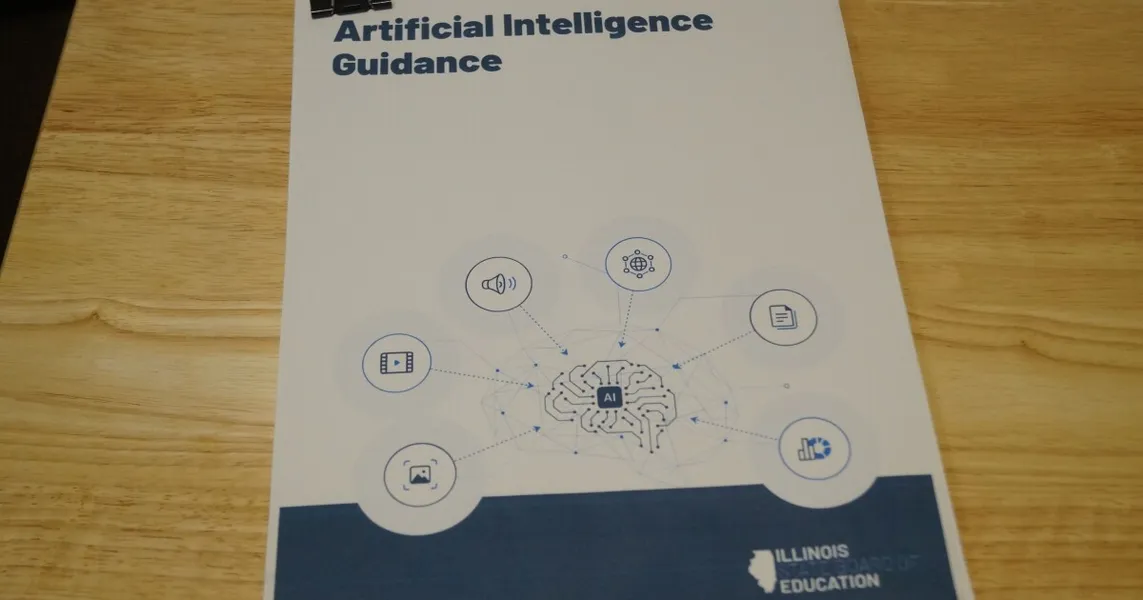
The Illinois State Board of Education (ISBE) released a 409-page AI guidelines for K-12 education document that tells schools how and why to use artificial intelligence. What makes the guidance notable: it was drafted with help from ChatGPT, Claude, and Gemini, with all AI-generated content vetted by humans. Released July 9 following Senate Bill 1920, the document aims to help districts, schools, and teachers navigate AI use while protecting students and keeping human relationships at the center of learning.
What happened
The ISBE issued the guidance after the Illinois General Assembly passed Senate Bill 1920 in 2025, directing the board to develop guidelines on using AI in K-12 education. The 409-page document was created with input from a blue-ribbon panel of experts in education, technology, and public policy. Source
The document includes a note stating that initial drafts used AI tools: ChatGPT primarily, and to a lesser extent Claude and Gemini. The authors used AI prompts to find links and verify that outside resources were publicly available. AI also helped generate and edit graphic figures and polish text. All AI-generated information was vetted outside of AI. Source
A 2024 survey of Illinois educators conducted by Teach Plus and the Illinois Digital Educator Alliance found common concerns that AI misuse could threaten student learning and endanger student privacy. One educator described the current situation as "a bit like the Wild West right now." Source
Why AI builders should care
This guidance creates a practical framework for responsible AI adoption that is likely to influence how schools evaluate and deploy AI tools for the foreseeable future. For AI builders, understanding this framework matters because it defines the trust and safety conditions under which products will be adopted in K-12 settings.
The positions AI as a tool to strengthen instruction, protect students, and build trust. It focuses on supporting teachers in developing skills and ethics for using AI, rather than imposing rigid mandates. Source
Practical implications
The guidance includes a list of questions teachers and administrators should ask before selecting an AI product. Examples include: "What is the learning problem I'm solving and is AI the right tool for that problem?" and "If AI were unavailable tomorrow, what would I do instead and is that actually better for the learning goal?" Source
The policy emphasizes that AI should inform teaching and learning decisions and supports constructive uses like lesson planning and grading. It also calls for best practices in developing student literacy in AI and engaging students in age-appropriate discussions about responsible and ethical AI use. Source
State Superintendent Tony Sanders framed the policy as helping "schools navigate new technologies in a way that strengthens instruction, protects students, and builds trust." Source
Caveats
The guidance document is dense and does not lay out specific rules or mandates for how schools and districts should use AI. The use of AI in drafting the guidance was clearly disclosed, with a note stating that AI-generated content was vetted outside of AI to ensure accuracy and reliability. Some early coverage cites the document as 400 pages rather than 409, reflecting minor variability in source reporting. Source
FAQs
Sources
- Illinois State Board of Education issues AI guidance, written with help from AI
- Illinois State Board of Education issues AI guidance to ...
- Illinois State Board of Education Releases AI Guidance for ...
- Illinois board of education releases guidelines for ...
- Illinois K-12 AI Guidelines | Fagen Friedman & Fulfrost LLP
- Illinois State Board of Education issues AI guidance, written with help from AI
- New Illinois guidance helps schools navigate AI
- Illinois education officials release guidance on use of AI in public schools
- Board releases guidance for use of AI in Illinois classrooms
- How should schools use AI? Illinois is providing some guidance for teachers and districts.
- Illinois State Board of Education issues AI guidance, written with help from AI | Capitol News Illinois
- Illinois State Board of Education issues AI guidance, written with help from AI | Mix 106.9
- Illinois State Board of Education issues AI guidance, written with help from AI
- Illinois State Board of Education issues AI guidance, written with help from AI
- New Illinois guidance helps schools navigate AI