What MIT's JARVIS Challenge Reveals About AI-Assisted Jet Engine Design
Published by AINave Editorial • Reviewed by Ramit
MIT's JARVIS Challenge put AI copilots to the test in designing, building, and running a jet engine. The results offer practical lessons for any team building safety-critical hardware with AI assistance.
What happened
The JARVIS Challenge (Jet-engine AI Research and Validation Intensive Sprint) gave 31 MIT undergraduates four weeks to design, fabricate, and test a 50-100 lbf jet engine running on Jet-A, using AI as their primary engineering partner. Seven teams from across the School of Engineering participated, with access to MIT Parley, a platform that aggregates frontier LLMs through a single interface. The effort was supported by MIT Lincoln Laboratory, Safran, Voyager Technologies, and Beehive Industries.
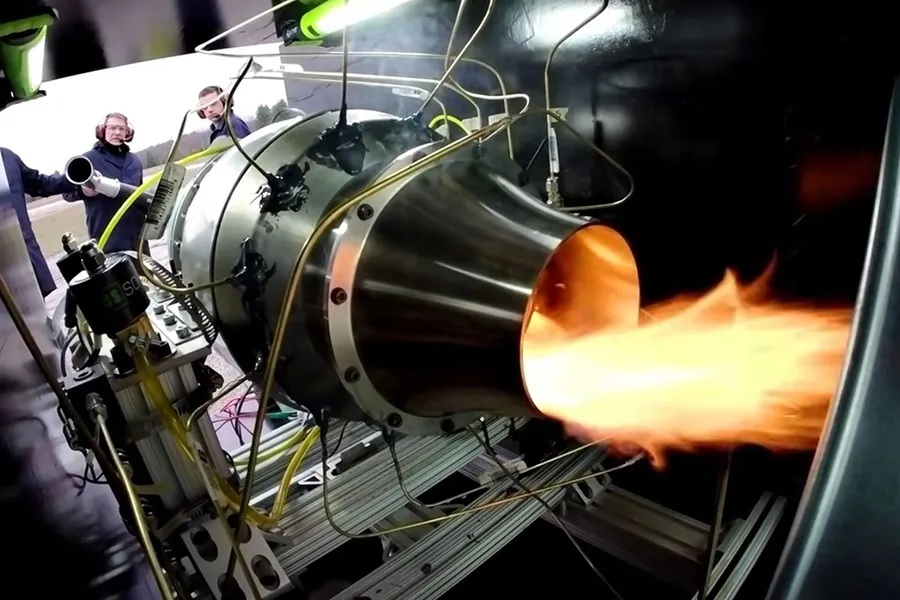
By the end of the sprint, two teams completed full engine tests. Team 811 Crew succeeded in starting their engine, transitioning to Jet-A, and generating net thrust. Team Fast and Fractured, which relied heavily on AI for trade studies and architecture comparisons, faced repeated vendor delays and a rotor rub that cut their test short.
Why AI builders should care
The challenge demonstrates that AI copilots can substantially accelerate safety-critical hardware engineering when paired with experienced engineers and strong fundamentals. Professor Zolti Spakovszky, director of the MIT Gas Turbine Laboratory, noted that manufacturing, not engineering design or analysis, remained the fundamental rate-limiting step. Teams that used AI for summarizing textbooks, selecting parts, organizing data, and running comparative analyses benefited, but those without enough domain knowledge to catch AI errors struggled.
Engineering experience and first-principles thinking were the key differentiators among teams. Younger students used Parley more frequently, while juniors and seniors leveraged deeper experience to get more value from the tools. The winning team, 811 Crew, was initially resistant to AI and relied on their fundamentals and teamwork.
Practical implications
For teams building AI-assisted hardware workflows, the JARVIS Challenge offers a clear pattern: use AI as a design aid and organizational partner, not as a sole designer. AI helped with textbook summarization, vendor sourcing, Excel sheet creation, and project management (one team even created an AI agent to serve as project manager). But when it came to detailed CAD design and physical prototyping, AI's hallucinations and lack of physical intuition slowed progress.
Vendor relationships and manufacturing readiness are critical bottlenecks that AI cannot bypass. Students reported that AI searches found vendors with no rapport, while the vendors who delivered were those with existing personal relationships. This reinforces that AI tools must be integrated into a broader engineering process that includes real-world supply chains and fabrication constraints.
Caveats
Several limitations temper the results. AI models exhibited hallucinations, sycophancy, and lack of physical understanding that undermined confidence and slowed design decisions. The four-week sprint, machine-shop capabilities, and access to parts also constrained outcomes. The challenge was not a pure test of AI capability but of how well teams could combine AI with hands-on engineering under tight deadlines.
Professor Zachary Cordero noted that performance in JARVIS correlated strongly with year in school, suggesting that education and hands-on practice are more valuable than ever in the AI era. The takeaway for builders: AI copilots are multipliers, not replacements, for engineering judgment.