Bessent Warns 'Nothing Would Matter' If China Wins the AI Race
Published by AINave Editorial • Reviewed by Ramit
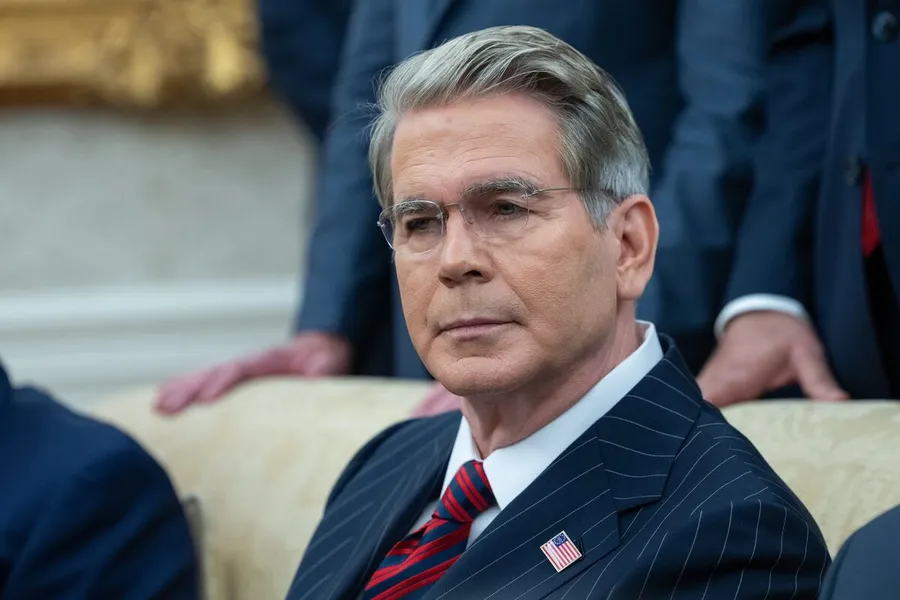
Treasury Secretary Scott Bessent delivered a stark warning this week: if China pulls ahead in the AI race, the United States' largest advantages, including its defense budget, would become irrelevant. 'There is no day after tomorrow if China wins at this,' he said at a Breitbart News event in Washington, adding that 'if they were to pull away from us on AI, then nothing else would matter.' The statement, reported by Bloomberg, frames the AI race between the US and China not just as a technology competition but as a national security imperative that could overshadow every other policy lever.
Bessent's remarks were blunt. He argued that the US cannot afford to pause AI development because China will not pause. 'We can't pause on AI. China won't pause,' he said, according to NDTV Profit. He also pointed to the threat of intellectual property theft, with US agencies accusing Chinese AI firms of extracting billions of data tokens from US models, possibly with government knowledge. The comments come amid rising tensions over AI sovereignty and the strategic importance of maintaining US AI leadership.
For teams building AI products, this isn't just geopolitical noise. The framing of AI as a national security issue directly affects the operating environment. Export controls on chips and model weights, restrictions on open-source model distribution, and tighter scrutiny of international collaborations could all accelerate. Builders who rely on global supply chains, use Chinese models or APIs, or depend on unrestricted access to frontier models may face new constraints. The US government's stance also signals that AI funding and research priorities may shift toward defense and sovereign capabilities, potentially reshaping the startup landscape.
What changes practically? First, expect continued pressure on export controls for advanced semiconductors and AI hardware. Second, IP enforcement around model distillation and data scraping will likely intensify, affecting how builders train or fine-tune models. Third, government contracts and grants may favor companies that can demonstrate AI sovereignty and domestic infrastructure. Bessent's warning suggests that the timeline for these policy moves is compressed. Builders should monitor regulatory signals, diversify their model suppliers, and consider the geopolitical risk of depending on a single region's AI ecosystem.
This article is based on a single public statement from a Treasury Secretary at a political event, not a formal policy document. Additional context from other outlets, including TheStreet and the South China Morning Post, adds further detail on IP theft allegations and the broader US-China AI dynamic. The exact policy responses remain uncertain, and the warning should be read as a signal of administration thinking rather than an immediate rule change.
FAQs
Sources
- Bessent Warns ‘Nothing Would Matter’ If China Wins the AI Race
- 'Iron Dome Wouldn't Matter If China Wins AI': Bessent Sounds Alar...
- Scott Bessent Warns US 'Can't Pause' AI Race With China: 'Th...
- Wall St Engine(@wallstengine):US TSY SEC. BESSENT ON AI AND...
- Scott Bessent sends blunt warnings to China on AI models - TheStreet
- 'Iron Dome wouldn't matter if China wins AI': Bessent sounds alarm on tech race
- China ‘can never get ahead’ of US in AI, Bessent says in advance of Xi’s visit
- Bessent warns ‘nothing would natter’ if China wins AI Race
- US’ Bessent warns ‘nothing would matter’ if China wins the AI race
- Scott Bessent warns US 'can't pause' AI race with China: 'There is no day after tomorrow' if Beijing wins
- Bessent warns ‘nothing would natter’ if China wins AI Race
- Scott Bessent has an urgent message for all Americans - AOL