AI-Washed Layoffs: Separating Automation From Corporate PR
Published by AINave Editorial • Reviewed by Ramit
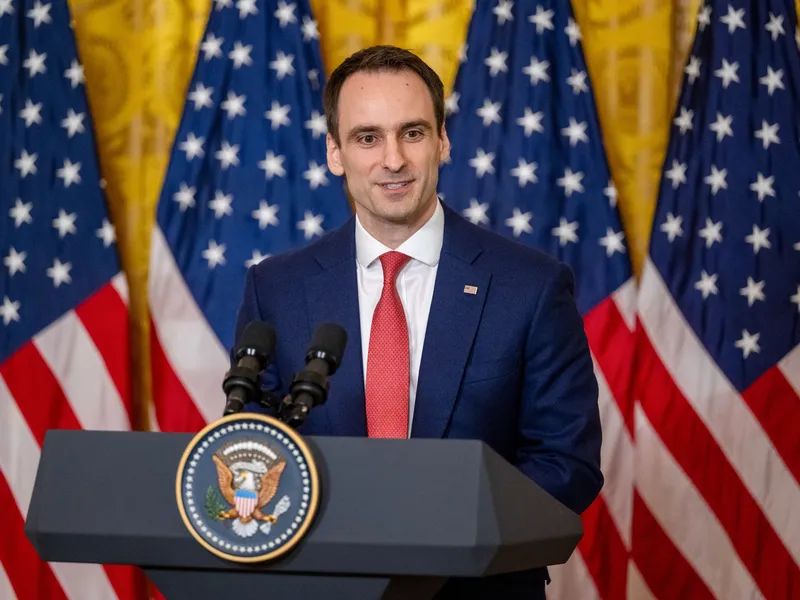
Michael Kratsios, the White House science and technology advisor, says some companies are blaming AI for layoffs that would have happened anyway because it “plays better in the press.” The claim is not proof that any particular company misrepresented its decisions, but it highlights a real problem for AI builders: public narratives often move faster than evidence about what automation actually changed.
The AI-washed layoffs debate is about causation
Kratsios made the comments on the Moonshots with Peter Diamandis podcast and said he remains optimistic about AI’s long-term effect on jobs. The article also reports that companies including Uber, Snap, and Block have cited AI in layoff announcements, while OpenAI CEO Sam Altman has acknowledged that some companies attribute cuts to AI even when other explanations may apply. The reported comments and examples do not establish how many layoffs were caused by automation.
That distinction matters. A company can be investing heavily in AI while cutting staff because of overhiring, weaker demand, margin pressure, or a change in strategy. AI may influence the plan without directly replacing the people affected. Calling every technology-linked reduction an AI displacement event makes the technology look more capable than the deployed systems may be.
Why builders should care about the PR narrative
For founders and product teams, “AI-washing” is more than a media argument. It can affect investor sentiment, hiring expectations, policy discussions, and customer assumptions about return on investment. A buyer may hear that AI reduced headcount and expect immediate labor savings, even when the underlying product still requires substantial human review, integration work, and operational supervision.
The better standard is operational evidence. Teams should be able to explain which workflow changed, what tasks are now assisted or automated, how much usage the system handles, and what review burden remains. They should also distinguish a forecast from a result. A model that drafts support responses is not equivalent to a support organization that no longer needs the same staffing level.
What transparent AI communication looks like
AI developers communicating workforce impact should document the chain from capability to business outcome:
- Identify the specific task or process affected.
- Separate assisted work from fully automated work.
- Report human review, failure handling, and rollout limits.
- Show measured time or cost changes rather than attributing a broad restructuring to AI.
- Explain whether staffing changes were planned before deployment.
This is useful internally as well as externally. Clear attribution helps teams decide whether an AI project is improving throughput, reducing cost, changing roles, or simply adding another tool to an existing process.
The evidence is still incomplete
The current discussion relies largely on executive comments, company statements, and media reporting. Coverage of the debate describes both alleged AI-washing and genuine displacement, but it does not provide a causal study that separates AI from wider business conditions across the reported layoffs.
Kratsios’s connection to the White House AI Action Plan adds policy context, including efforts described in the article to accelerate data-center permitting and limit the influence of some state AI regulations. It does not resolve the employment question. Builders should treat “AI caused these layoffs” as a claim requiring evidence, not as a default explanation.
The useful decision rule is simple: when evaluating an AI workforce claim, ask what system was deployed, what work it replaced, and what measured outcome followed. If those answers are missing, the story may be describing corporate positioning rather than demonstrated automation.
Sources
- White House advisor says companies are blaming AI for layoffs because 'it plays better in the press'
- White House advisor says companies are blaming AI for layoffs because 'it plays better in the press'
- Michael Kratsios Says Some Companies Blame AI for Layoffs Because 'It Plays Better in the Press' - Micros - Benzinga
- Trump Adviser Says Companies 'Blame' AI for Layoffs Because 'It Plays Better in the Press' | IBTimes UK
- Companies use AI as ‘heat shield’ for layoffs: Trump advisor | Technology | thenews.com.pk
- CEOs blame AI for layoffs, but an MIT professor says it fits a long-running pattern to find a cover story. 'They've been saying that for 20 years' | Fortune
- White House advisor says companies are blaming AI for layoffs because 'it plays better in the press'
- Expert Warns: Companies Are ‘AI Washing’ by Blaming Layoffs on Automation They Haven’t Actually Built
- Expert warns: Companies are ‘AI washing’ by blaming layoffs on automation they haven’t actually built
- Why Tech Companies Are Blaming AI for Layoffs in 2026
- 59% of Hiring Managers Admit AI Is Their... | Metaintro
- Jensen Huang says blaming AI for layoffs is just too convenient
- 'AI Is Creating Jobs, Not Killing Them': White House Adviser Amid Big Tech Layoffs