Spotify's AI Persona Labels: How the Platform Is Handling AI-Generated Artists
Published by AINave Editorial • Reviewed by Ramit
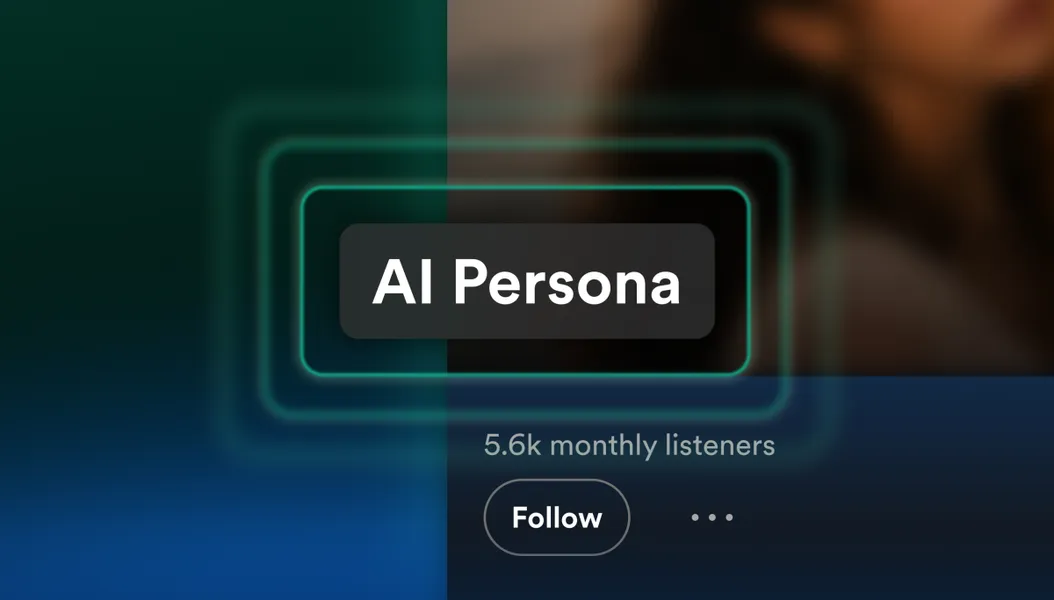
Spotify will soon label AI-generated artist profiles with an “AI Persona” badge and exclude their music from editorial and algorithmic recommendations by default. For builders working on AI music tools, artist identity systems, or content moderation pipelines, this policy introduces a real-world governance model: identity transparency over music production, hybrid human-AI verification, and licensing deals that separate fan-made AI remixes from synthetic personas.
What Spotify is actually rolling out
Starting in mid-September 2026, Spotify users will see an “AI Persona” badge on artist profiles that appear to represent photorealistic AI-generated identities rather than real people. The badge will show up in the profile banner, About section, search results, and on track rows across playlists. Artists can self-disclose starting August 11 via the Spotify for Artists portal. Spotify will also apply a “Likely AI Persona” badge after human and AI review when identity authenticity is in question.
Once labeled, the artist’s music will not appear in editorial playlists, algorithmic recommendations, or personalized suggestions unless a user explicitly follows that artist. That’s a key distinction: the user must take action to hear more from that identity. Spotify says it will begin its review with profiles that meet pre-defined audience thresholds to cover the most listened-to artists first.
Artists can appeal if they think the badge was applied incorrectly, and Spotify plans to add a tool for listeners to report unlabeled AI Personas.
Why this matters for AI builders
The policy is a practical case study in AI identity governance at scale. Spotify is not banning AI-generated music outright; it’s separating identity from production. A human producer using AI for mixing or sound design won’t get flagged. The badge is about whether the profile itself is synthetic, not how the music was made. That distinction affects how developers approach artist branding, AI-generated profile images, and agent-driven music uploads.
The hybrid verification model, combining self-disclosure with AI-powered detection and human review, mirrors approaches used in content moderation but applied to identity. For teams building AI-generated content pipelines, this suggests that platforms will demand transparency at the account level, not just the content level. Deezer recently revealed that AI-generated tracks now make up half of its daily song uploads, reinforcing why Spotify is acting now.
Spotify’s licensing deals with UMG and Merlin also matter. Those deals enable fan-made AI remixes and covers with revenue sharing, while the AI Persona badge keeps synthetic identities out of recommendations. That creates a clear boundary: AI as a creative tool is allowed, but AI as a fake persona is not.
Practical implications for product teams
If you’re building AI music generation tools, artist identity platforms, or agent-based content distribution, watch for these signals:
- Self-disclosure requirements will become standard. Build disclosure flows into your product now, not after a takedown.
- Identity verification is a new surface for moderation. Expect platforms to audit profile name, image, and metadata for synthetic patterns.
- Recommendation exclusion changes distribution strategy. AI-generated music needs a direct audience (follows, shares) because algorithmic discovery is blocked.
- Appeal and reporting loops are part of the product. If your tool generates artist profiles, you need to support badge challenges.
What remains unclear
Spotify hasn’t published the exact audience thresholds for its initial review, so smaller AI Personas may go unlabeled for a while. The appeal process details and timeline for the listener reporting tool are also still vague. The policy is rolling out first on mobile, with desktop coverage expected later. And while the badge targets identity, Spotify currently doesn’t have a system to identify AI-generated music at the track level like Deezer does. The labels only cover the profile, not the audio itself. That leaves a gap: a human artist with a real identity could still upload AI-generated tracks without detection.
For builders, the takeaway is clear: platforms are drawing a line between synthetic identities and authentic ones. If your product creates, manages, or distributes AI-generated artist personas, start preparing for transparency requirements now.
FAQs
Sources
- Spotify will label ‘AI Persona’ profiles and exclude their music from recommendations
- Spotify AI Persona labels will alert listeners if an artist isn't real
- Spotify says it won’t recommend music from ‘AI Personas’
- Spotify to label AI-generated artists as 'AI Persona' and exclude their ...
- Spotify to label 'AI personas' and exclude AI music from personal ...
- Spotify to distinguish AI artists from real people - and stop ...
- Spotify to label AI artists - and keep their music out of ...
- Spotify to label 'AI personas' and exclude AI music from personal...
- Spotify’s AI Persona Label to Pluck AI Artists From Your Algorithm
- Spotify to flag AI slop with special new label in wake of user complaints
- Spotify Creates New ‘AI Persona' Label To Flag AI-Generated Artists
- Spotify adds ‘AI persona’ labels as it cracks down on AI-generated artist identities
- Google News - Spotify to label AI artists with AI Persona badges...
- Spotify AI Persona Label: What It Means and Why It Took... | NotNoise
- Spotify labels AI Persona profiles, excludes music from...
- Spotify AI persona labels will alert listeners if an artist isn't real