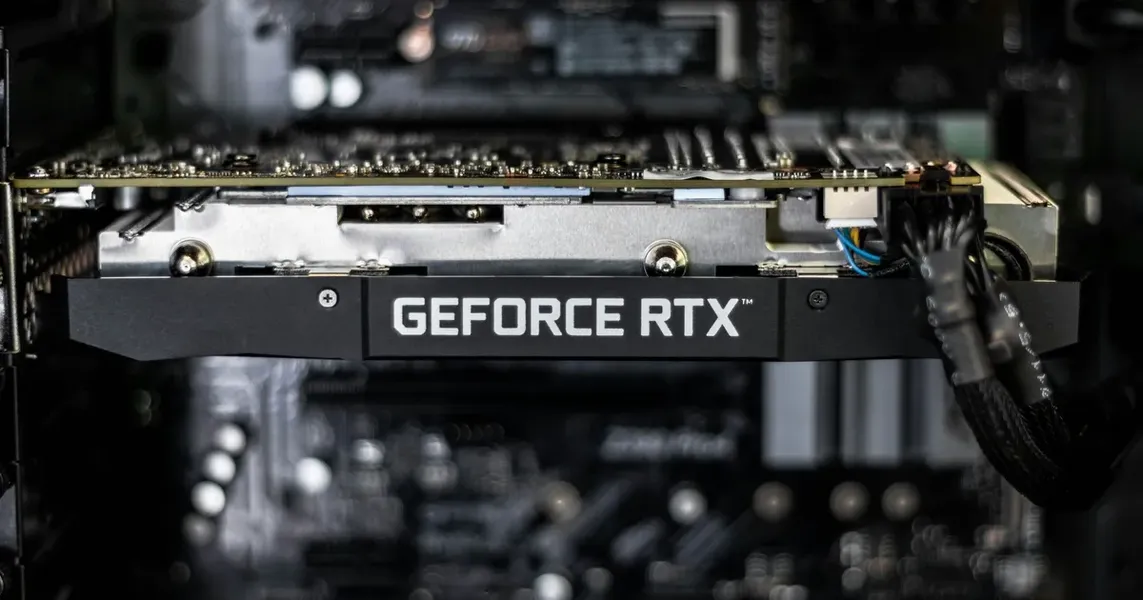
RTX 50 price hikes could reshape PC builds as AI demand tightens GPU supply
Published by AINave Editorial • Reviewed by Ramit
Nvidia's RTX 50-series GPUs are seeing steep price increases that could nearly double launch prices for some models, driven primarily by AI demand and constrained manufacturing capacity at TSMC rather than gaming demand. For AI builders and teams relying on consumer GPUs for local inference, development, or graphics-heavy workflows, these shifts mean tighter supply, higher budgets, and a need to rethink upgrade timing.
What happened
Based on current market data, RTX 50-series prices are rising roughly 15-20% across the lineup. The RTX 5060 Ti is reportedly around $783 (up from $429 launch), the RTX 5070 around $973 (from $549), and the RTX 5070 Ti around $1,408 (from $749). Higher-end models see even larger jumps: the RTX 5080 is climbing to about $1,845 (from $999), and the flagship RTX 5090 to around $3,843 (from $1,999). These are baseline prices; board partner cards with custom cooling or factory overclocks will likely cost more.
The price surge is not driven by gaming demand. Nvidia's data-center business, which brings in high-revenue orders, has made GPU manufacturing capacity a scarce, more profitable resource. Consumer-grade gaming cards are increasingly treated as lower priority.
Why AI builders should care
For teams building AI products that rely on consumer GPUs for local model inference, fine-tuning, or development, these price increases directly affect hardware budgets. The same TSMC capacity constraints that drive up gaming GPU prices also affect availability of desktop GPUs for AI workloads. Nvidia's prioritization of data-center orders means fewer chips go into consumer cards, potentially lengthening lead times and raising costs for anyone buying GPUs for on-premise AI work.
AMD's response with the Radeon RX 9050, an entry-level RDNA 4 card with 8GB GDDR6 and 16 compute units starting around $279, offers a lower-cost alternative for 1080p gaming and light AI tasks, but its release is limited to Asia-Pacific, Japan, and Latin America. A 4GB version for prebuilt PCs is also available, though less useful for AI workloads.
Practical implications
If you are budgeting for GPU hardware in the near term, expect to allocate 15-20% more than launch MSRPs, and possibly more for premium partner cards. The RTX 50 Super series, which could offer more VRAM, is reportedly delayed or facing high GDDR7 pricing that may push prices even higher. For AI builders, this may mean extending upgrade cycles, considering cloud GPU rentals for peak workloads, or evaluating AMD alternatives where available.
Caveats
The reported prices are based on Chinese market rates and may shift once US pricing lands. Actual street prices vary by region and retailer. Board partner premiums and fluctuating GDDR7 memory costs could further alter the final pricing landscape. The RTX 50 Super GPUs remain unconfirmed, and their impact on pricing is uncertain.
FAQs
Sources
- Nvidia’s RTX 50 GPUs are about to cost nearly double what you paid at launch
- Newly reported NVIDIA RTX 50-series GPU prices are unacceptable
- Nvidia RTX 50 Super GPUs are reportedly ready, but stuck in limbo due to excessive GDDR7 pricing — 3GB GDDR7 module costs triple the price of 2GB | Tom's Hardware
- NVIDIA RTX 50 GPU Shortage: Supply Cut 20%, Prices Climbing, No Desktop Refresh Confirmed
- New Nvidia GeForce RTX GPU prices look ridiculous as RTX 5070 to touch $1,000 - Notebookcheck News
- Nvidia's RTX 50-series launch shows why the 'always wait for the next generation' rule is dead
- Nvidia fixes the 8GB RAM problem with one of its GPUs—if you can pay for it
- Report: RTX 50 Super GPUs back on track. But more VRAM means higher prices
- 2026 will be one of the worst years ever for new GPUs as Nvidia's RTX 50 Supers pushed out to 2027
- GeForce RTX 50 series - Wikipedia
- Nvidia’s RTX 50 GPUs are about to cost nearly double what you...
- HUGE UPDATE! How to monitor Hotspot temp on RTX 50... - YouTube
- Getting NVIDIA's RTX 50 Series GPUs At MSRP Would Be...
- Everybody stay calm: Walmart is selling RTX 50 GPUs at MSRP or...
- 2026 will be one of the worst years ever for new GPUs as Nvidia's RTX 50 Supers pushed out to 2027