John Deere's JD AI Assistant: What it does with farm data and what builders should watch
Published by AINave Editorial • Reviewed by Ramit
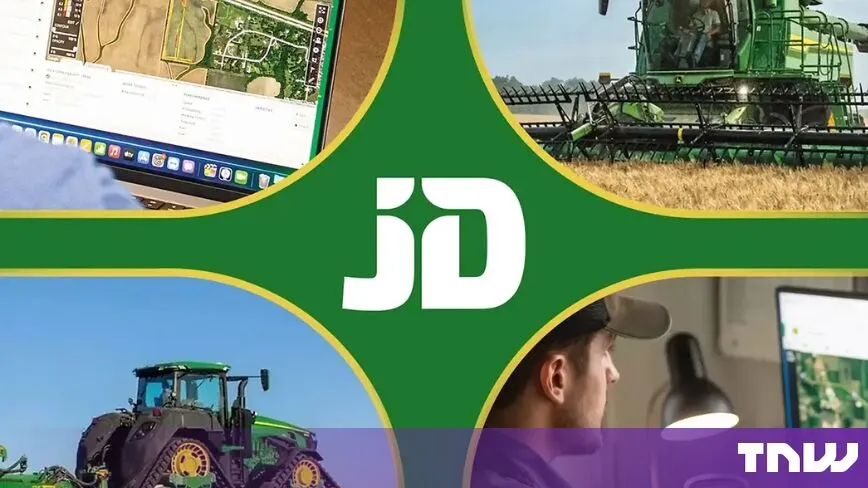
John Deere launched JD AI Assistant, a conversational tool built into its Operations Center that answers plain-language questions using a farm's own field and machine data, and it comes with a ten-point Farmer Data Commitment asserting farmers retain control TNW. For builders building vertical AI products, JD demonstrates how to surface insights from proprietary operational data without requiring users to navigate dashboards, but it also highlights the growing gap between US voluntary pledges and EU legal obligations under the Data Act.
What JD actually does:
JD sits inside John Deere's Operations Center, the farm management platform that already ingests data from tractors, planters, sprayers, and harvesters. Instead of digging through spreadsheets, a farmer can ask questions like "How did fuel use during tillage compare year over year?" or "Which sprayer operator covers the most acres per hour?" and get answers generated from their own data TNW. Chief technology officer Jahmy Hindman described it as changing "the experience from navigating through a sea of data to simply asking it a question." The underlying model is not disclosed; principal product manager Melissa Neuendorf said Deere will hide that complexity from farmers aiweekly.co.
For AI builders, this pattern is familiar: take a domain-specific dataset, connect it to an LLM with retrieval, and let users query in natural language. The difference here is the data is highly personal and sensitive (yield, fuel, timing) and the trust model matters more than model performance.
Data rights and the regulatory split:
JD launched alongside a ten-point Farmer Data Commitment. Deere pledges farmers control their data, that it does not sell the data, and that farmers can shut off data flow to third parties at any time. Deere points to its Ag Data Transparent certification from 2018 as evidence of long-standing commitment Deere.
In the EU, most of those "pledges" are legal obligations under the Data Act, which has applied to connected products since September 2025. The Act gives farmers the right to obtain their machine data in a structured, machine-readable format and to pass it to a third party. More importantly, Article 4(13) forbids the manufacturer from using the data to derive insights about a farm's economic situation, assets, or production methods TNW. That clause directly addresses a risk that Deere's own pledge does not cover: a manufacturer that can see yields and fuel bills knows what a farm can afford to pay for equipment.
This creates an asymmetric landscape. In the US, trust rests on a voluntary promise. In the EU, the farmer holds a statutory right, and the burden is on the manufacturer to deliver data by default by September 2026 for new connected products. Deere has not confirmed whether JD will be available in Europe, and the early access program is US-only TNW.
What builders should watch:
For teams building AI products that consume customer operational data, the takeaway is twofold. First, the technical integration is straightforward but the data governance model is the differentiator. Deere chose to make all queries run against the farm's own data, not aggregated across customers. That avoids the data-ownership disputes that plague other AI assistants. Second, the regulatory trajectory matters. If your product handles data from customers in the EU, the Data Act's default-access and anti-monetization rules apply regardless of your platform's features. Building a data architecture that supports per-customer isolation and structured data export from day one will save rework.
The most interesting caveat is what JD cannot do. It runs on data already inside Operations Center. It cannot, for example, incorporate third-party weather or soil sensor data unless those sources are already integrated TNW. And Deere has not promised to make JD available outside the US, which means builders targeting global ag markets cannot assume this capability exists.
Finally, the refusal to name the LLM vendor is notable aiweekly.co. For builders, choosing a model is a technical decision; for Deere, it is a branding and liability decision. But for a farmer evaluating trust, knowing whether the model is hosted, inference logs are retained, and what guarantees exist around data privacy matters more than the model name.
JD is a solid vertical AI deployment that respects data boundaries, but the real story is how regulatory pressure shapes product decisions. European farmers get stronger legal protections by default, and that will influence whether and how JD expands.
FAQs
Sources
- John Deere launches JD, an AI assistant that answers questions from a farm’s own data
- John Deere JD™ AI Helps Farmers Use Their Data | John Deere US
- John Deere Launches 'JD' AI Assistant to Unlock Farm Data Insights
- John Deere Introduces JD AI Assistant for Farm Data
- John Deere debuts JD, an AI assistant over farm data
- John Deere Launches New AI Features to Change How Farming Works
- John Deere introduces AI chatbot to assist farmers
- From spreadsheets to AI: Deere gives farmers new features in Operations Center, JD
- John Deere Built an AI Chatbot, Named It After Itself, and Wants to Know Your...
- John Deere Launches AI Assistant for Farmers
- John Deere Built an AI Chatbot, Named It After Itself... - Gadget Review
- John Deere launched an AI chatbot for farmers | The Verge
- AI in Agriculture: John Deere Launches JD Assistant
- Meet "JD:" John Deere’s New AI Assistant for... - The Packer
- Deere launches AI assistant named JD to guide farmers