AI in wildfire response moves from detection to crew deployment decisions
Published by AINave Editorial • Reviewed by Ramit
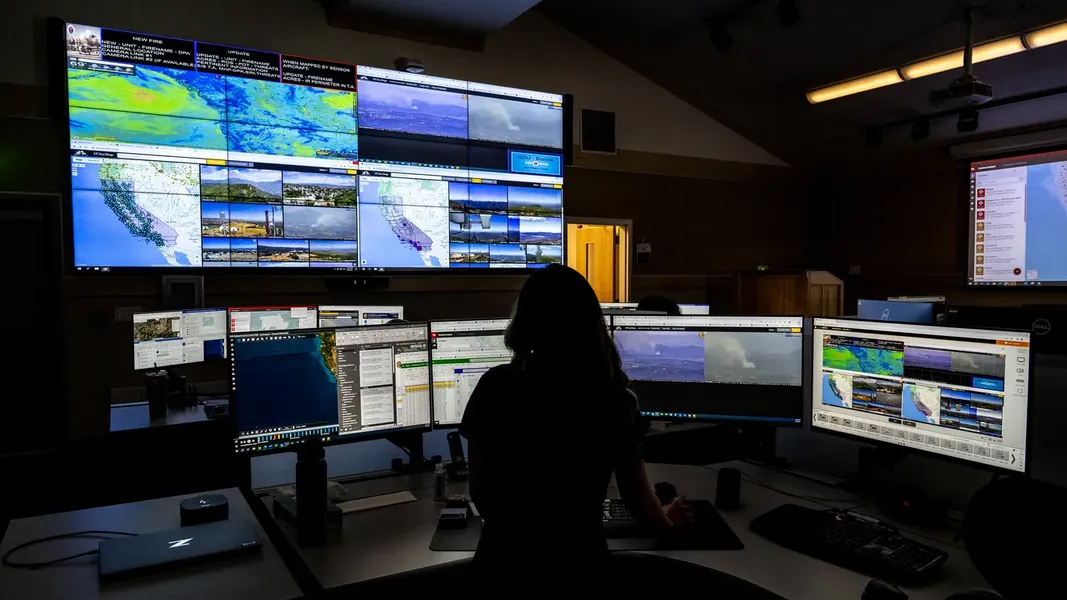
AI is already used to detect and monitor wildfires across the U.S. Now researchers are exploring how machine learning and optimization could help fire officials decide where to deploy limited crews when multiple fires burn simultaneously. For builders working on emergency response systems, the shift from detection to resource allocation is the harder engineering challenge, and it comes with a hard constraint: AI must augment human decision-makers, not replace them.
From detection to deployment optimization
Jason Fallon, division chief for wildland fire intelligence at the U.S. Wildland Fire Service, told Axios that AI is already ingrained in wildfire management nationally for monitoring, detection, information dissemination, and data transfer. Leonard Boussioux, an information systems professor at the University of Washington, is part of a team researching how machine learning and optimization could assist fire officials in deciding where to send crews when multiple wildfires are burning. The scale of the problem is clear: in 2025, 77,850 wildfires were recorded across the U.S., noticeably higher than five- and ten-year averages.
Why data quality determines real-world impact
The usefulness of these AI tools will depend on the quality and organization of the underlying data. Boussioux noted that the hardest problem is predicting which fire will escalate. For builders, this means the model is only as good as the pipeline feeding it real-time satellite feeds, weather data, fuel moisture readings, and historical burn patterns. Without clean, structured, and timely inputs, even the best optimization model will produce unreliable recommendations.
The human-in-the-loop constraint
Every expert quoted in the story emphasizes augmentation over automation. Fallon said AI's role is to augment firefighters, decision-makers, and analysts, not replace them. Fire officials remain in control of directing strategy and action. Matt Weiner, CEO of Megafire Action, added that AI won't solve the problem of massive, destructive wildfires. For product teams, this means building explainable systems that surface recommendations with confidence levels and allow humans to override them easily.
What experts say about the limits of AI in wildfire response
Fallon described research like Boussioux's as having potential, but added: "I don't think we know yet to what degree." Boussioux himself said the hardest part is predicting which fire will blow up. These are honest admissions that the field is still early. Builders should treat wildfire AI as a decision-support layer, not a dispatch autopilot. The practical takeaway: invest in data pipelines, build for human oversight, and resist overselling the model's certainty.
FAQs
Sources
- AI's growing role in wildfire response
- Technology has a growing role in wildfire response - Marketplace
- Technology Steps Into the Fight Against Wildfires - BIO HEADLINS UK
- #panoai #wildfiredetection #newrole #gtm #salesleadership
- EU: Wildfire response needs to evolve in line with climate change
- How AI is playing a growing role in wildfire response
- How AI is playing a growing role in wildfire response
- FireMap: Track Wildfires in Real-Time with NASA & Local Data
- Live Wildfire Map | Track Active Fires in Real Time — Current Wildfires
- Wildfire Service - Province of British Columbia
- Drone incursions still disrupt wildfire response across Western US...
- How AI is playing a growing role in wildfire response
- The origins of the LA fires may never be discovered - but AI is still...
- Utah Fire Info