How Williams uses AI to squeeze more from F1 cost cap without headcount growth
Published by AINave Editorial • Reviewed by Ramit
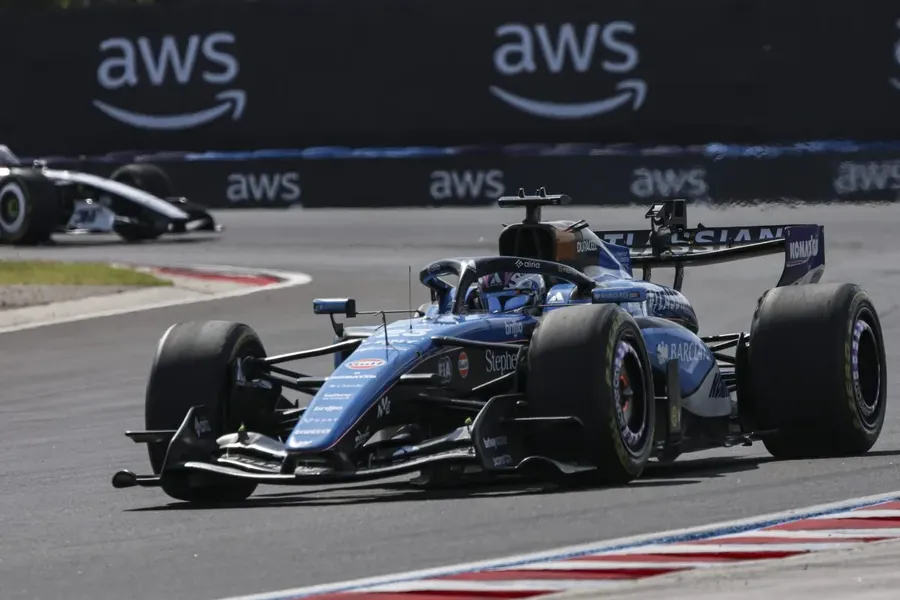
Williams Racing is using AI to solve a problem many engineering teams face: how to get more done when you can't just add headcount. Under Formula One's cost cap, the team's biggest constraint is time, not budget. By deploying Atlassian Rovo AI across its 1,200-strong operation, Williams cut 863 hours of low-value meetings in a single month and increased work throughput by 83% between October and March, according to Atlassian's own analysis.
Williams deploys Rovo AI to cut meetings and boost throughput
The initial rollout covered 200 employees. Rovo AI aggregates project data from across the organization and surfaces conclusions for engineers to review. Matt Harman, Williams' director of engineering, said the tool saves him about four hours per week by pulling together information that previously required meetings and manual work. The team is clear on one point: AI does not make engineering decisions. "We should never replace our inquisitive nature as engineers with AI," Harman told City AM. "We must always be critical of what we're presented with." Engineers interrogate the AI's suggestions and make the final call.
Why this matters for engineering teams under resource constraints
The Williams case is a practical example of AI as a decision-support layer, not a replacement. For builders shipping AI products into engineering-heavy organizations, the lesson is about workflow integration. Atlassian's own research found that 85% of its workers use AI, but only 29% have embedded it into daily workflows, and just 6% of executives could point to clear ROI. The bottleneck isn't the AI itself; it's the processes around it. Williams' approach of using AI to surface information and flag duplicates, while keeping humans in the loop, mirrors what works in enterprise deployments.
Practical takeaways: unified issue management and human-in-the-loop
A data-collection fault during Hungarian Grand Prix practice exposed a deeper problem. The same fault had occurred at the factory two weeks earlier but never reached trackside staff because issue management was fragmented between the two locations. Williams has since consolidated factory and trackside fault reporting into Jira Service Management. Rovo can now flag potentially duplicated problems and retrieve past incidents, including resolutions. This is the kind of integration that turns AI from a novelty into a measurable productivity tool. The team also partnered with Anthropic as its official thinking partner, with Claude-based AI set to be used across car development and operations.
What to watch: trust and integration challenges
All evidence here comes from a single article and Atlassian's own reporting, so the numbers should be treated as vendor-claimed. The 83% throughput increase and 62% of staff reporting more time for strategy are Atlassian's internal assessments of a relationship from which it benefits commercially. Williams is not using AI to reduce headcount; it has more engineering projects than capacity. The real test will be whether the unified issue management and AI-assisted workflows prevent future data silo failures and whether the Anthropic partnership produces measurable gains in car development. For now, the approach is a useful reference for any engineering team operating under hard resource constraints.
FAQs
Sources
- Williams turns to AI to squeeze more from F1 cost cap
- Opus Clip : AI Video Editing & Auto Captions for Viral Clips
- F1 News - The Latest Formula 1 News, Articles & F1 Results
- Bloxstrap Fast Flags (2026): FPS Boost & Low Ping Guide
- The Horrifying Story F1 Wants You To Forget.. - YouTube
- Do look ill, John!" "Did you think he's pretty harmless." Pr...
- Williams turns to AI to squeeze more from F1 cost cap
- +1 Speed Keyboard Escape Summer Event Guide - Coins
- Google Translate
- Free Nudifier - #1 AI Nudify Tool Online | 100% Free
- I Kept Annoying Tatsumaki ai Until She Wrung Me Dry - YouTube