How AI Model Distillation Is Shaping China’s Defense Systems
Published by AINave Editorial • Reviewed by Ramit
A Reuters review of more than 80 Chinese academic papers and patents found military-linked researchers using AI model distillation to train domestic defense systems. The practical takeaway for AI builders is clear: a powerful hosted model can bootstrap a smaller system for local or edge deployment, but the student model may lose important safeguards and raise difficult intellectual property and export control questions.
China’s reported workflow turns hosted intelligence into local capability
Model distillation uses a larger teacher model’s outputs to train a smaller student model. Instead of reproducing the frontier system’s full capabilities, the student learns selected behaviors for a narrower task, reducing the compute and connectivity required at runtime.
The documents reviewed by Reuters reportedly cite OpenAI GPT-3.5 and Anthropic Claude 3 Haiku in different workflows. Researchers linked to PLA Unit 96941, described as a military intelligence and cyber-warfare unit, used GPT-3.5 to summarize sensitive source code before training a domestic model intended to operate inside Chinese military networks. Researchers at the North University of China reportedly used Claude 3 Haiku to generate synthetic data for text classification, content monitoring, and moderation.
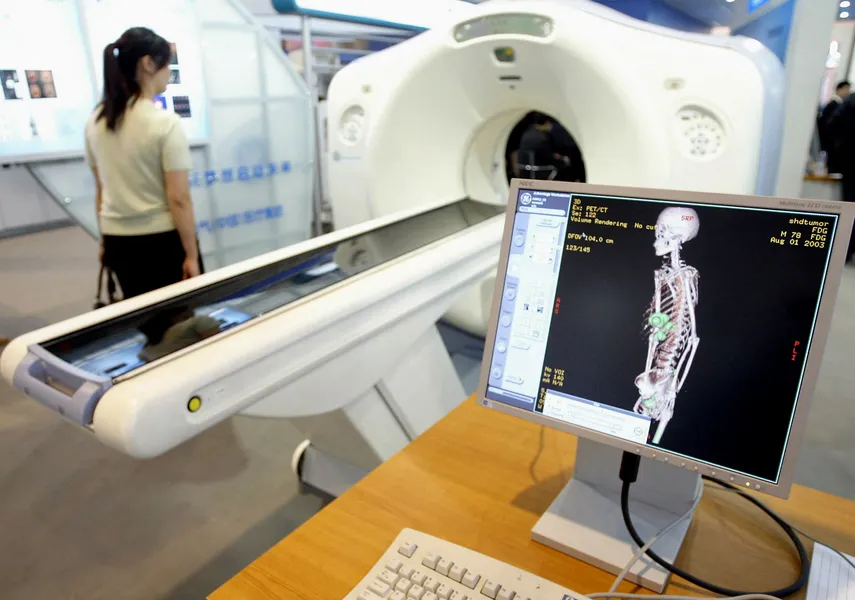
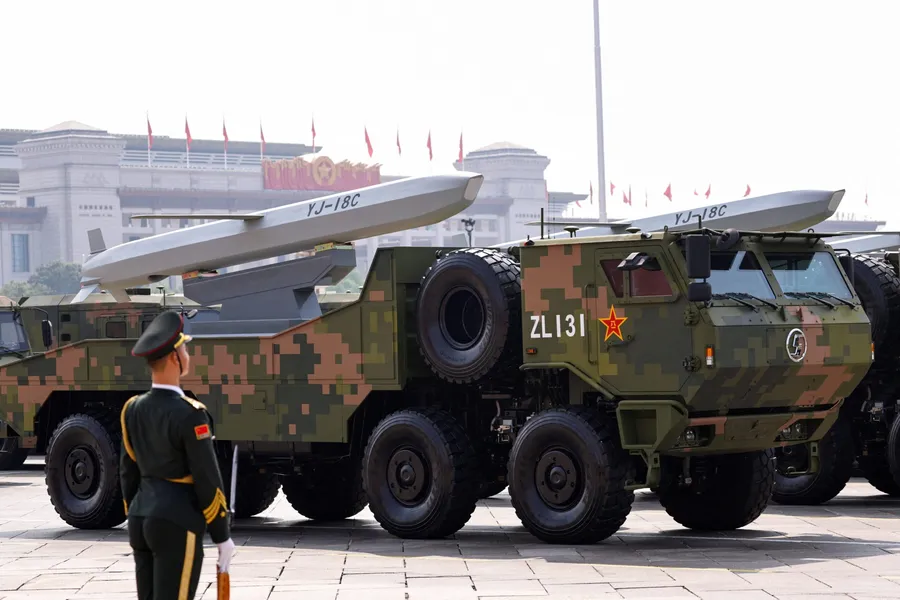
Other papers described shrinking image-processing and target-recognition models for drones, ships, unmanned submarines, and tactical hardware. The reported goal was local inference, including analysis of live video when communications are unavailable.
Why this matters to AI builders
The important part is the deployment pattern, not the geopolitical headline alone. Distillation is a practical answer when a team needs predictable inference on a device with limited memory, power, bandwidth, or access to a cloud API. It can also reduce latency and keep data inside a private network.
That makes the technique relevant to edge AI, industrial automation, robotics, and offline agents. A product team might use a large model to label examples, summarize code, or generate synthetic training data, then fine-tune a smaller model for one controlled workflow. The resulting system can be cheaper and easier to operate, but it should not be treated as an equivalent replacement for its teacher.
The trade-off is control versus capability
A locally deployed student model gives builders more control over data handling and availability. It can run without an external API, which is useful for isolated environments and devices such as drones. However, it inherits only the capabilities represented in the distilled training set. It may also reproduce errors, omit useful general reasoning, or behave unpredictably outside the target task.
Safety is a separate concern. Anthropic warned that distilled models may lose the original model’s safeguards, allowing sensitive capabilities to move into systems outside the teacher’s control. For builders, that means evaluating refusal behavior, misuse cases, data provenance, and post-deployment monitoring rather than assuming the teacher’s policy layer transferred with its outputs.
Governance questions are part of the architecture
The Reuters report places these practices in the dispute over whether foreign model outputs are being used for unauthorized extraction. Distillation itself is widely used, but the legality and policy implications can depend on access terms, data provenance, intended use, and applicable export controls.
Teams building similar pipelines should document which model produced the training data, what the provider’s terms permit, whether sensitive information entered the workflow, and where the resulting model will be deployed. The reported Chinese research also shows why export controls focused only on chips may not address every route by which model capabilities spread.
The evidence remains documentary rather than a public demonstration of operational battlefield performance. Still, the builder lesson is strong: distillation can make specialized AI practical under tight compute constraints, but it transfers selected capability, not full model independence. Treat the student model as a new system requiring its own
Sources
- Chinese military researchers tap US AI models to train defense systems
- Chinese military researchers use US AI models to develop defence...
- China And The U.S. Are Clashing In The AI Race. Beijing's Military Is...
- Chinese Military Researchers Use U.S. AI Models to Advance...
- Why Chinese military researchers are using US AI models
- Chinese Military Researchers Exploit U.S. AI Models to Sharpen...
- Chinese military researchers tap US AI models to train defense systems
- China’s military tapped U.S. AI to build battlefield systems: report
- Reports: Chinese military training defence systems with US' AI models
- Chinese military used OpenAI, Anthropic AI outputs to train their defence systems: Report
- Chinese AI models raise cybersecurity concerns, new report warns
- Chinese military researchers tap US AI models to train defense...
- Chinese Military Researchers Use OpenAI and Anthropic Models to...
- Chinese military researchers tap US AI models to train defence systems
- Chinese military researchers use US AI models to train domestic defense systems
- What is AI model distillation and why is it becoming a US-China flashpoint?