How a $46B 'smart wall' project blends steel, sensors, and AI at the US-Mexico border, and why builders should care
Published by AINave Editorial • Reviewed by Ramit
The Trump administration is racing to build a $46 billion 'smart wall' along the US-Mexico border, combining 30-foot steel fencing with an AI-enabled surveillance network of autonomous towers, ground sensors, and buried fiberoptic cables. For AI builders, this project offers a real-world case study in deploying autonomous sensing and edge AI at massive scale, with all the technical and governance challenges that entails.
What happened
Congress allocated $46 billion for immigration enforcement, funding a rapid expansion of what Customs and Border Protection (CBP) calls a smart wall. As of mid-June 2026, CBP had erected 74 miles of new barrier and aims to build hundreds more. Homeland Security Secretary Markwayne Mullin said a preliminary segment could be finished within about a year, and CBP Commissioner Rodney Scott reported a pace of 6 miles of wall per week.
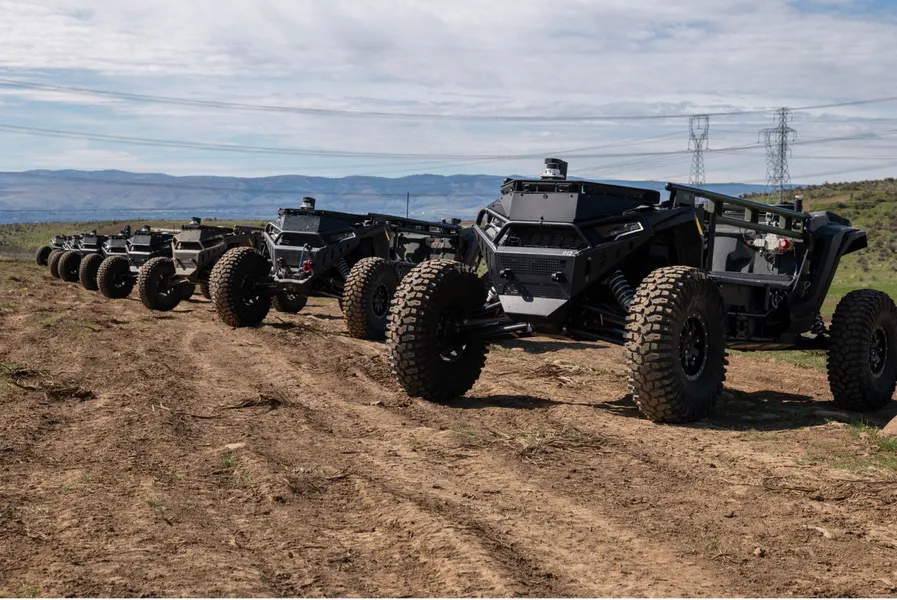
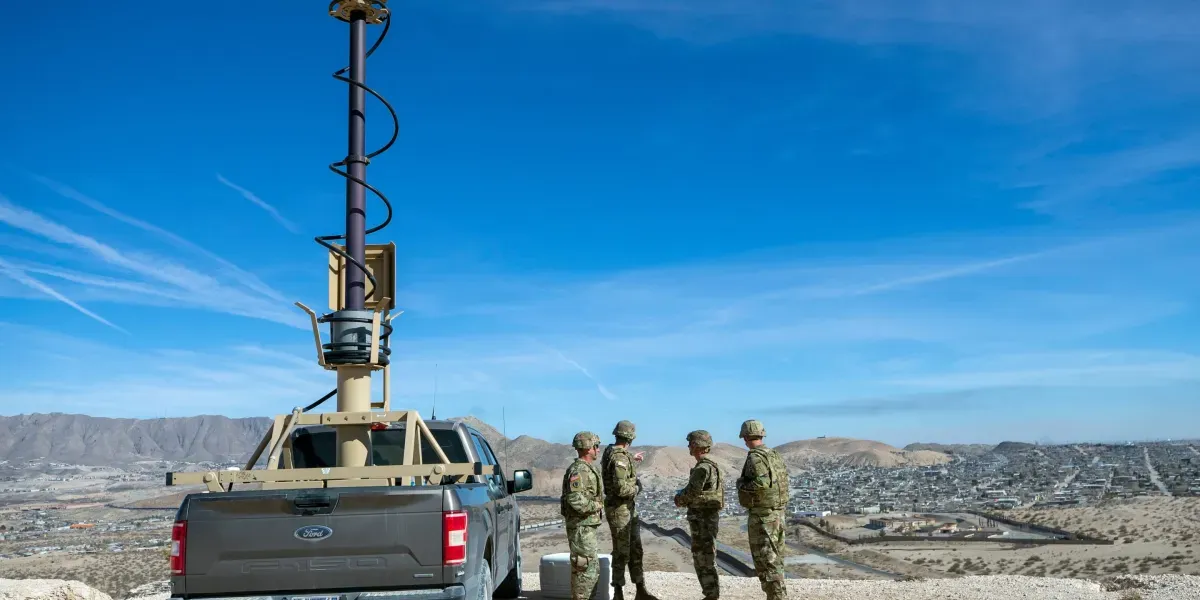
The project goes beyond steel. CBP is retrofitting existing walls with lights and roads, deploying 12- to 15-foot buoys along river segments, and installing a layered technology stack: ground sensors, trail cameras, fixed towers with video and infrared, and autonomous towers that use AI to analyze what they see and alert agents. A recent GOP tax and spending bill requires CBP to buy only autonomous towers, and the department is deploying an additional 95. Buried fiberoptic cables from Sintela sense movement, with data fed into AI analysis pipelines.
Why AI builders should care
This deployment represents one of the largest real-world integrations of AI-enabled surveillance with physical infrastructure. The autonomous towers scan terrain, run inference on sensor data, and trigger alerts without human operators watching screens. That pattern is directly relevant to teams building edge AI, sensor fusion, and autonomous decision systems.
The project also highlights the tension between efficiency and governance. CBP argues the technology maximizes agent productivity. Critics, including the Southern Border Communities Coalition and the Electronic Frontier Foundation, warn that AI decision-making at the border introduces risks of bias, privacy violations, and displacement of migrants to more dangerous routes. For builders, these are the same questions that arise in any autonomous system deployed in high-stakes environments.
Practical implications
Contracting is driven by a large federal infusion, with tens of billions of dollars going to wall construction and technology vendors. The technology stack includes fixed cameras, infrared and radar towers, ground sensors, and fiberoptic cables that follow the contour of the land. Autonomous towers have a range of roughly 8 miles and can be mounted on trucks for mobility.
Deployment covers the entire Southwest border, with no wall planned for roughly 535 miles of rugged terrain where sensors and towers will be used instead. In the Big Bend area, CBP has abandoned plans for a 30-foot bollard wall after bipartisan opposition, but will still install patrol roads, vehicle barriers, and detection technologies. Bright lights in that area have raised concerns about light pollution in a region known for dark skies.
Caveats
The evidence in this article reflects reported plans and official briefings. Actual performance and privacy outcomes remain under debate. Watchdog groups like Taxpayers for Common Sense have called for more robust evaluation of the technologies, pointing to the 2011 cancellation of a similar 'virtual wall' project that ran over budget and behind schedule. CBP denies a lack of oversight, but independent analysis of cost-effectiveness and measurable security benefits is limited.
AI bias is a known concern. Experts have warned about the technology's potential for errors, and civil liberties groups note that sensors have been placed on private property without consent. Builders evaluating similar deployments should consider these governance and transparency challenges as part of the system design.
Sources
- Trump’s $46 billion ‘smart wall’ with Mexico bets on AI and scale
- Smart Wall Trending #33 - Break The Web
- Trump administration builds $46B ‘smart wall’ on U.S.-Mexico border...
- Trump wall: How much has he actually built?
- Scale AI CEO Alexandr Wang on U.S.-China AI race: We... - YouTube
- Trump’s $46B ‘smart wall’ races ahead at the border despite low crossing numbers
- Trump’s push to complete border wall intensifies with more contracts, waivers
- Trump Builds the Wall
- Trump administration’s $46 billion 'smart wall' races ahead ...
- Trump administration’s $46-billion ‘smart wall’ races ahead ...
- Trump's $46 billion 'smart wall' races ahead on the US-Mexico ...
- Smart Wall Frequently Asked Questions - U.S. Customs and ...
- Trump administration's $46 billion 'smart wall' races ahead ...
- Trump Administration’s $46 Billion ‘Smart Wall’ Races Ahead ...
- Trump administration’s $46 billion 'smart wall' races ahead ...
Latest Tech News