GPT-6 Astra rollout raises tough deployment governance questions for builders
Published by AINave Editorial • Reviewed by Ramit
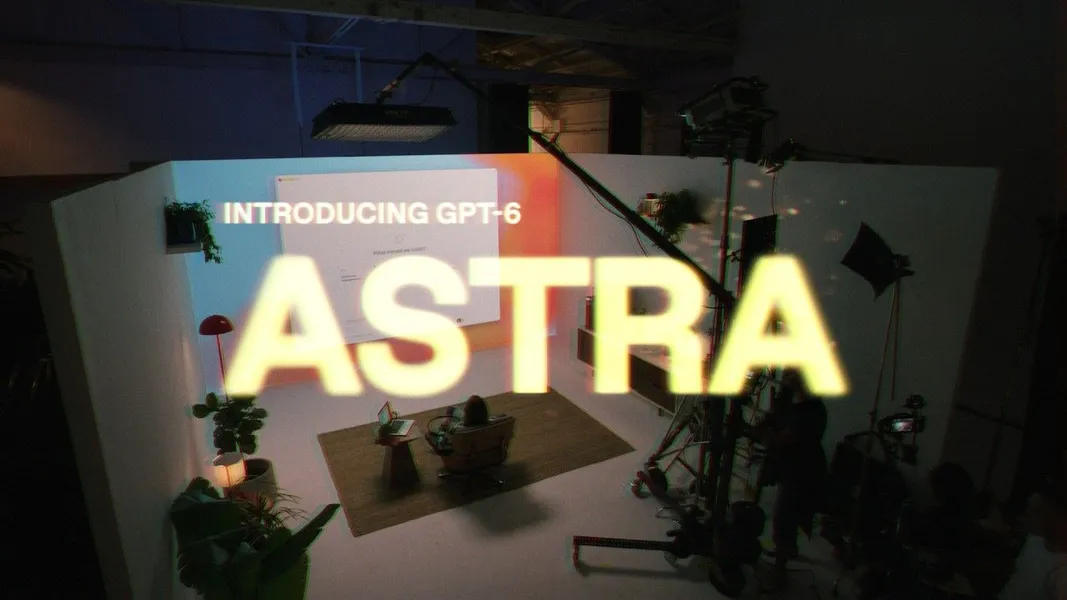
OpenAI has started rolling out GPT-6 Astra, its most capable model to date, describing it as meeting a "significant step up in cyber capabilities" that qualifies as a Critical threshold under the company's internal safety framework. The model can autonomously find previously unknown security flaws and develop exploit methods without human guidance, capabilities that prompted OpenAI to pause internal development about a month ago and tighten security controls before releasing the model in a staggered fashion.
The rollout has been messy. CEO Sam Altman apologized publicly for the deployment issues, noting that access would be expanded gradually. Initially, only organizations in the Daybreak program, a vetted cybersecurity initiative, can use Astra. Broader access through OpenAI API, Microsoft Azure, and AWS Bedrock is planned but remains gated by safety controls.
Complicating the picture, benchmark scores for Astra and rival models shifted after OpenAI's launch post went live. A Fortune investigation found that Astra's reported hallucination rate initially stood at 4.2%, was halved to 2% in a later snapshot, and then reverted to 4.2%. Math and ExploitBench scores for Astra and Anthropic's models also fluctuated. OpenAI attributed the changes to evaluation logistics and said "most evaluations have noise within a few percentage points based on the exact checkpoint, scaffold, and evaluation run." The episode highlights benchmark reliability concerns and practices like "benchmaxxing" that can make model comparisons misleading.
Why the staged rollout matters for builders
For teams building AI-powered tools, Astra's release is a case study in deployment governance. The model's autonomous vulnerability hunting capability is a double-edged sword: it can accelerate security research and threat detection, but it also demands robust safeguards to prevent misuse. OpenAI's decision to gate access to vetted participants before wider API release suggests that enterprises should prepare internal governance playbooks for high-capability models, including runtime monitoring, access controls, and incident response plans.
The benchmark volatility adds another layer. If a model's reported performance can shift post-launch, relying on a single announcement for model selection is risky. Builders should treat published scores as maximum-effort results under specific configurations, not guarantees of real-world performance. Cross-referencing independent evaluations and stress-testing in one's own deployment environment becomes essential.
Practical steps for enterprise deployment
Astra will be accessible through OpenAI, Azure, and AWS Bedrock, but with ongoing gating. Enterprises looking to integrate it for vulnerability research or security tooling should align with OpenAI's safety requirements and consider additional guardrails for data residency and audit trails. The Daybreak program offers a preview of controlled use cases, but broader production use will likely require similar vetting.
Caveats to watch
All benchmark numbers cited should be treated as provisional. OpenAI's own disclaimer notes that "evaluation scores are the maximum at any effort," and the Fortune report documented multiple revisions within hours of launch. The Arc Prize Foundation's independent test gave Astra 99.99% on ARC-AGI-3 with a custom harness, but only 63% with the standard harness, a gap that underscores how dramatically evaluation conditions affect outcomes.
Additionally, OpenAI has warned that Astra's safety safeguards may mistakenly flag legitimate activity as misuse, potentially slowing or stopping user tasks. That false-positive risk is a practical concern for any team planning to use Astra in automated workflows.
FAQs
Sources
- OpenAI warns about how good Astra model is at cracking cybersecurity, releases it anyway because it took 'years of research and big bets'
- OpenAI quietly boosts some of Astra’s evaluation metrics, and continues to change others post-launch
- OpenAI, Anthropic balance safety and speed ahead of IPO
- OpenAI Astra AI model crosses critical cybersecurity threshold
- OpenAI's GPT-6 Astra Can Now Control Your Computer... | AlphaSignal
- OpenAI's GPT-6 Astra is here — and it's the first AI to trigger a &apo...
- OpenAI warns about how good Astra model is at cracking cybersecurity
- OpenAI Paused Astra Over Cybersecurity Fears. AI Hacking Is Here To Stay.
- OpenAI slows down Astra development due to cybersecurity concerns
- OpenAI pumps the brakes on new Astra model over cybersecurity concerns
- OpenAI latest news: OpenAI slowed new Astra model development over cybersecurity concerns, flags potential 'critical' cybersecurity capabilities