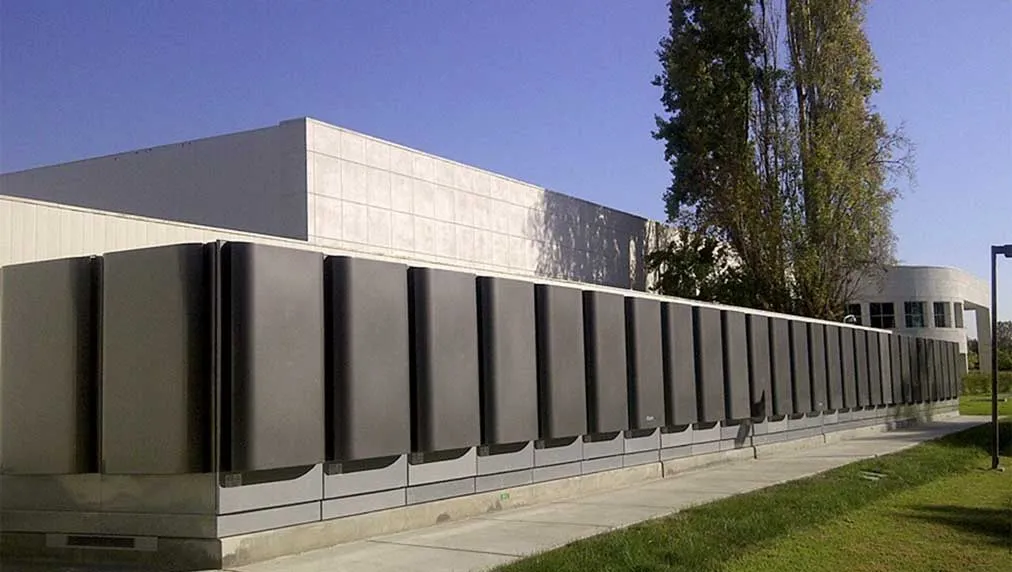
Bloom Energy S&P 500 Inclusion Signals AI Infrastructure's Mainstream Shift
Published by AINave Editorial • Reviewed by Ramit
S&P Dow Jones Indices has added Bloom Energy (BE), Illumina (ILMN), and Everpure (P) to the S&P 500, replacing Molson Coors as part of its latest quarterly rebalance. The changes take effect before the open on Monday, Sept. 21, 2026, and the announcement already triggered after-hours price gains for all three stocks. For AI builders, the inclusion of Bloom Energy signals something bigger than a routine index reshuffle: the market is waking up to the scale of infrastructure needed to power AI workloads.
What the Rebalance Actually Changes
The quarterly rebalance adjusts the S&P 500 for market capitalization and sector representation. Bloom Energy, a fuel-cell manufacturer that has become a proxy for AI data center power demand, joins alongside gene-sequencing company Illumina and water-treatment firm Everpure. The removal of Molson Coors reflects a broader rotation away from consumer staples and toward industrial and technology-linked names.
Bloom Energy shares have been on a tear this year, partly driven by its role in the AI energy boom. The company was recently selected by Nebius Group to supply fuel cells for a 300-megawatt AI data center, and earlier this year it notched a record closing high after a strong first-quarter earnings report. The S&P 500 inclusion adds another layer of validation for the thesis that AI infrastructure is a long-term growth sector.
Why AI Builders Should Pay Attention
For teams building AI products or operating data centers, the index inclusion matters on two levels. First, it increases the visibility of energy infrastructure companies in broad market benchmarks. Passive funds and ETFs that track the S&P 500 will automatically add Bloom Energy shares, channeling capital flows into a company whose fortunes are tied to AI compute growth. That can lower the cost of capital and support further investment in fuel cell manufacturing and deployment.
Second, the rebalance highlights a structural shift in what the S&P 500 represents. The index is increasingly weighted toward firms that support AI: chipmakers, cloud providers, and now energy infrastructure. For founders and product teams, this means the public market is now a more direct thermometer for the health of the AI supply chain. When Bloom Energy beats earnings or lands a contract, it moves an index - not just a niche stock.
Practical Implications for the Next Few Weeks
The effective date of Sept. 21 is the key milestone. ETF providers and index fund managers will rebalance their portfolios around that date, potentially creating predictable price pressure. The exact magnitude depends on the total assets under management in S&P 500-tracking funds and the relative weight of Bloom Energy, Illumina, and Everpure. Investors should monitor official S&P notices for the final list and weight calculations.
For AI builders, the more durable takeaway is that the market now treats energy infrastructure as core to AI. As data center power constraints become a bottleneck for model training and inference, companies that solve that problem will be valued accordingly. Bloom Energy's inclusion is one signal among many, but it is a concrete one.
Caveats Worth Keeping in Mind
Index inclusion does not change a company's fundamentals. Bloom Energy still faces execution risk on its large fuel cell contracts, competition from alternative power sources (natural gas turbines, nuclear), and the cyclical nature of infrastructure spending. The after-hours price jump after the announcement may partly reflect short-term positioning rather than a long-term re-rating. Additionally, the exact composition of the rebalance can shift up to the effective date, so builders should treat the Sept. 21 timeline as the firm anchor.
The broader AI power theme is real, but the stock market has a habit of pricing in expectations years ahead. As one analyst noted, Bloom Energy's stock has already run significantly, and valuation concerns have been raised. Builders should separate the long-term industry trend from short-term stock price movements.
FAQs
Sources
- AI Energy Play Bloom Energy Jumps On S&P 500 News
- Bloom Energy Jumps 13% as Nebius Picks Its Fuel Cells for AI Data...
- BE, P, ILMN Join S&P 500; LNG Misses Out — Bloom Energy Stock...
- Bloom Energy Jumps After Earnings—and It May Be the Best AI...
- Bloom Energy, Illumina, Everpure to Join S&P 500 in... - Bloomberg
- Energy Transfer Is Quietly Becoming One of the... - The Globe and Mail
- Why Bloom Energy Rallied Over 50% in July
- Dow, S&P 500 slip as Fed holds rates, eyes turn to mega-cap earnings
- Has The AI Power Boom Pushed Bloom Energy Stock Too Far, Too Fast?
- Nvidia Says Its H100 GPU Prices Are Still Rising. That’s Good News for Nebius St...
- Stock Index Futures Gain on Hopes for Renewed U.S.-Iran Talks, PPI Data and More...
- Buy, Hold, or Sell: Bloom Energy Stock Ripped Past... - 24/7 Wall St.
- Why is Bloom Energy stock sliding today? By Investing.com
- Bloom Energy jumps on improved outlook as AI... | Seeking Alpha
- Dow Jones futures fall, oil jumps on Iran news; Seagate, SK Hynix, KLA, Bloom Energy are AI earnings movers
- Bloom Energy Is Soaring: Is There a Better Way To Play The AI Power Boom?