Nvidia PAIR turns idle home computers into a local AI data center
Published by AINave Editorial • Reviewed by Ramit
Nvidia released PAIR, a free open-source tool that pools idle PCs on your home network into a single local inference cluster. For builders running Ollama or LM Studio at home, this means access to multiple GPUs worth of compute without buying new hardware The Verge.
What PAIR actually does
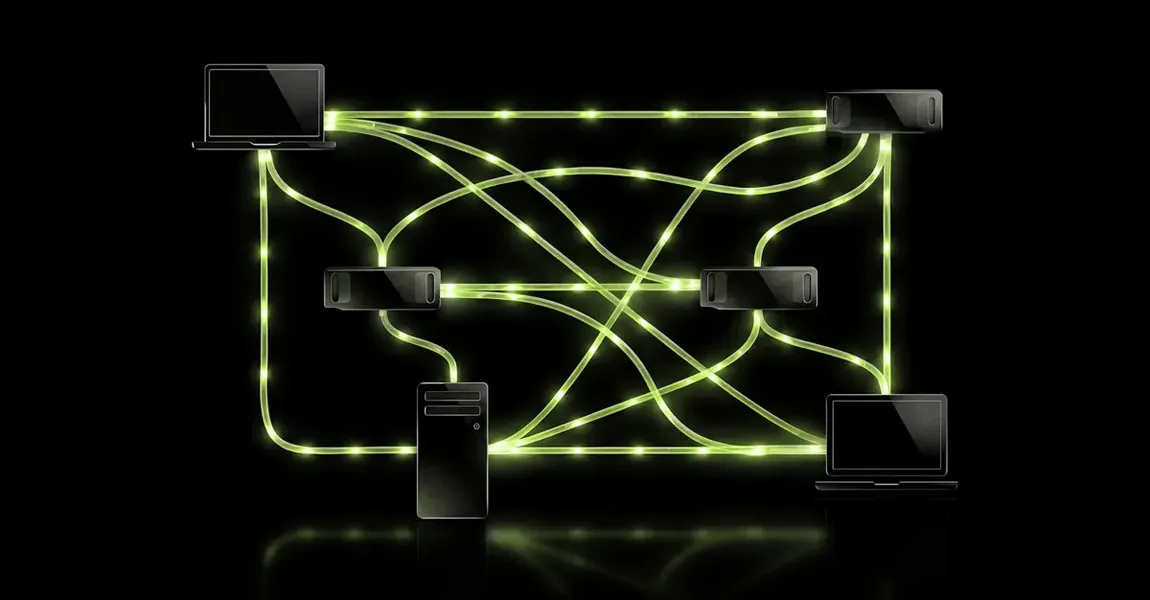
PAIR is not a hardware router. It is software that discovers compatible machines on your local network and coordinates them for AI inference. The system runs only on idle devices, so your gaming PC or laptop is still usable for other tasks. PAIR breaks complex agentic workflows into smaller jobs that run in parallel across devices, and it adapts dynamically as machines join or leave the network The Verge.
Why this matters for local AI workflows
Running a large model on a single GPU often hits memory or throughput bottlenecks. PAIR distributes inference across multiple GPUs, which directly helps agentic workflows that need to run many subtasks quickly. Nvidia estimates a typical household could have around 165 teraflops of unused compute, but that is an extreme example. The company expects most users to have one laptop and one gaming PC The Verge.
Compatible hardware and setup
PAIR supports Nvidia GeForce RTX 20-series and newer, RTX Pro GPUs, DGX Spark systems, and Apple M4 chips or newer. It runs on Windows, Linux, and macOS, and the beta is available now. Devices pair with a six-digit code and communicate over mTLS for encrypted bidirectional communication The Verge.
Three AI agent apps get simplified local setup
Nvidia also announced that Perplexity Portable Computer, Hermes Agent, and OpenClaw will offer simplified one-click local setup on Windows with Nvidia GPUs. This reduces the manual configuration needed to run local agents, making PAIR more accessible for builders who want to experiment with agentic workflows without complex Docker setups The Verge.
Caveats to keep in mind
PAIR is in beta, and real-world performance depends on your device mix and usage patterns. The 165 teraflops example is a best-case household with multiple high-end machines. Nvidia claims electricity costs are manageable, but specific numbers are not provided. Also, primary compatibility is Nvidia; Apple M4 is supported but older M-series chips are not. The Verge article does not include independent benchmarks or real user tests The Verge.