NVIDIA RTX Spark Superchip: First Hands-On With AI PCs at IFA 2026
Published by AINave Editorial • Reviewed by Ramit
The first RTX Spark-powered Windows PCs are here. At IFA 2026, Nvidia and partners showed off laptops and mini PCs that combine a Grace ARM CPU with a Blackwell RTX GPU into a single system-on-a-chip. The pitch is straightforward: run AI agents and models locally without sending data to the cloud. For builders, that means lower latency, better privacy, and a new hardware target for on-device inference.
What the RTX Spark superchip actually packs
The RTX Spark superchip integrates up to 20 Grace CPU cores with up to 6,144 Blackwell GPU cores into one SoC, sharing unified memory. Based on core counts, the integrated GPU performance sits between an RTX 5070 Ti and RTX 5080 in current laptop terms. Nvidia calls it "the most efficient PC chip ever built" and claims it delivers 22x the AI performance of today's best Copilot+ PCs.
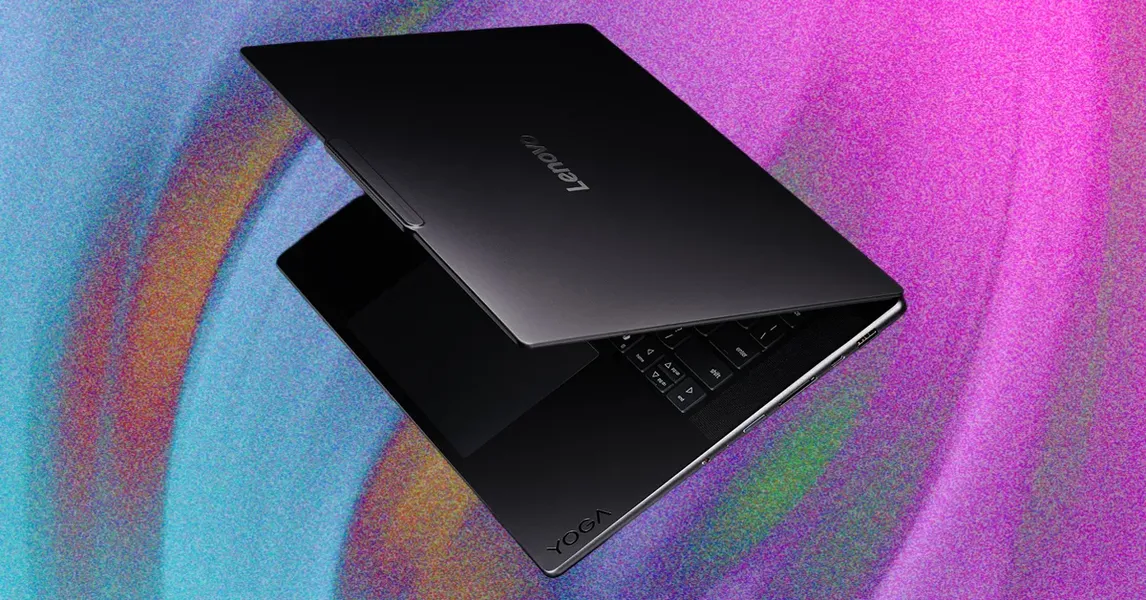
The first device, the Lenovo Yoga 9n 2-in-1, is a 16-inch laptop with an OLED 2880x1800 120Hz display, 0.69-inch thick, and configurable with up to 64GB of RAM. A 15-inch Yoga Pro 9n variant supports up to 128GB RAM and adds a Force Pad touchpad for stylus input. Beyond Lenovo, Nvidia has signed up Dell, Asus, Microsoft, HP, and Acer for RTX Spark systems. Acer's mini PC and Asus's ProArt Mini PC target desktop AI workloads with up to 128GB RAM in a Mac Mini-sized chassis.
On-device AI workflows become viable
For AI builders, the real shift is architectural. Because the CPU, GPU, and memory live on the same die, data doesn't have to shuttle between discrete components. That matters for agentic AI workflows that need tight feedback loops: reading from local files, calling tools, processing results, and acting again. Privacy is a secondary benefit: sensitive data like financial records or email threads never leave the machine.
The 128GB ceiling on higher-end SKUs means you could run sizable models locally. A 70B parameter model quantized to 4-bit fits in about 40GB, leaving headroom for context and tool outputs. That opens up prototyping and even production agent deployment on a single laptop, provided the model is optimized for the Blackwell architecture.
Price reality and caveats
These systems won't be cheap. The most affordable RTX Spark laptop hasn't been priced yet, but context from WIRED's coverage gives a clue: a 128GB MacBook Pro costs $6,139 today. The Lenovo ThinkCentre X Ultra, an AMD-powered alternative with similar memory, starts at $3,699 for the base model. Expect RTX Spark devices to land in that premium band.
A few unknowns remain. Battery life wasn't disclosed for any RTX Spark laptop, though the Arm architecture should help. Real-world AI throughput depends on software stack maturity, driver quality, and whether OEMs throttle under sustained load. The initial wave of RTX Spark PCs is expected to ship in October 2026, so builders will have concrete benchmarks soon.
FAQs
Sources
- Nvidia RTX Spark ‘Superchip’: The First AI PCs Are Here
- Slim Laptops & Small Desktops | NVIDIA RTX Spark
- Nvidia enters PC market with Arm-based RTX Spark superchip...
- NVIDIA and Microsoft Reinvent Windows PCs for the Age... | CallMissed
- NVIDIA launches the RTX Spark Superchip to run local AI agents...
- NVIDIA Accelerates Local AI With New Agents And NVIDIA PAIR Tool, Reveals Spark PCs Coming In October
- Nvidia Challenges Apple Silicon With New RTX Spark PC Chip
- Nvidia announces RTX Spark as ‘the most efficient PC chip ever built’
- Nvidia unveils RTX Spark, an Arm-based superchip for Windows PCs
- Nvidia RTX Spark Laptops Are Coming This Fall, With Xbox, Ubisoft, and More Games
- Nvidia RTX Spark ‘Superchip’: The First AI PCs Are Here
- NVIDIA and Microsoft Reinvent Windows PCs for the Age of ...
- NVIDIA RTX Spark Superchip: AI PCs Explained | TechPillow Blog
- What Laptops Have the Nvidia RTX Spark chip? Confirmed Models and What the Chip Does for AI
- Chip stocks shakeup: Arm soars, Intel falls as Nvidia and Microsoft announce new AI superchip for Windows PCs