Flock Safety Surveillance Cameras Face Growing Backlash as Deployments Expand
Published by AINave Editorial • Reviewed by Ramit
Flock Safety just raised $500 million at an $8.3 billion valuation from investors including a16z and Tiger Global, but the company's AI-powered surveillance cameras are facing a widening backlash that has already led around 100 cities to block or cancel contracts. For builders working on AI-enabled policing tools, the tension between rapid deployment and public opposition is becoming the central risk to navigate.
Flock Safety's $500M raise and the growing surveillance backlash
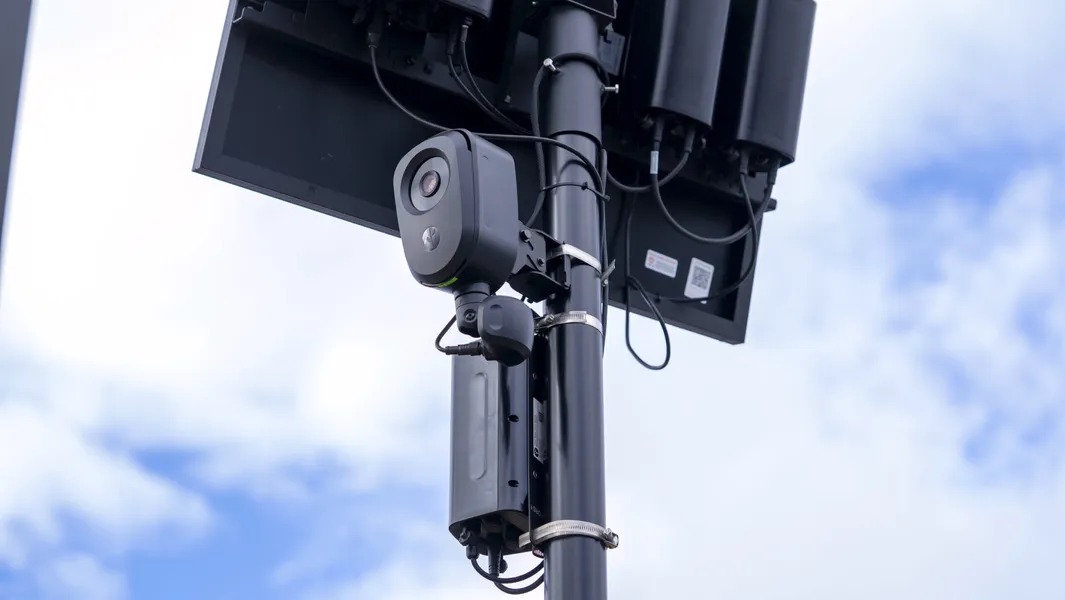
Flock Safety operates automated license plate reader (ALPR) cameras that are now used by more than 5,000 law enforcement agencies. The company says its cameras have aided about 1 million police investigations and helped locate roughly 10,000 missing persons. According to the tracking group DeFlock, over 130,000 AI-powered cameras are active in the US, the vast majority of which are Flock cameras.
But that scale has triggered a coordinated response. At least 100 cities have shut down cameras or canceled contracts, and the backlash is bipartisan. Lawmakers on both sides of the aisle have spoken out against the tech. Residents have resorted to vandalism and non-destructive methods like "Flock Socks" to block camera views. The ACLU has called Flock's cameras a "major civil liberties threat" even after the company announced operational changes.
What the Flock backlash means for AI surveillance builders
If you're building or integrating ALPR technology, the Flock story is a case study in how quickly public sentiment can turn into policy action. The concerns aren't just from fringe activists. Civil liberties groups, local governments, and even some law enforcement agencies are questioning the balance between public safety and privacy. The New York Times notes that the cameras have drawn "intense criticism" over data retention, surveillance scope, and potential misuse.
For founders and product teams, this means that technical capability alone won't determine adoption. Procurement decisions are increasingly influenced by community pushback and media coverage. Cities that once signed contracts are now terminating them, and new deployments face more scrutiny. The political risk is real and can affect revenue, contract renewals, and brand reputation.
Guardrails, transparency, and the cost of ignoring public sentiment
Flock has responded by announcing new guardrails and transparency measures, but critics remain skeptical. The ACLU argues the changes don't go far enough. For builders, the lesson is that privacy-preserving features, clear data retention policies, and community engagement should be part of the product design from the start, not an afterthought added under pressure.
Vendors who ignore these signals may find themselves locked out of entire markets. The cities that have already blocked Flock are not likely to reverse course without significant structural changes. And the broader AI sentiment shift, from optimism to hostility in some quarters, means that any surveillance-adjacent product could face similar headwinds.
What's still unclear about Flock's impact
The evidence about Flock's scope and impact comes primarily from the company's own claims and from advocacy groups like DeFlock. Independent verification of the 1 million investigations and 10,000 missing persons figures is limited. The exact number of cities that have fully terminated contracts versus those that have paused or restricted use is also hard to pin down from media reports. For policy discussions or legal considerations, these numbers should be verified against primary sources.
What is clear: the Flock Safety surveillance cameras debate is a bellwether for how AI-powered policing tools will be regulated and adopted in the coming years. Builders should watch this closely.
FAQs
Sources
- Critics Turn the Lens Back On Flock’s Surveillance Cameras
- Why Are People Taking Down Flock Cameras | TikTok
- ‘Flock Sock’ blocks unpopular surveillance cameras | Straight Arrow
- Flock & ALPR Cameras by State – DeFlock The USA
- FlockHopper | Flock Camera Avoidance Routing
- Across The US, People Are Dismantling and Destroying Flock...
- Flock puts new ‘guardrails' on license-plate cameras after breaches in S.F. and other cities. Critics are skeptical
- The Growing Backlash Against Flock Surveillance Cameras, Explained
- Flock camera controversy: What does the Constitution say?
- Flock cameras are everywhere — and people really, really hate them
- Flock Cameras Are Dividing U.S. Cities. Here’s What to Know About Them.
- Their cities dropped Flock surveillance cameras. They’re ...
- Flock's Cameras Remain Civil Liberties Threat Despite Updates
- Resistance to police surveillance tech like Flock cameras ...
- Police Flock Safety surveillance cameras getting pushback in ...