Experiential learning AI: Richard Sutton explains why synthetic data is ‘a big mistake’
Published by AINave Editorial • Reviewed by Ramit
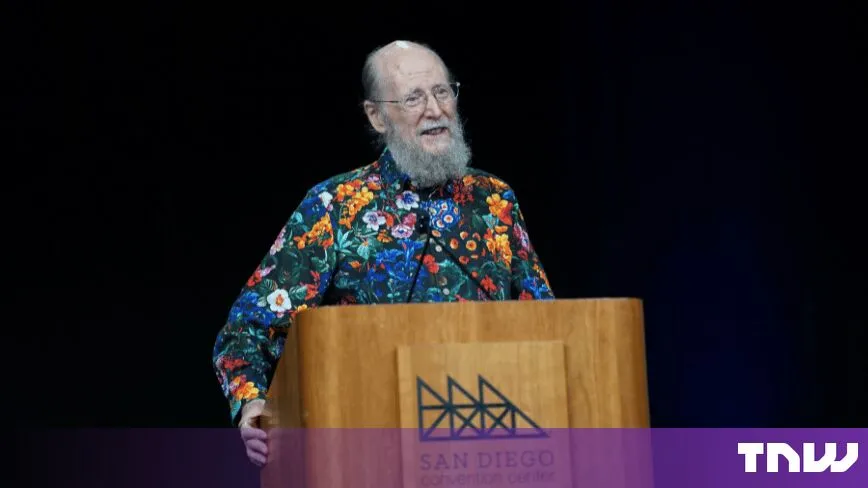
Richard Sutton, the Turing Award-winning co-creator of reinforcement learning, says the AI industry’s reliance on synthetic data is “a big mistake.” He argues that true intelligence comes from experiential learning AI: agents gathering data by acting in environments, not from text generated by another model. For builders, this challenges current data pipeline assumptions and points toward a future where continuous, environment-driven learning replaces static text corpora.
Why Sutton calls synthetic data a mistake
Sutton’s objection has two edges. First, synthetic data cannot capture the complexity of other minds or the physical world: “There’s no way we can have synthetic data for other people’s minds,” he said on Sequoia Capital’s Training Data podcast. He calls this the “big world hypothesis” - reality is always larger than any agent’s model, making any simulation a lossy compression by definition. Second, deciding what synthetic data to generate reintroduces human judgment into the process, exactly what his 2019 essay The Bitter Lesson warned against. Instead, he advocates for experiential data gathered by agents acting in their environment, as laid out in his April 2025 paper with David Silver, “Welcome to the Era of Experience.”
Why his voice matters now
Sutton’s critique lands when the industry is running out of human text. Epoch AI projects the stock of public text, around 300 trillion tokens, will be exhausted between 2026 and 2032. Major labs have already switched to synthetic data at scale: Microsoft’s Phi-4 trained on roughly 400 billion synthetic tokens across 50 datasets, and Nvidia released a 10-trillion-token synthetic corpus for its Nemotron models. Sutton acknowledges these efforts but stresses his objection is about modeling humans and physical systems, not about math and code, where synthetic data with checkable answers works fine.
What this means for builders
If Sutton is right, then data strategy for AI products needs a rethink. Instead of curating large text corpora or generating synthetic examples, teams should invest in agent-environment interfaces that produce high-signal experience data. That means building continuous learning loops rather than one-shot training runs. The economics also shift: experiential data may reduce the need for massive pre-training compute if agents can learn efficiently from interaction. But this path is early. Sutton’s own lab, co-founded with Khurram Javed, aims for a trillion-parameter mind that learns continuously on 20 watts within five to ten years - an aspirational projection, not a near-term product.
Caveats and counterarguments
Not everyone agrees. Andrej Karpathy has argued that language models are “ghosts distilled from human writing” and that fine-tuning on text is a legitimate path. Research on model collapse is mixed: Shumailov et al. found that models trained on their own output degrade, but Gerstgrasser and Schaeffer et al. showed the effect disappears when synthetic and human data accumulate together. Sutton’s vision also depends on breakthroughs in agent design and energy efficiency that have not yet materialized.
For now, builders can take the argument as a signal to diversify data sources and explore environment-based evaluation. The industry will likely continue using synthetic data for cost reasons, but knowing its limits matters for long-term product design.
Sources
- A Turing Award winner says the industry’s fix for running out of data is ‘a big mistake’
- A Turing Award winner says the industry’s fix for running out ...
- Turing Award Winner Richard Sutton: AI Has Entered the ...
- AI Is Running Out Of Data. Your Business Ran Out Years Ago
- Turing Award Winner Richard Sutton: AI Enters the 'Era of ...
- Using synthetic data for AI training is 'a big mistake,' says ...
- Turing Award Winner Richard Sutton Shares at the Bund ...
- The “Godfather of AI — Yoshua Bengio” Just Gave Us... | Medium
- Turing Award Winner: Disagreeing with Google, Postgres... - YouTube
- Turing Award Winner: "I May No Longer Recommend Studying..."
- A Turing Award Winner Just Described Our Exact Workflow — Pane