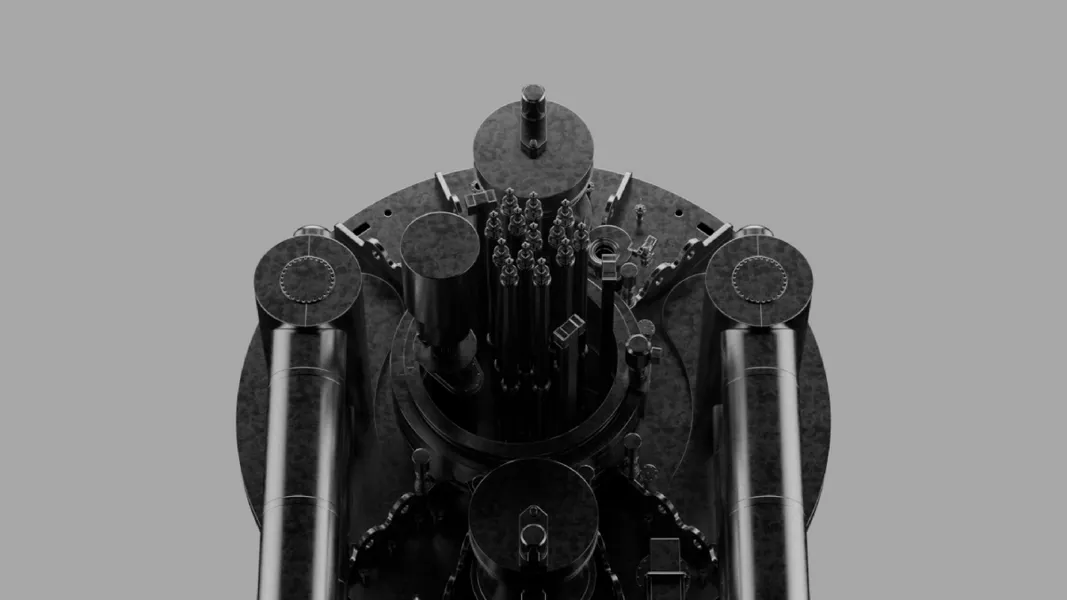
TerraPower Natrium reactor aims to power AI data centers with built-in energy storage
Published by AINave Editorial • Reviewed by Ramit
TerraPower, the Bill Gates-founded nuclear company, is positioning its Natrium reactor as a solution for AI data center power, and the key differentiator is not the reactor itself but the molten sodium energy storage built into the design. Instead of ramping the reactor up and down to match GPU load swings, TerraPower stores excess heat in a giant vat of molten sodium and taps it when demand spikes. This approach could give AI builders a more reliable, low-carbon power source that matches the intermittent nature of AI workloads.
The Natrium reactor's secret: molten sodium storage
Nuclear reactors have the highest capacity factor of any power plant type, operating at maximum output about 92.5% of the time in the U.S.. But they are slow to ramp up and down, with existing reactors changing only about 5% of rated output per minute. That is a problem for AI data centers, where GPU loads can swing rapidly during training and inference. TerraPower's 345-megawatt Natrium reactor solves this by keeping the reactor running at full power and storing the extra heat in molten sodium. When power demand spikes, the plant draws on that thermal reservoir to generate more steam and boost electricity output without changing reactor output. The expensive reactor equipment keeps running at peak utilization, improving capital amortization.
What TerraPower announced and who is buying
TerraPower plans to announce its first data center project this year, with a second Natrium plant expected to break ground in 2027. The company's first plant is already under construction in Wyoming. In January 2026, Meta agreed to buy eight Natrium plants, signaling strong customer interest. TerraPower also signed a memorandum of understanding with Sabey Data Centers to explore using Natrium plants for their data center operations. The customer for the first data center project has not been disclosed.
Why this matters for AI data center operators
For AI builders, the practical implication is a power source that can handle the variable load of GPU clusters without requiring large battery banks or relying on natural gas peaker plants, which have been breaking under the stress of AI workload swings. The integrated storage allows the plant to deliver power on demand while the reactor runs at steady state. This could reduce the complexity and cost of behind-the-meter power for AI data centers. The high capacity factor also means more predictable power availability for training runs that can last days or weeks.
The practical trade-offs and open questions
Mass manufacturing of small modular reactors (SMRs) could eventually lower upfront capital costs, but real-world cost reductions remain unproven and could take a decade or more. Early plants will be expensive, and regulatory approval timelines are uncertain. TerraPower's design is still under development, and the first data center project is not expected until 2027 at the earliest. The company is also exploring expansion in the UK and South Korea, but those are longer-term opportunities. For now, the Natrium approach is a promising concept that addresses a real pain point for AI infrastructure, but builders should watch for actual deployment costs and timelines before making power procurement decisions.
FAQs
Sources
- TerraPower’s nuclear reactor has a secret weapon for powering AI data centers
- TerraPower's nuclear reactor has a secret weapon for powering AI data ...
- TerraPower's Secret Weapon: How Its Natrium Reactor Will Power the AI ...
- TerraPower's nuclear reactor offers a strategic edge for AI data center ...
- TerraPower and Sabey Data Centers Developing Strategic Collaboration ...
- TerraPower’s nuclear reactor has a secret weapon for powering AI data centers
- Tech giants have locked up 9.8 gigawatts of nuclear power to feed AI data centers
- Is TerraPower the next Oklo? Inside Bill Gates' nuclear bet.
- Nuclear microreactor clears criticality: Crusoe plans AI factory data center test
- The AI Hunger Games: Why Data Centers and Nuclear Energy Are the Ultimate Power Couple | by James Soldinger | Medium
- Why AI Data Centers Are Turning to Nuclear Power - VKTR
- SMRs Power AI: $10B Nuclear Data Center Revolution | Introl Blog
- Nvidia goes nuclear — company joins Bill Gates in backing TerraPower, a company building nuclear reactors for powering data centers | Tom's Hardware
- TerraPower advances SMR commercialization with US approval
- TerraPower - Wikipedia