Google Gemini expands student-focused tools with integrated study workflows and AI-assisted research
Published by AINave Editorial • Reviewed by Ramit
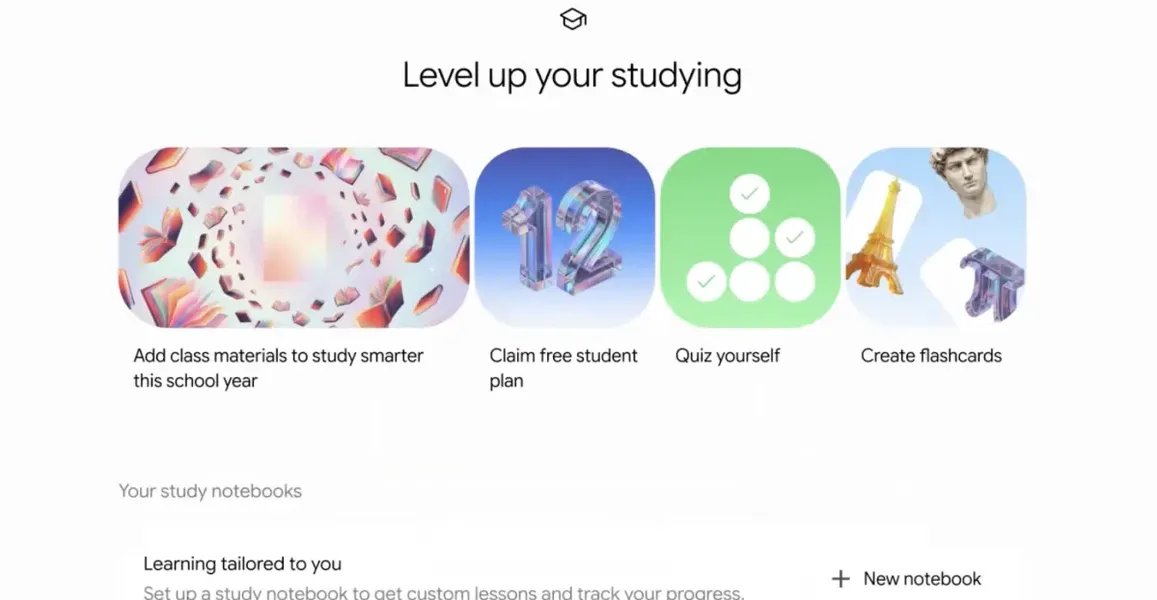
Google rolled out a dedicated Gemini student hub that brings study notebooks, flashcards, practice quizzes, and calendar sync into a single AI-powered workspace. For AI builders, this is a clear signal that platforms are moving beyond chat toward structured, cross-app study and research workflows.
Study notebooks, flashcards, and syllabus-to-calendar sync
The hub acts as a one-stop repository for collecting research, creating flashcards, and taking practice quizzes. It now supports graphs and images inside study notebooks, and it can automatically read a syllabus to add test dates and deadlines to Google Calendar. This bridges the gap between raw AI chat and the structured tools students actually use.
Deep Research lands in Gemini Live
Google is also folding Deep Research into Gemini Live. You can ask Gemini to generate long-form research reports and talk through the results. If the report takes time, you can close the chat and lock your phone; Gemini will notify you when it's ready. That's a practical improvement for asynchronous research workflows.
Lens gets study-time superpowers
In the coming weeks, Gemini Lens in the Google mobile app will let you take a photo of a study worksheet or problem and get explanations, concept breakdowns, or coaching on mistakes. This turns the camera into an interactive tutor.
Free Pro tier for US students, AI Plus for everyone else
Eligible US students can get one year of Google AI Pro for free, which includes 5TB of storage, Google Health Premium, higher Gemini usage limits, and access across Google apps. For international students, Google AI Plus offers 400GB of storage and lower Gemini usage limits. This pricing strategy locks in students early while giving Google a structured upsell path.
What this means for AI builders
The updates show how AI platforms are evolving from simple chat interfaces to integrated learning environments with notebooks, media support, calendar sync, and long-form research generation. Developers building educational AI tools should watch this as a template: demand for rich-media study notebooks, syllabus-aware scheduling, and persistent research agents will grow. The tighter the integration across apps, the harder it is for a competitor to replicate the full workflow.
Caveats to keep in mind
All details come from a single announcement, and exact rollout timelines, feature completeness across regions, and the quality of the research reports are not yet clear. The hub's capabilities may differ at launch. The free Pro tier applies only to eligible US students; international users get a less generous plan without 5TB storage or Health Premium.