AI agents enter the smartphone: China's NaviX and peers push toward agentic devices
Published by AINave Editorial • Reviewed by Ramit
Chinese smartphone makers are moving beyond isolated AI features to embed autonomous agents at the operating system level. ZTE's NaviX Ultra AI smartphone, running ByteDance's Doubao agent, sold out its initial 30,000 units within hours at the World AI Conference in Shanghai. StepFun and Honor unveiled similar agentic devices, signaling a shift in how AI is integrated into mobile hardware.
What happened
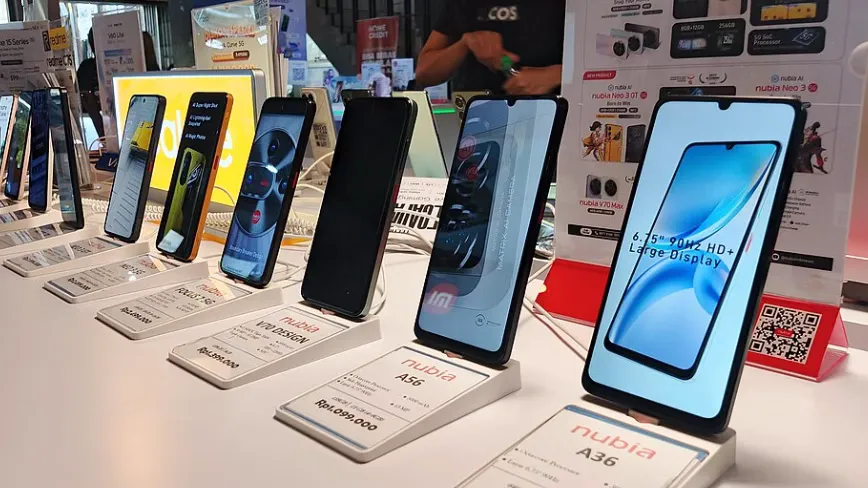
ZTE showcased the NaviX Ultra under its Nubia brand at WAIC, calling it the world's first agentic AI smartphone. The device runs ByteDance's Doubao AI agent and can be activated by voice or a dedicated hardware button. It comes in four colors, was prototyped in December, and priced at 3,499 yuan ($516). The initial batch of 30,000 units sold out quickly, and used prices doubled on secondary markets.
ZTE was not alone. StepFun unveiled a device with a proprietary operating system and a built-in agent called Amoo. Honor showcased an AI agent co-developed with Alibaba that will ship on new devices later this year. The common approach: build an agentic layer into the operating system that lets AI execute tasks autonomously across apps, rather than bolting isolated AI features onto an existing interface. Nubia chief Ni Fei said, "Many so-called AI phones on the market simply stack AI functions on top of an existing system. That actually makes it more cumbersome for users."
The timing aligns with market pressure. China's smartphone shipments have fallen for five consecutive quarters as the memory crisis pushed component costs up and consumer demand down. IDC expects the global smartphone market to post its steepest annual decline on record in 2026. IDC's Arthur Guo said more than half of China's smartphone market could be dominated by AI devices this year.
Why AI builders should care
This shift from adding AI features to embedding autonomous agents at the OS level has practical implications for anyone building AI products or services. An agentic layer that can execute tasks across apps reduces user friction and changes the surface area for AI interaction. Instead of users opening a separate chat interface or app, the agent becomes a system-level assistant that can book flights, edit photos, or manage workflows across multiple services.
For builders, this means the device OS itself becomes a potential distribution channel for agent capabilities. The competition also deepens with Apple, which received Beijing's approval to roll out Apple Intelligence in China through partnerships with Alibaba and Baidu. Ni Fei claimed on Weibo in June that "In terms of AI smart devices, we are ahead of Apple."
Practical implications
If agentic AI phones gain traction, developers may need to design for on-device autonomous agents that can orchestrate workflows across apps. This could mean exposing APIs for agent actions, optimizing for voice-first or button-activated interactions, and considering how agentic OS layers affect traditional app discovery and usage patterns.
The partnerships with Alibaba and Baidu for Apple Intelligence, and the use of ByteDance's Doubao on ZTE's device, show that large AI platform holders are already positioning themselves as the agent layer for smartphone makers. Builders targeting Chinese markets should track which agent frameworks gain device-level integration and how they control access to user data and app actions.
Caveats
Details on specific models and features are based on vendor announcements and early demonstrations at WAIC. Official specs, real-world performance, and consumer adoption remain unproven. The market trajectory for agentic AI smartphones depends on whether these autonomous agents are compelling enough to drive device upgrades in a declining market. The question of whether an agent that books flights and edits photos is enough to make people replace a device they already own remains open.
FAQs
Sources
- China is rebuilding the smartphone around AI agents. ZTE’s NaviX sold out in hours.
- China Rebuilds Smartphones Around AI Agents; ZTE NaviX Sells...
- Tech companies in China introduce AI agent smartphones - Overview
- China Reinvents the Smartphone Era with Agentic AI as ZTE NaviX...
- ZTE Unveils NaviX Ultra, Its Take on the Agentic AI Phone
- China bets big on agentic AI smartphones. What are they and could they challenge Apple?
- Nubia announces AI agent smartphone with on-device AI processing
- China is rebuilding the smartphone around AI agents. ZTE’s NaviX...
- Google News - Nubia NaviX Ultra AI agent smartphone - Overview
- Your AI Agent Shouldn’t Be Able to Delete the Database - YouTube
- ZTE’s AI phone sells out as China rebuilds the smartphone
- China Joins Rush to Rethink the Smartphone for the AI Era
- China bets big on agentic AI smartphones. What are they and could they challenge Apple?
- Nubia announces AI agent smartphone with on-device AI processing