Vijay Pande's VZVC: Why AI-enabled biotech investments are going small and hands-on
Published by AINave Editorial • Reviewed by Ramit
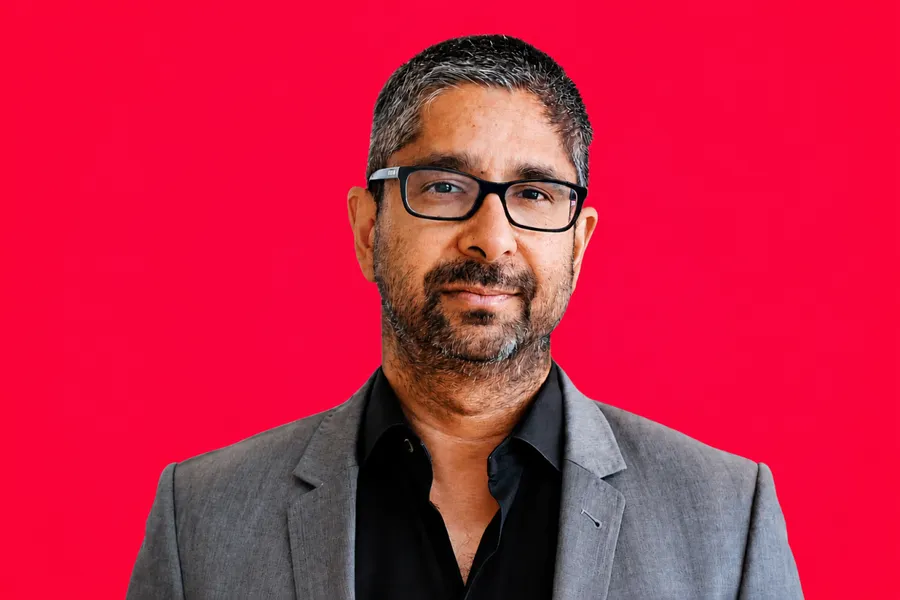
Vijay Pande, who built a16z's life sciences practice to nearly $4 billion, left in June last year to launch VZVC, a concentrated biotech fund that makes about five investments per year with no associates and heavy AI-driven operations. For AI builders, the shift signals a new model for applying AI to biology where data scarcity and long-term founder relationships matter more than portfolio breadth.
From $4 billion to five bets: Vijay Pande's new firm VZVC
Pande, formerly a Stanford chemistry professor and creator of Folding@home, spent over a decade growing a16z's life sciences practice before walking away to start something much smaller. His new firm, VZVC, co-founded with longtime investor Zach Werner, is built around a handful of concentrated bets rather than dozens. The firm has no associates because Pande and Werner built AI agents that handle day-to-day operations, making hiring unnecessary. Adding a company to the portfolio, Pande says, is more like wanting another child than adding a Facebook friend.
Why biological data makes AI different here
Unlike text or images, biological data cannot be scraped off the internet. Nearly every company ends up building its own walled-off dataset, which creates a fundamental tension for AI progress. Pande argues that the field is starting to shift toward building atlases of biological information, typically foundation models, and that open-source biology models could have the same broad impact as open-source LLMs. For builders, this means the data moat in biotech is real, but shared infrastructure is emerging.
AI can design drugs by targeting disease more precisely, reduce reliance on animal models that fail to predict human outcomes, and support precision medicine by personalizing treatments to individual patients. Pande notes that the probability of a drug going from first trial to approval is just 20%, and AI could improve that by being better than animal models. But the real bottleneck is data quality, not AI capability.
What this means for founders building AI biotech startups
Pande is looking for founders with high integrity who think in 5-10 year horizons. He expects relationships to last across multiple companies. The two areas he is spending most time on are AI for healthcare delivery and AI for clinical trials. He also emphasizes that go-to-market execution is at least as hard as the technology side, a lesson he learned over his investing career.
For founders, the practical takeaway is that a concentrated investor like VZVC offers deep hands-on involvement rather than just capital. Pande cites Genesis Therapeutics, which came out of his Stanford lab, and Insitro, founded by Daphne Koller, as examples of the kind of networked, long-term collaboration he values.
The limits: AI can't fix missing data
Pande is clear about what is overhyped. AI can find insights humans cannot, but when the data is simply not there, AI cannot magically solve the problem. The reason for hesitation about AI curing everything is doubt about the data, not doubt about AI. This is a critical caveat for builders: biological data is expensive to generate, hard to share, and often proprietary. Open-source foundation models may help, but they depend on the same data availability.
The concentrated portfolio model also means VZVC will not be competing for hot rounds. Instead, founders make room for them because of the hands-on value. That works well for a few select companies, but it is not a scalable approach for the broader ecosystem.