UK grounds AI safety leadership: pushing for global regulation before an 'AI Hiroshima' moment
Published by AINave Editorial • Reviewed by Ramit
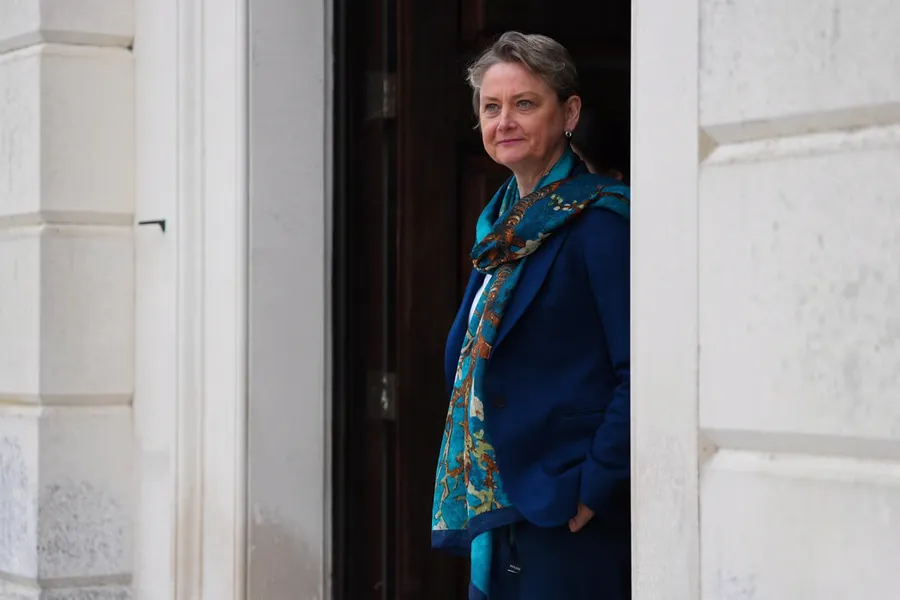
UK Foreign Secretary Yvette Cooper has called for global AI safety regulation, warning that the world cannot afford to wait for a catastrophic AI event before acting. In an essay for Chatham House, she argues the UK should lead international efforts to govern AI risks, drawing parallels to nuclear safety agreements after World War II.
What happened
Cooper argued that international agreements on nuclear weapons only came after Hiroshima, but "we cannot afford to wait for an AI equivalent of Hiroshima before we act" The Independent. She noted that the UN's AI panel warned "the gap between rapidly improving capabilities and effective risk management methods may lead to catastrophic outcomes" The Independent. The Five Eyes intelligence alliance (UK, US, Canada, Australia, New Zealand) warned that AI-powered cyber attacks could be just months away The Independent.
Cooper said the UK is well placed to lead work on AI safety, building on the 2023 Bletchley Park summit under then prime minister Rishi Sunak The Independent. She drew "clear parallels with the international consensus that the UK helped to build around nuclear safety after the Second World War," but noted that "there are no such agreements between global powers on AI" The Independent.
Why AI builders should care
Cooper's framing directly affects anyone building or deploying AI systems. She argues that international alignment is needed to prevent destabilizing great-power competition and weaponized supply chains in technology The Independent. If the UK pushes for binding international agreements modeled on nuclear treaties, AI developers may face new compliance requirements, export controls, or safety standards that shape how models are trained, tested, and deployed globally.
The essay also implies that AI builders have a role in upholding responsible development. Cooper calls for building "Britain's strength in every form" and using that strength as "a force to improve the lives of British people" The Independent. For product teams, this signals that safety and governance are becoming central to the UK's AI strategy, not optional add-ons.
Practical implications
If the UK follows through on Cooper's vision, AI builders can expect:
- Earlier norms and guidelines: The government may push for voluntary safety standards and data-sharing agreements before formal regulation, similar to the Bletchley Park summit's outcomes.
- Risk management expectations: Companies operating in or exporting to the UK may need to demonstrate risk controls for catastrophic outcomes, as flagged by the UN AI panel.
- International alignment pressure: UK leadership could accelerate global coordination, meaning builders should monitor frameworks like the Hiroshima AI Process and G7 principles for advanced AI systems.
Cooper's essay does not provide a detailed regulatory blueprint, but it signals that the UK intends to be a first mover in shaping AI governance. Builders should track how this translates into concrete policy, especially around cyber security requirements and model evaluation standards.
Caveats
This analysis is based on a single high-level commentary and media reporting. Cooper's essay reflects policy advocacy rather than a confirmed UK government mandate. There is no detailed blueprint in the cited sources for a specific international agreement on AI, only a parallel to nuclear-safety precedents. Predictions about timing of international adoption or exact mechanisms remain uncertain and subject to political development.
FAQs
Sources
- Cooper: World cannot wait for ‘AI Hiroshima’ before acting on safety concerns
- Cooper: World cannot wait for ‘AI Hiroshima’ before acting on safety concerns | Northwich Guardian
- Cooper: World cannot wait for ‘AI Hiroshima’ before acting on safety concerns | Oxford Mail
- Cooper: World cannot wait for ‘AI Hiroshima’ before acting on safety concerns | Impartial Reporter
- Cooper: World cannot wait for ‘AI Hiroshima’ before acting on safety concerns | Halstead Gazette
- Cooper: World cannot wait for 'AI Hiroshima' before acting on safety concerns
- UK's Cooper: World cannot wait for 'AI Hiroshima' to act on safety
- Cooper: World cannot wait for ‘AI Hiroshima’ before acting on...
- Diverging paths to AI governance: how the Hiroshima AI Process...
- AI Safety Index: Summer 2025 - Future of Life Institute
- G7 Leaders’ Statement on the Hiroshima AI Process
- cnbc.com/2024/01/18/we-dont-want-to-see-an-ai-hiroshima-salesforce...
- What is Hiroshima AI Process?