Hermes MoA 2.0: Multi-Model Ensembles That Beat Individual Frontier Models
Published by AINave Editorial • Reviewed by Ramit
Nous Research has released Hermes Mixture of Agents 2.0 (MoA 2.0), an update to its open-source Hermes Agent framework that lets you combine multiple AI models into a single system. The company claims the ensemble outperforms today's strongest publicly available models, including Claude Opus 4.8 and GPT-5.5, without needing access to any single restricted frontier model. For AI builders, this means higher-quality outputs for critical tasks, but with significantly higher token costs and transparency caveats.
What happened
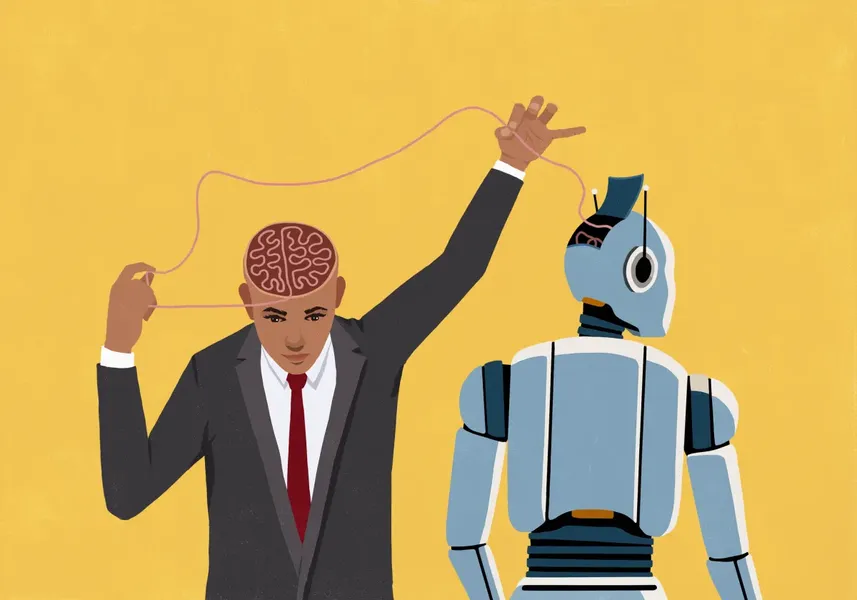
MoA is not a new model but a multi-model architecture. You configure a preset made of one or more "reference models" plus a single "aggregator." Each reference model analyzes the request independently, then the aggregator reads all outputs, synthesizes a final answer, and handles any tool calls.
The main change in MoA 2.0 is that each named preset now appears as a selectable "virtual model" in the model picker, listed right alongside Claude, GPT and Grok, across the CLI, the desktop client, and gateways like Telegram and Discord. A /moa [prompt] command also allows a single one-shot call that reverts to your normal model afterward.
Nous points to internal HermesBench results showing a default preset using GPT-5.5 and DeepSeek as reference models with Claude Opus 4.8 as the aggregator scoring 0.8202, versus 0.7607 for Opus 4.8 alone and 0.7412 for GPT-5.5 alone. That is roughly 8% above Opus and 11% above GPT-5.5.
Why AI builders should care
The ensemble approach can produce higher-quality answers by pooling several models' strengths, and it reduces dependence on any single provider. This matters as top models face access restrictions and rising costs. As Nous Research wrote, "the strongest models are access-restricted, available to only a few," positioning MoA 2.0 as an alternative: rather than depend on a single restricted super-model, assemble the accessible ones into a system that outperforms them.
Practical implications
Several design choices matter for deployment:
- Prompt caching is preserved by appending reference outputs to the end of the latest user turn rather than inserting them mid-history, keeping a stable context prefix hitting the cache and holding down cost.
- Nested MoA is banned: an aggregator cannot itself be another preset, which blocks runaway recursive mixing and the cost and debugging headaches that come with it.
- Reasoning is transparent, with each reference model's full output shown as its own labeled block before the aggregator streams the final answer.
- Full tool access is reserved for the aggregator, while reference models receive a simplified conversation stripped of system prompts and tool history, reducing cost and avoiding provider-level refusals from stricter services.
MoA 2.0 shipped as a core feature of Hermes Agent v0.17.0 on June 19 and was refined in the July 1 "Judgment Release," v0.18.0, with improved trace persistence and security hardening.
Caveats
| Caveat | Detail |
|---|---|
| Internal benchmarks | HermesBench is not yet public. These are Nous Research's internal results, and a complete public leaderboard is still in preparation. |
| Cost | Each call multiplies token usage by roughly the number of reference models. Nous recommends reserving MoA for "the 10% of tasks that most need quality." |
| Export-control caveats | The article notes ongoing public leaderboard ambitions and export-control caveats; use of multiple models may require awareness of policy constraints. |
FAQs
What is Hermes MoA 2.0 and how does it work?
Hermes MoA 2.0 is an update to Hermes Agent that allows multiple AI models (reference models) to analyze a request independently, with a single aggregator synthesizing a final answer. Presets appear as selectable virtual models in model pickers across CLI, desktop, and gateways, enabling easy use.
How does Hermes MoA 2.0 combine GPT, Claude, and DeepSeek?
A preset uses one or more reference models, each analyzing the request, with an aggregator synthesizing results and handling tool calls. The model path is exposed as a virtual model in interfaces like CLI and gateway clients; the /moa prompt enables a one-shot ensemble use.
What are the performance implications of using an ensemble versus a single model?
Internal HermesBench results show improved scores for ensembles versus single models, but the benchmark is not public and results may not generalize across tasks. Token usage scales with the number of reference models, increasing cost; MoA is recommended for the most quality-sensitive tasks.
What are the potential cost impacts of running multi-model ensembles?
Each call roughly multiplies token usage by the number of reference models, making MoA more expensive than a single model. Costs are expected to fall as open-source combinations improve, but current guidance is to reserve MoA for the few high-quality tasks.