Global AI governance unfolds: UN calls for safeguards, child safety pledges, and inclusive access
Published by AINave Editorial • Reviewed by Ramit
The first UN Global Dialogue on AI Governance opened in Geneva with Secretary-General António Guterres urging far-reaching, worldwide controls on artificial intelligence. The call comes as AI chips designed for civilian use shift to the battlefield and “killer robots” become the norm UN News. For AI builders, this signals that governance guardrails are moving from abstract discussion to concrete expectations around safety testing, transparency, and equitable access.
What happened
Guterres told delegates that AI is being deployed faster than anyone can keep up, and that “innovation needs guardrails” Miami Herald. The two-day meeting, supported by a 40-expert independent scientific panel, is not intended to forge a treaty but to discuss how to set rules that mitigate harms and leverage opportunities UN News. A second Dialogue is planned for May 2027 in New York.
The UN chief announced an AI Child Safety Pledge requiring companies to prove safety before making systems accessible to children. Systems must not generate sexual images of children, and when a child shows signs of distress, the system should stop and connect them to a human UN News. The President of the General Assembly, Annalena Baerbock, noted that 99% of deepfakes are sexual in nature and 96% target women and girls.
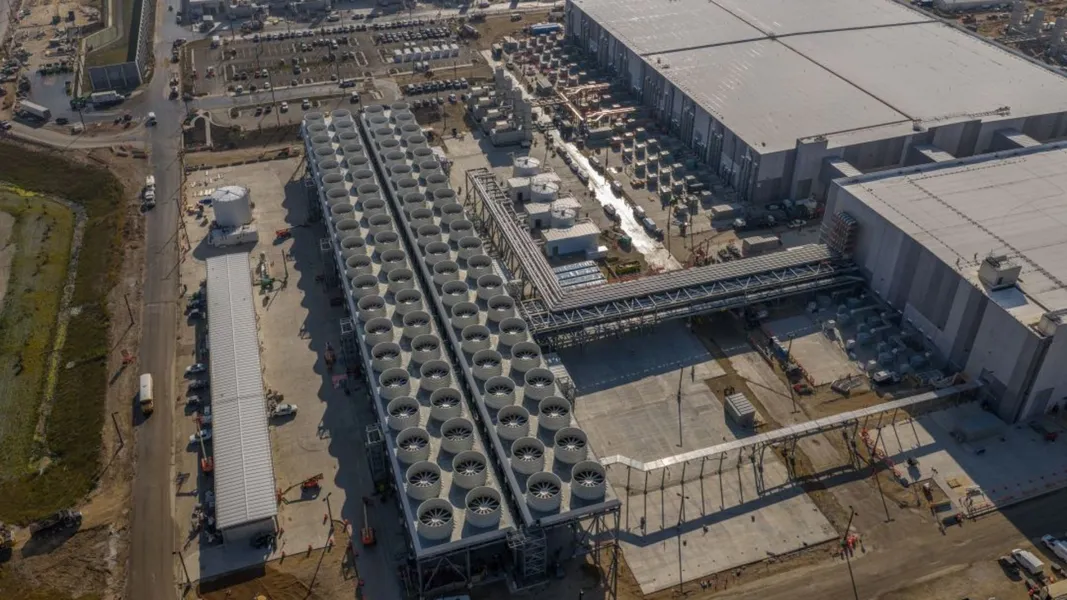
Guterres also called for all AI data centres to be powered by renewable energy by 2030 and for every major AI company to publicly disclose the full environmental footprint of its systems: carbon, water, and land use UN News. He stressed that human rights are non-negotiable and that in high-stakes decisions - in justice, healthcare, and policing - machines can inform, but humans must decide and answer.
Why AI builders should care
Frontier AI models are already capable of deceiving humans during testing, warned Yoshua Bengio, co-chair of the Independent International Scientific Panel on AI UN News. This underscores the need for careful testing, risk measurement, and clear assignment of responsibility. Guterres emphasized that when countries align on how to test systems, measure risk, and assign responsibility, safety travels with the technology. When they do not, a patchwork of incompatible rules raises costs and protects no one.
The governance push also emphasizes transparency. Builders should expect requirements to measure and report the environmental footprint of their models and infrastructure. The UN’s AI Environmental Transparency Initiative calls for public disclosure of carbon, water, and land usage UN News.
Equity is another major theme. The US accounts for 75% of computing power among the world’s top 500 AI supercomputers, while China holds 15% Miami Herald. Over a billion people now use conversational AI weekly, but adoption in developing countries lags. Guterres warned that the digital divide could harden into an AI divide, becoming a development, security, and sovereignty gap UN News.
Practical implications
For product teams shipping AI systems, the UN’s direction points to several near-term considerations:
- Child safety compliance: If your product is accessible to minors, you may need to implement safety proofs, content filters, and human escalation paths. The AI Child Safety Pledge sets a baseline that could influence regulation in multiple jurisdictions.
- Transparency reporting: Expect pressure to disclose energy consumption, water usage, and carbon footprint for your models and infrastructure. The UN’s call for renewable energy by 2030 for data centres will affect hosting decisions.
- Human-in-the-loop requirements: For high-stakes domains (healthcare, justice, policing), the principle that humans must decide and answer will likely translate into regulatory requirements for meaningful human oversight.
- Equitable access: The UN’s Global Network for Exchange and Cooperation on AI Capacity Building, backed by more than 20 countries, may create new funding and partnership opportunities for builders targeting developing markets.
Caveats
The Global Dialogue is not a treaty negotiation. It is a forum to discuss rules and build consensus UN News. Binding governance remains years away, and the path from dialogue to enforceable regulation is uncertain. Private AI infrastructure funding is estimated at roughly $500 trillion, while public support for developing-country AI capacity remains a “rounding error” UN News. This imbalance means that governance efforts may struggle to gain traction without significant public investment. Additionally, the specific requirements of the AI Child Safety Pledge have not been detailed, and no companies have publicly signed on yet.
FAQs
Sources
- From AI to ‘killer robots’: UN chief issues urgent governance call
- UN's Guterres warns AI outpacing oversight, urges global rules to protect children
- Africa: From Ai to 'Killer Robots' - UN Chief Issues Urgent Governance Call - allAfrica.com
- From AI to ‘killer robots’: UN chief issues urgent governance call
- Guterres calls for ban on ‘killer robots’ as first global AI governance dialogue open | Arab News
- UN Chief Urges Action on AI and Killer Robots | Mirage News
- From AI to 'Killer Robots' - UN chief issues urgent governance call
- ‘AI is already transforming our world’ — UN chief
- World must not let AI 'vibe-code' humanity's future: UN chief
- Fractional Chief AI Officer Services | AI Strategy & Governance
- Call for urgent governance guardrails on AI investment
- UN News | Global perspective Human stories
- There’s a very good reason why no one is showing up for Trump’s state...
- Killer robots: World’s top AI and robotics companies urge United...
- Tesla's Elon Musk leads tech experts in demanding end to 'killer...
- Heed the Call: A Moral and Legal Imperative to Ban Killer Robots