How AI Is Reshaping Admin Work: When Tools Augment, Not Replace, Executive Support
Published by AINave Editorial • Reviewed by Ramit
Oana Manolache, the founder and CEO of Sequel.io, made headlines last year with a stark LinkedIn post: "I will fire anyone who doesn’t use AI." But as AI tools reshape administrative work, even she admits the technology cannot replace her executive assistant Stephanie Martinez.
This tension between AI-driven efficiency and the irreplaceable human elements of admin work defines the state of the profession. For AI builders, the shift signals growing demand for reliable, governance-friendly tools that augment human judgment rather than automate roles entirely.
What happened
The administrative assistant and secretary profession has been declining for decades. In 2004, about 3.5 million people worked in the role, nearly 97% of them women. By 2024, that number fell to 2.1 million, despite overall workforce growth. The U.S. Bureau of Labor Statistics projects a continued overall decline in office and admin occupations through 2034, with only medical secretaries and administrative assistants expected to grow by 4% due to healthcare industry expansion according to BLS economist Emily Rolen.
At the same time, AI tools have begun to automate core admin tasks. Deanna Danger, an executive assistant at Vanderbilt University, reported that using Copilot and ChatGPT for meeting notes reduced what used to take hours to under five minutes freeing her to participate in meetings rather than transcribe them.
Why AI builders should care
The AI for executive assistants market is maturing quickly. Builders need to understand several dynamics:
- Demand for AI training is surging. Fiona Young, founder of Carve and a former EA who has delivered AI training at Google, Amazon, Uber, Salesforce, and LinkedIn, reports a massive shift in demand for her services since 2023 as employers want staff using AI as an integral part of daily work.
- The augmentation model wins. Even a CEO who mandates AI use found that Martinez uses AI to free herself from note-taking so she can focus on judgment calls, stakeholder relationships, and team connectivity. This creates product opportunities for tools that preserve human agency.
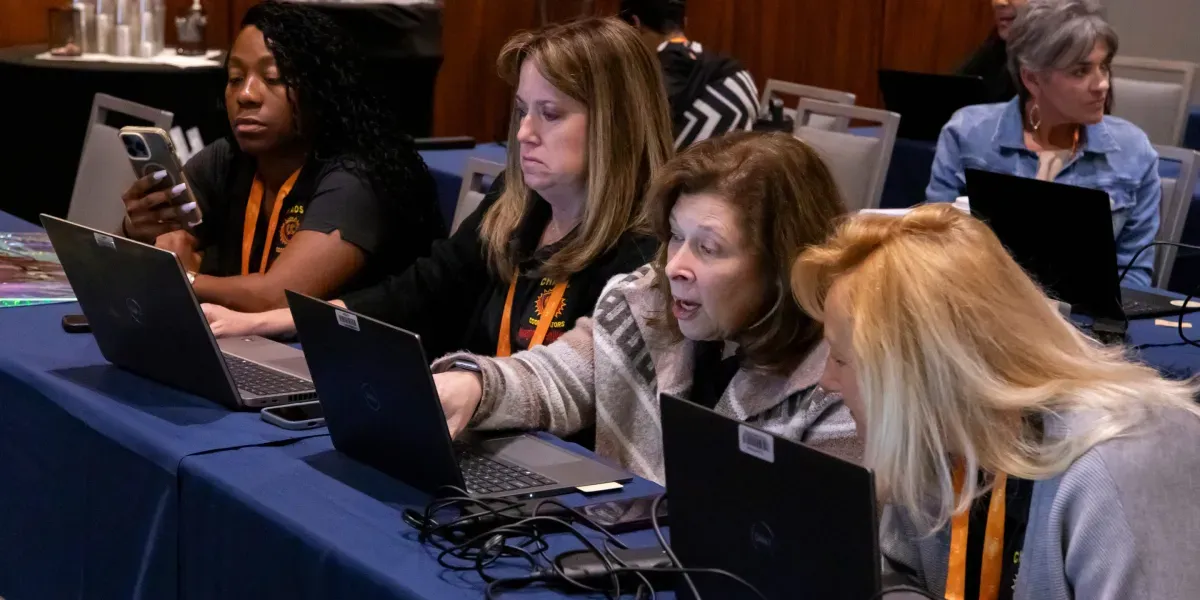
- Trust and data security are dealbreakers. Participants in an American Society of Administrative Professionals session raised concerns about data security and lack of AI regulation. Products must address governance and privacy to win adoption in admin workflows.
Practical implications
For builders shipping AI tools into admin and executive support workflows, several patterns stand out:
- Copilot and ChatGPT remain the most commonly cited tools, handling note-taking, meeting prep, and draft outreach. This suggests API-level integration opportunities for automated admin agents.
- Use cases are expanding beyond traditional tasks. Martinez, for instance, used AI to sift through all customer communications, identify good candidates for reviews, and draft outreach emails solving a business problem AI could not have identified alone.
- AI training and bandwidth are unevenly distributed. Melissa Peoples, an EA coach, observes that some admins "are crushing it" while others are told they are "not smart enough to be in the room." Products that lower the barrier to effective AI use will capture a wider user base.
Caveats
- The Brookings Institution report cited in the article warns that about 86% of 6 million clerical and administrative workers are women, and displacement risks are amplified by limited savings, advanced age, and narrow skill sets. AI adoption must account for equity concerns.
- Administrative professionals are older on average (34% are 55+) compared to the broader workforce (23%), and median pay is lower at $47,460 vs. $49,500. The transition to AI-augmented roles may require significant retraining investment.
- The unemployment rate for office and administrative support workers ticked up to 4% from 3.6% the previous June, though this remains lower than the overall unemployment rate. The long-term trend remains uncertain.
For AI builders, the lesson is clear: ship tools that augment human judgment, protect data residency and privacy, and enable admin professionals to handle higher-value work. The market is ready, but the product must earn trust.
FAQs
Sources
- The CEO who vowed to ‘fire anyone who doesn’t use AI’ admits that the technology can’t replace her executive assistant as the role evolves
- Google News - AI threat to administrative assistants - Overview
- treehugger.com/technology-4846040
- Lindy – The Ultimate AI Executive Assistant
- ‘AI will not replace humans, but only those who choose not to use the...