NVIDIA DLSS 5: What AI Builders Need to Know About Neural Rendering and the Controversy
Published by AINave Editorial • Reviewed by Ramit
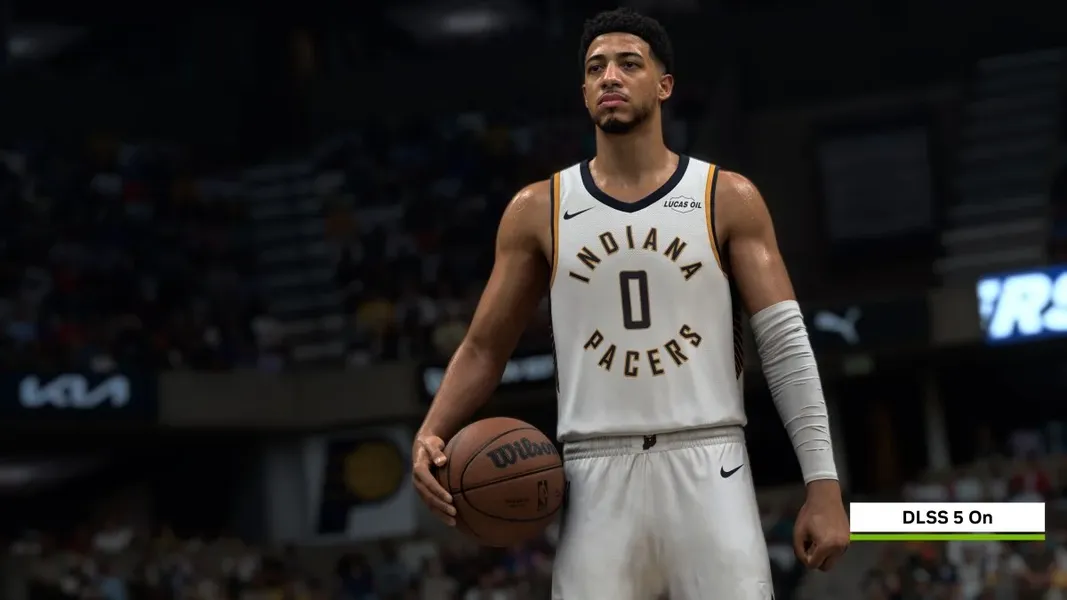
NVIDIA DLSS 5 launches on September 3 as an exclusive feature for RTX 50-series GPUs, bundled with NBA 2K27. It's the company's most ambitious AI upscaling yet, using neural rendering to repaint lighting, textures, and even character faces in real time. For AI builders and game developers, the key question is whether the performance trade-off and artistic control sliders make this a practical tool or a controversial override of traditional rendering.
What DLSS 5 Actually Does
DLSS 5 moves beyond previous versions that simply upscaled lower-resolution frames or generated in-between frames. Instead, it actively participates in the rendering pipeline, using AI to add realistic lighting and materials to scenes in real time Mashable. NVIDIA calls it 3D-Guided Neural Rendering, and it can repaint lighting, textures, and character faces on the fly NVIDIA.
Developers get sliders to control how aggressive the AI's changes are. They can choose to leave character faces untouched or only enhance background details Mashable. This is NVIDIA's answer to the criticism that AI overrides artist intent.
Performance Cost and Hardware Reality
NVIDIA estimates DLSS 5 costs 50 to 60 percent of native frame time, offset by aggressive frame generation Mashable. The company claims even a mid-range RTX 5060 can run NBA 2K27 at 1080p with ray tracing and DLSS 5 maxed out, but only with a top-tier CPU and 6x frame generation enabled. That means the GPU is inventing five out of every six frames you see rather than rendering them directly.
The hardware barrier is significant. The RTX 5090 used in NVIDIA's demos costs $2,000 new and resells for two to three times that on the secondary market due to ongoing memory shortages Mashable. Even the RTX 5060 is priced over $400. So while NVIDIA pitches DLSS 5 as making high-frame-rate ray-traced gaming reachable on mid-range cards, the mid-range itself has become much less affordable.
The Controversy: Artistic Intent vs. AI Rendering
DLSS 5 has been controversial since its first demo in Resident Evil: Requiem, where the AI-enhanced protagonist looked so different it sparked memes and criticism Mashable. Critics argue that letting an AI model reinterpret a character's face or a room's lighting overrides decisions the actual artists made. Proponents say the tech looks as good as you make it, and that bad results come from pushing sliders too far.
For builders shipping AI-powered tools, this debate highlights a familiar tension: how much control to give users versus how much to automate. NVIDIA's slider approach is a reasonable compromise, but it requires developers to invest time in tuning. If developers don't use the controls carefully, the AI can produce results that clash with the original art direction.
What This Means for AI Builders
If you're building AI rendering tools or game engines, DLSS 5 demonstrates that neural rendering is moving from upscaling to full scene reinterpretation. The performance cost is high, but the visual results in photorealistic titles like NBA 2K27 are impressive PCWorld. The key takeaway: AI can now participate in the rendering pipeline at a fundamental level, but the trade-offs in
Sources
- What is NVIDIA's DLSS 5 and why is it so controversial?
- What is NVIDIA's DLSS 5 and why is it so controversial?
- Nvidia's DLSS 5, explained - The Verge
- What is DLSS 5? Nvidia's controversial AI update explained
- What Is DLSS 5? Nvidia's Neural Rendering Technology Explained
- Nvidia's Controversial DLSS 5 Neural Rendering Tech Finally Launches On...
- NVIDIA's DLSS 5 Launches With NBA 2K27 On September 3, But There's Little Reason...
- Nvidia's controversial DLSS 5 will launch September 3 with NBA2K27, company shar...
- DLSS 5 was trained to 'preserve artistic intent'
- Nvidia says DLSS 5 is a "new level of realism" and not "AI replacing graphics"
- Nvidia’s DLSS 4.5 has a lot going on, so here’s what actually matters to gamers
- Mid-range by price, premium by ambition — the OLED gaming notebook with an RTX 5...
- NVIDIA DLSS 5 — Everything We Know So Far About NVIDIA’s ...
- DLSS 5: 3D-Guided Neural Rendering Debuts in NBA 2K27 | NVIDIA
- Nvidia’s DLSS 5 makes NBA 2K27 look incredibly real, which is kind of the problem