Mythos-like AI models emerge as Asian startups fill the export ban gap
Published by AINave Editorial • Reviewed by Ramit
Two Asian AI companies have launched models positioned to compete with Anthropic's export-restricted Mythos and Fable 5, signaling a shift in how builders access frontier AI capability amid tightening export controls.
Chinese cybersecurity firm 360 reportedly unveiled Tulongfeng, an AI tool it says can go head-to-head with Anthropic's Mythos for vulnerability discovery. Tokyo-based Sakana AI launched Fugu, a model designed to orchestrate agent usage across multiple models through their APIs. Both launches come roughly two weeks after the U.S. government ordered Anthropic to disable all global access to Mythos and Fable 5.
What happened
The U.S. Commerce Department's emergency export control order blocked foreign nationals and companies from using Anthropic's most powerful models, prompting the company to shut off access worldwide. Anthropic reported being on a historic growth trajectory, with run-rate revenue crossing $47 billion in May 2026.
Into that gap stepped two Asian AI players. 360's Tulongfeng is designed to automatically discover software vulnerabilities, and the company also launched Yitianzhen for automated cyber defense and incident response. 360 founder Zhou Hongyi described vulnerability-detection AI as a national strategic asset, warning of "one-way transparency" risks where some actors gain advanced detection capabilities while others do not.
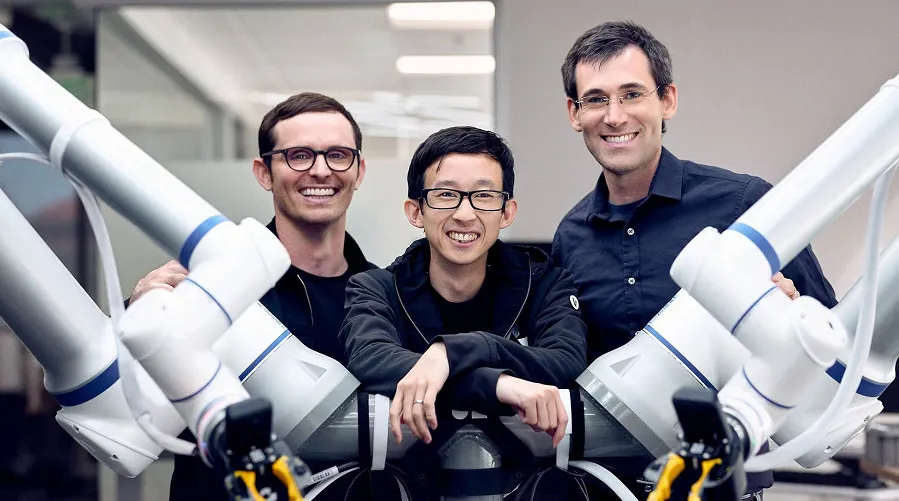
Sakana AI, co-founded by former Google researchers Ren Ito, Llion Jones, and David Ha, launched Fugu, a frontier model optimized for Japanese language and culture. The company's website advertises "delivering frontier capability without the risk of export controls". Sakana's spokesperson said the timing was coincidental but acknowledged the model fills a need created by the access restrictions.
Why AI builders should care
Fugu represents a new category: orchestration-focused frontier models. Sakana CEO David Ha described orchestration models as the next frontier, beyond bigger models. The model is designed to coordinate agent usage across many models via APIs, reducing reliance on any single provider. Ha argued that relying on a single provider for national infrastructure poses a risk that export controls made impossible to ignore. "Access to top models can disappear overnight," he wrote.
For AI builders, product teams, and developers, this signals a practical shift. The era of assuming universal access to frontier models is over. Multi-model orchestration is no longer just an optimization play; it is becoming a resilience requirement. Building agents that can route between providers and models based on policy, geography, and cost is now a core architectural consideration.
Practical implications
- Regional model alternatives with language-specific optimization, as seen with Sakana's Japanese-language focus, may offer better performance for local use cases than general-purpose U.S. models, even setting aside access restrictions.
- Orchestration layers that abstract away provider access are becoming as important as model capability. The ability to dynamically switch between models without rewriting agent logic matters for production reliability.
- The export ban creates a natural experiment in AI diversification. Builders in non-U.S. markets now have direct incentives to evaluate local alternatives.
- Anthropic's strong revenue growth ($47 billion run-rate) suggests deep enterprise adoption. If export controls remain, some of that revenue base may shift to Asian alternatives over time.
Caveats
Claims about model capabilities are based on company statements and press coverage, not independent verification. 360 and Sakana have positioned their products as competitive with Mythos and Fable 5, but no benchmarks or third-party evaluations are provided in the source material. The actual capability gap, if any, between these Mythos-like AI models and Anthropic's banned models is unknown.
Sakana itself noted that U.S. models remain important to Asia, characterizing the moment as one of diversification rather than permanent realignment. The spokesperson described the current situation as a response to export controls, not a permanent shift.
The policy situation remains fluid. Changes in U.S. export rules could alter the competitive landscape quickly. Builders should treat this as a signal to build flexible, multi-provider architectures rather than as a definitive shift in which models lead.
Finally, the impact on enterprise users. The export ban applies to Anthropic's top-tier models only. Claude 4 and other lower-tier models remain available globally. For many AI builders, those alternatives may be sufficient for production use cases.
FAQs
Sources
- Asian AI startups launch Mythos-like models as Anthropic’s export ban drags on
- Asian AI startups launch Mythos-like models as Anthropic's export ban ...
- Asian AI startups launch Mythos-like models as Anthropic's export ban ...
- Asian AI startups launch Mythos-like models as... - daily.dev
- Asian AI startups launch Mythos-like models as Anthropic's export ban ...
- Anthropic Opens Its Seoul Office Even as a US Export Ban Cuts Korean Access to Its Top Models
- Anthropic Disabled Fable 5 And Mythos 5 After A U.S. Export-Control Order. Here’s What Happened
- Anthropic releases 'Mythos Class' AI model as mega-startup preps IPO
- Anthropic suspends all access to Mythos model after US government bans foreign nationals use
- Anthropic Pulls Its Most Powerful AI Models After U.S. Bars Foreign Access
- Anthropic halts access to top AI models after US ban on foreign use
- Days after launch, Anthropic flagship AI models pulled off after US order over use by foreign nationals
- Anthropic Pulls Fable, Mythos After Government Issues Emergency Export Control Order
- Why did Anthropic refuse to release its most dangerous AI model, Claude Mythos?
- AI regulation is a mess, and Anthropic is caught in the crosshairs