Google DeepMind leadership shake-up puts Gemini execution under scrutiny
Published by AINave Editorial • Reviewed by Ramit
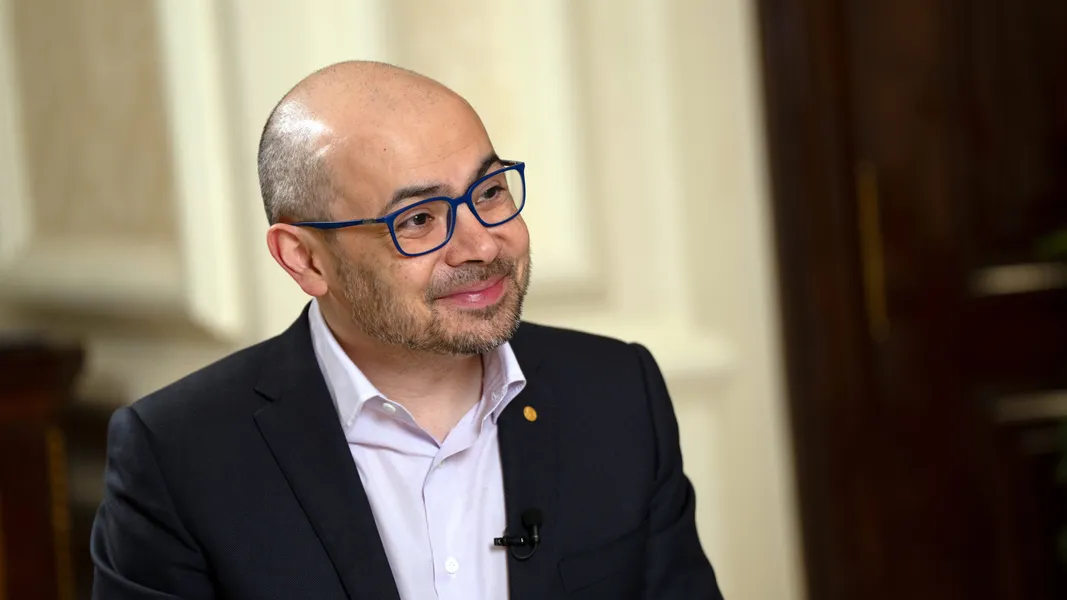
Google's AI leadership is being reorganized as Demis Hassabis steps aside from the Google DeepMind CEO role, Jeff Dean leaves Google, and senior researchers move toward a new scientific-discovery startup. The Google DeepMind leadership shake-up matters to AI builders because it creates questions about Gemini execution and enterprise AI momentum, but the available evidence does not establish a product failure or a new release schedule.
A broader research role replaces Hassabis's operating role
Hassabis is moving from CEO of Google DeepMind to chairman and Alphabet chief scientist. He will also continue leading Isomorphic Labs, the Alphabet-linked company applying AI to biomedical problems. Axios reports that Koray Kavukcuoglu, previously DeepMind's chief technology officer, will take a senior leadership role and report to Google CEO Sundar Pichai. The leadership changes place Kavukcuoglu closer to the Gemini roadmap, including work on the Gemini 4 model.
That is a meaningful separation between research direction and day-to-day model execution. It may help Google coordinate frontier research across Alphabet, but there is no disclosed timeline or benchmark showing how the change will affect Gemini.
Jeff Dean's departure creates a different kind of signal
Jeff Dean is leaving Google after 27 years to co-found Discovery Loop with Sanjay Ghemawat, Quoc Le, and Oriol Vinyals. The public-benefit startup says it wants to use AI to run and iterate on large numbers of scientific experiments, reducing the human bottleneck in research. Its stated focus includes automated experimental loops and possible recursive self-improvement, according to the company's reported plans.
Alphabet is investing in Discovery Loop and will provide cloud and computing capacity, meaning this is not a clean break from Google's ecosystem. For founders, the interesting point is organizational: some high-value AI work may increasingly happen in focused startups with access to hyperscale infrastructure rather than inside a single platform company.
What builders should change now
Do not rebuild a production stack around assumptions about the Gemini roadmap. Teams evaluating Google models should keep provider abstractions, regression tests, and fallback access to other APIs. The parent report describes Google as having started slowly in generative AI after Microsoft's Copilot reveal, which adds competitive pressure, but it provides no quantitative comparison of enterprise AI capabilities.
The practical watchpoints are model release cadence, API stability, context and tool support, pricing, and enterprise controls. None of those details can be inferred from an executive reshuffle. Discovery Loop is more relevant to scientific and industrial R&D partnerships than to ordinary application developers today, and its impact remains a stated ambition rather than a demonstrated result.
The evidence is still announcement-level
The Google DeepMind leadership shake-up is a credible signal that Alphabet is changing how it manages frontier research and product execution. It is not yet evidence that Gemini will improve or deteriorate. Builders should monitor shipped capabilities and independently evaluate latency, cost, reliability, and deployment controls rather than treating leadership moves or market concern as product benchmarks.
Sources
- Google's AI shake-up: DeepMind's Hassabis steps aside, senior scientists depart
- Jeff Dean and other top AI researchers are leaving Google to launch their own startup
- Google’s Jeff Dean — chief scientist for 27 years — leaving during AI leadership overhaul for startup
- Google DeepMind CEO Demis Hassabis is stepping aside
- Google shakes up AI leadership. Demis Hassabis takes on broader research role, and Jeff Dean leaves.
- Jeff Dean Leaves Google as Demis Hassabis Steps Aside as Google DeepMind CEO — The Information
- Big shake-up in Google’s AI team as DeepMind chief executive steps down | AI (artificial intelligence) | The Guardian
- Demis Hassabis steps down from Google DeepMind CEO role amid a major AI leadership shake-up
- DeepMind's Hassabis steps down. Key AI scientist departs. Google stock falls.
- Google chief scientist Jeff Dean leaving in AI reshuffle after 27 years at company
- Google shakes up AI leadership as head of DeepMind steps down to become chair - The Globe and Mail
- Google shakes up AI leadership as DeepMind chief shifts role
- DeepMind's Hassabis steps down, adding to worries over Google's AI push
- Google’s stock drops after Nobel-winning AI executive steps aside
- Google DeepMind CEO Demis Hassabis is stepping aside
- Google DeepMind 'loses' both CEO and chief scientist; Demis Hassabis gets a promotion and Jeff Dean steps down
- Google shakes up AI leadership as DeepMind chief shifts role