Fangqing Technology’s $1.5B AI Chip Bet Puts Decoupled Inference to the Test
Published by AINave Editorial • Reviewed by Ramit
Fangqing Technology reached a valuation above 10 billion yuan, about $1.5 billion, in its A1 funding round, despite not having publicly disclosed a chip tape-out, manufacturing partner, or target process node. For AI builders, the important point is not the valuation itself. Fangqing is making a pre-silicon bet that separating transformer workloads can lower the cost and power required for inference, especially in continuous agent workloads.
Fangqing’s A1 round funds an unproven hardware thesis
The round was led by Xu Hui Capital, the state-owned investment platform of Shanghai’s Xuhui district, and Zhuhai Sci-Tech Industrial Group. CICC Capital, Guotai Haitong Creative Investment, and existing backer Junshan Capital also participated. Fangqing says it will use the proceeds for chip and system research, manufacturing scale-up, software ecosystem work, and hiring.
The company’s founder, Liang Jun, previously worked as chief architect of Huawei’s HiSilicon Kirin SoCs and served as CTO at Cambricon. That background helps explain investor confidence, but it does not remove the execution gap between an architectural concept and a production accelerator.
How decoupled inference is supposed to work
Fangqing’s distributed transformer architecture separates attention and feedforward computation into dedicated hardware modules.
Attention uses the model’s growing key-value cache and is primarily memory-bandwidth-bound. Feedforward network layers perform dense matrix operations and are more compute-bound. A conventional GPU runs both through a general-purpose design, which creates a compromise between moving data quickly and performing arithmetic efficiently.
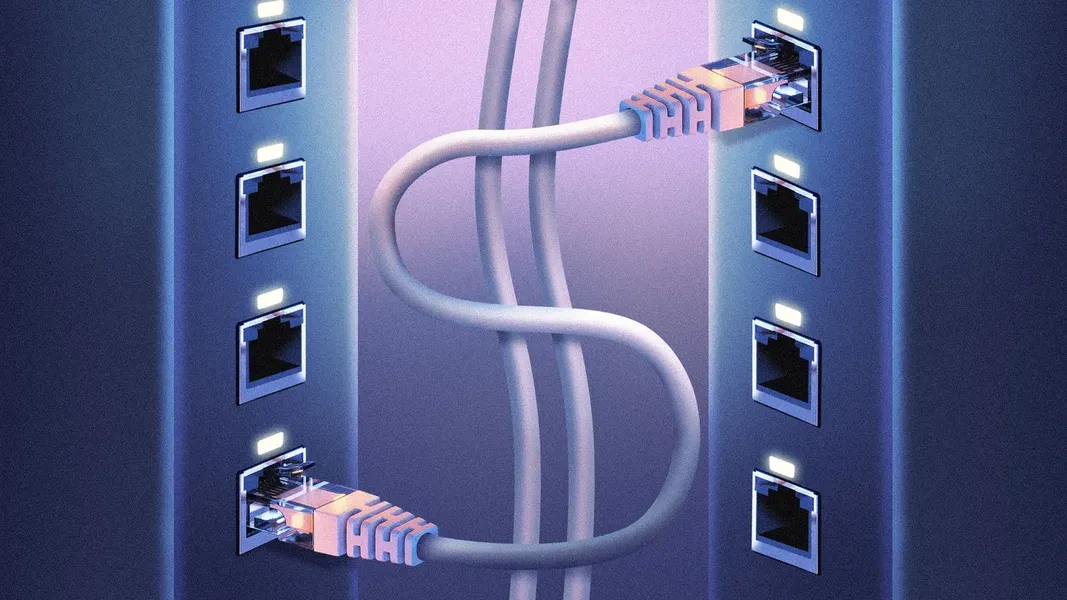
The proposed alternative is to optimize each workload separately. In theory, that could improve throughput, energy efficiency, or utilization. In practice, intermediate activations still need to move between the modules. If the interconnect adds too much latency, bandwidth pressure, or energy cost, specialization may deliver less benefit than expected.
That is the central question for builders evaluating the decoupled inference approach: where does the communication overhead land under real model sizes, sequence lengths, batching patterns, and latency targets? Fangqing has not published a benchmark answering it.
The manufacturing problem may be as important as the design
Fangqing’s A1 funding gives the team resources to pursue silicon, but the company remains exposed to China’s constrained advanced-node supply chain. The source report describes SMIC’s competitive domestic process as roughly 7nm-class, with capacity heavily contested by established customers. It also reports yields of 20% to 40% on the process, compared with the 80% or higher level commonly associated with competitive commercial production.
Those figures are reported claims, not Fangqing measurements. Still, they identify the practical diligence questions for an AI infrastructure team: Which foundry will build the chip? What process node is planned? How large and complex will the design be? What yield assumptions support the cost model? Until Fangqing answers those questions, its valuation reflects confidence in the team and strategic need more than evidence of product economics.
What AI builders should watch next
Fangqing matters because export controls and restricted access to advanced accelerators are increasing demand for domestic Chinese inference hardware. State-backed investment can provide patient capital for that effort, but it cannot guarantee software compatibility, reliable supply, benchmark performance, or acceptable total cost of ownership.
Enterprise buyers also need governance review before placing sensitive workloads on any Chinese-incorporated hardware platform. The source report highlights China’s National Intelligence Law, Cybersecurity Law, and Data Security Law as relevant conditions for healthcare, financial, government, and defense
Sources
- China AI Chip Firm Fangqing Hits $1.5B Valuation on Decoupled Inference Bet
- China AI chip firm Fangqing hits $1.5B valuation on decoupled ...
- Fangqing's $1.5B Valuation Hinges on Decoupled Inference ...
- Liang Jun's First Year at the Helm: Fangqing Tech Raises Over ...
- Dialogue with Fangqing Technology's Liang Jun: Scaling Law Is ...
- AI reasoning chip company Fangqing Technology raises 1 ...
- China AI chip firm Fangqing hits $1.5B valuation on decoupled inference bet
- Z.AI to Use Only Chinese AI Chips at New Giant Data... - Bloomberg
- SambaNova | The Fastest AI Inference Platform
- Groq AI: LPU Chips, GroqCloud, and Pricing (2026)
- Groq is the premier neocloud for fast inference
- China AI chip firm Fangqing hits $1.5B valuation on decoupled inference bet
- Opinion | China’s AI push in the Global South is not just about...
- Are Orbiting AI Data Centers China's Next Commercial Space...
- ft.com/content/eb984646-6320-4bfe-a78d-a1da2274b092