Democratic campaign AI chatbot strategies in 2026: new study insights
Published by AINave Editorial • Reviewed by Ramit
A recent Democratic-aligned study estimates that chatbots like ChatGPT and Google AI receive about 650,000 prompts about politics every week. The research, commissioned by the PR firm Orchestra and conducted by the AI-marketing platform Evertune, reveals that the quality and consistency of a campaign's digital footprint directly affect how AI models answer voters. For builders working on campaign tools or AI-assisted information systems, this signals that structured, problem-focused, and consistent content can be a lever for influencing AI outputs.
AI chatbots as a new campaign frontier
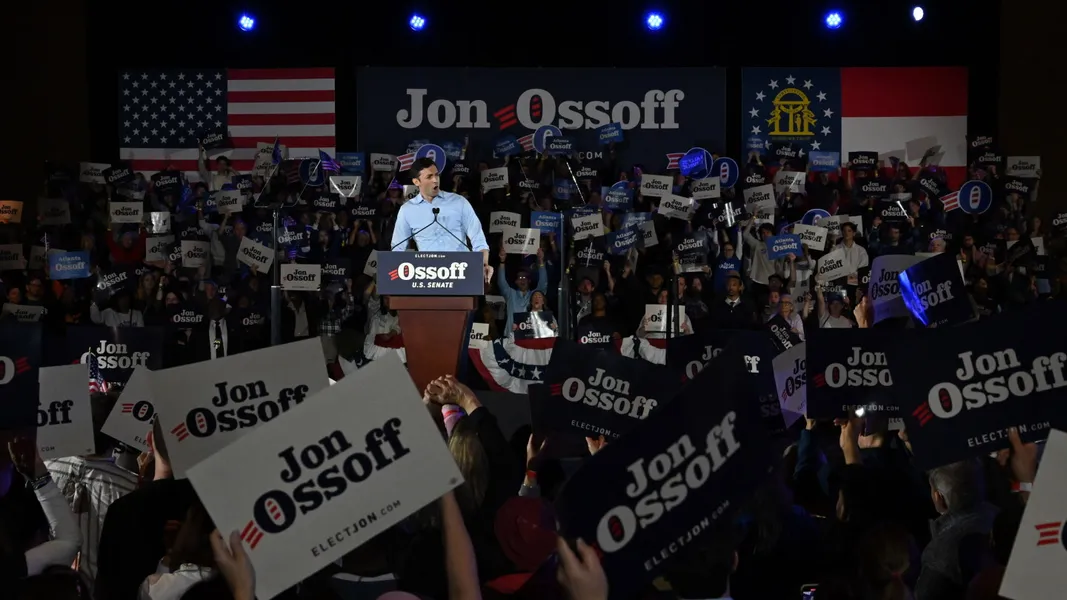
The study tested how major LLMs respond to questions about candidates and issues. In a head-to-head comparison of Georgia Sen. Jon Ossoff and GOP Rep. Mike Collins, the researchers found that Ossoff's detailed and clearly labeled campaign issues pages were repeatedly cited by AI answer engines. That advantage disappeared on economic messaging. Republicans had a more coherent economic narrative across content sources, while Democratic arguments were "fragmented" and not consistently assembled into an overarching story.
The study also found that YouTube interview clips, once treated as one-day news hits, are frequently cited by chatbots. News explainers and partisan sources like party platforms and campaign websites were the strongest URL references in AI-generated answers https://www.notus.org/2026-election/ai-chatbot-chatgpt-democrats-campaign.
How content structure steers AI citation
For AI builders, the key insight is that LLMs lean heavily on well-organized, authoritative content when generating political summaries. If a campaign's materials are detailed, problem-first, and internally consistent, the model is more likely to reproduce that framing. Conversely, scattered messaging leads to scattered AI responses. This pattern mirrors SEO principles but applied to the output of generative AI rather than search rankings.
Practical moves to influence AI-generated answers
The study offers concrete advice for campaigns that applies directly to anyone building AI-informed political tools:
- Treat campaign websites as resources, not just fundraising hubs. Create content that "starts with a problem," matching how voters phrase chatbot queries.
- Ensure consistent messaging across campaign content, official records, and media coverage. The study warns that "if the response sounds scattered, the model may be reflecting deeper communications problems."
- Label issue pages clearly and make them easy to cite. Ossoff's detailed, well-annotated pages were repeatedly favored by answer engines https://www.notus.org/2026-election/ai-chatbot-chatgpt-democrats-campaign.
Caveats and what remains unknown
This research was commissioned by a Democratic-aligned firm, and the findings may reflect partisan framing. The study tested only ChatGPT and Google AI, so behavior on other platforms like Claude or Gemini may differ. The results are observational, not causal; no controlled experiment proves that changing content alone changes AI outputs. Builders should treat the conclusions as directional rather than definitive.
Despite these limits, the study confirms what many in AI product teams have suspected: LLMs are increasingly a digital channel that campaigns must optimize for, much like they optimized for Google or TikTok. The teams that figure out how to structure content for citation by AI models may gain a real information advantage.
FAQs
Sources
- Democrats Are Getting Some Answers to Their Chatbot Problems
- Politicians Are Trying to Change What Chatbots Say About Them
- Lawmakers on Capitol Hill Are Learning to Love AI - notus.org
- With just a few messages, biased AI chatbots swayed people's ...
- Right-Wing Chatbots Turbocharge America’s Political and ...
- Misinformation is already a problem during natural disasters. AI chatbots aren't...
- AI Chatbots Can Cushion the High School Counselor Shortage — But Are They Bad fo...
- Trump Said Affordability Is A Fake Word And These 21 Reactions Are Pretty Heated
- Is There Rot at the Heart of Grok? I Interrogated Elon Musk's Chatbot to Find...
- Politicians are slowly but surely starting to try out AI for themselves
- A tech group is launching a new effort to keep Democrats from ...
- AI chatbot safety: California Democrats push new guardrails ...
- Social Security has rolled out a new chatbot — and the people are talking
- AI chatbots can sway voters better than political advertisements
- AI chatbots can cushion the high school counselor shortage—but are they bad for ...