Bill Gates proposes an AI token tax and Human Reserved jobs to slow automation
Published by AINave Editorial • Reviewed by Ramit
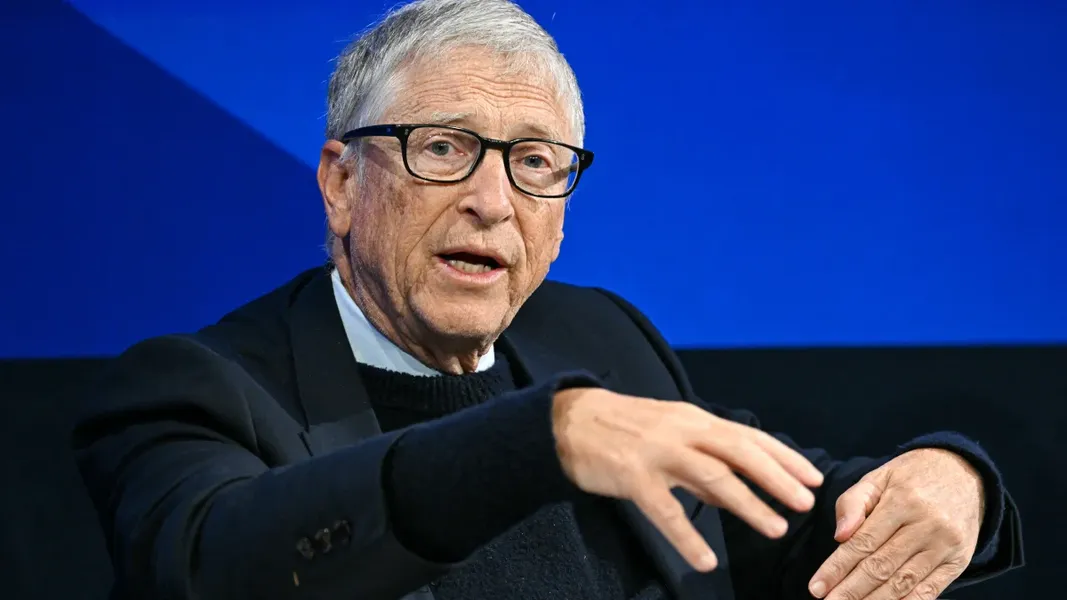
Bill Gates published a 6,000-word essay and gave a New York Times interview proposing a set of policies to address AI-driven labor displacement. The core ideas: a token tax on AI usage, a companion robot tax, and a new category of Human Reserved jobs that would be protected from automation. For builders, this signals a growing policy conversation that could eventually affect deployment costs, workforce planning, and where AI is encouraged versus restricted.
Gates proposes a token tax and Human Reserved jobs
Gates argues the current tax system incentivizes replacing workers with machines: businesses pay payroll taxes for human employees but can write off AI purchases as business expenses. His token tax would apply to AI usage, making automation more expensive and slowing labor displacement. The revenue would fund retraining programs and strengthen social safety nets. Gates also proposed Human Reserved jobs, roles that should remain human because workers cannot easily transition or because human interaction is essential. He cited caregiving and delivering bad medical news as examples.
What the token tax would actually do
The token tax targets the cost advantage of replacing workers with AI. If implemented, it would raise the effective price of AI tokens used in business processes, potentially shifting the ROI calculation for automation projects. Gates suggests the tax could exempt purely beneficial uses like medicine and education. The idea builds on his earlier robot tax proposal and aligns with growing anti-AI sentiment among the public and politicians.
Why builders should watch this policy direction
Even as a proposal, Gates' essay reflects a real shift in how influential figures think about AI's impact on labor. OpenAI's Sam Altman has said "entire classes of jobs will go away" and Anthropic's Dario Amodei warned AI could "wipe out" half of white-collar jobs. Gates' framework offers a concrete policy response: tax automation, protect certain jobs, and fund retraining. For builders, this could mean future regulations that affect deployment costs, especially for customer-facing automation in care, education, or construction. It also suggests that workforce retraining funding might become available, potentially creating new markets for AI upskilling tools.
The limits of a policy proposal
Gates' essay is a policy argument, not a legislative blueprint. Details on how a token tax would be administered, what counts as a token, and how to exempt beneficial uses remain unclear. The proposal also faces political and international coordination challenges. Gates has reportedly sought a meeting with Xi Jinping to discuss an international oversight body, but no concrete agreement exists. Builders should treat this as a signal of where policy thinking is heading, not an imminent change.
For now, the most useful takeaway is that the conversation around AI and labor is moving from abstract warnings to specific policy ideas. Builders who track these developments will be better positioned to adapt their deployment strategies and workforce plans.
FAQs
Sources
- Bill Gates proposes a 'token tax' on AI to protect human workers
- Bill Gates proposes ‘Human Reserved’ jobs and a tax on AI tokens
- Bill Gates wants to tax robots and AI tokens to deter... | Fortune
- Gates floats reserving 40% of jobs for human workers
- Bill Gates Is Warning That A.I. Is More Dangerous Than Big Tech Will...
- 3 key takeaways from Bill Gates’ stark warning about AI and jobs
- Bill Gates calls for robot and AI taxes to blunt AI job losses
- Bill Gates on AI: Tax robots, reserve human jobs
- Bill Gates wants to keep some jobs off-limits to AI
- Bill Gates calls for human-reserved jobs as AI reshapes work
- Bill Gates calls for some jobs to be ‘Human Reserved ...
- Why we need ‘Human Reserved’ jobs: Bill Gates' AI memo - CNBC
- Bill Gates Calls for Tax on Artificial Intelligence Systems
- Bill Gates diagnoses problems with AI, but an expert questions his prescription
- Bill Gates Says AI Needs A Transition Plan. Business Doesn't Have One Either.