World's first live AI-assisted brain surgery: what builders should know about real-time surgical AI
Published by AINave Editorial • Reviewed by Ramit
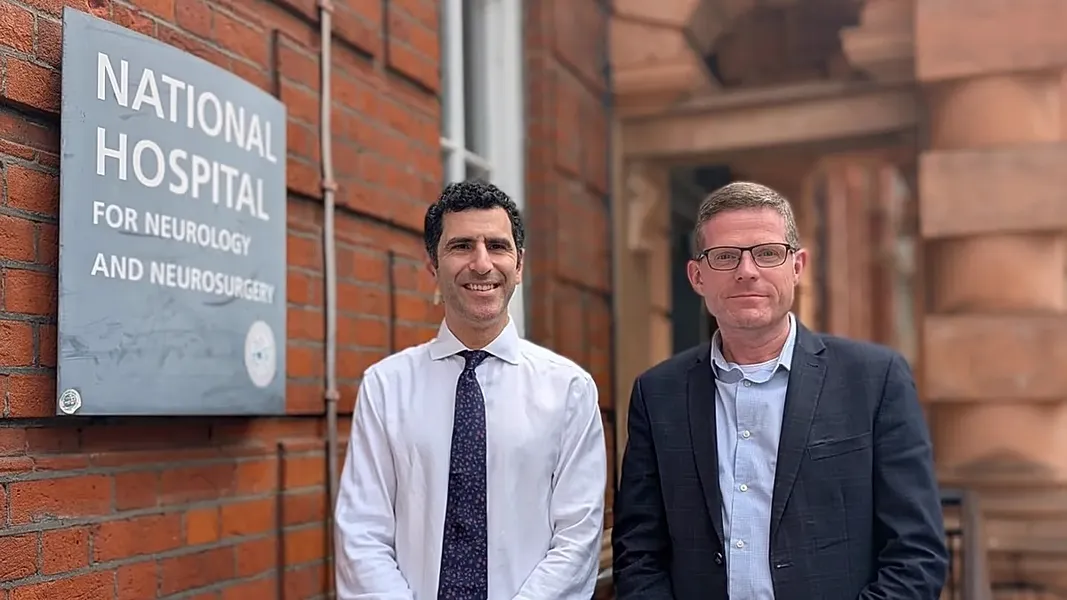
A 48-year-old man in London became the first patient to have a brain tumour removed with real-time AI guidance during surgery, preserving his sight. The case, performed at the National Hospital for Neurology and Neurosurgery (NHNN) as part of an NIHR-funded clinical trial, used an AI system developed at University College London to analyse the live surgical video feed and highlight critical structures. For teams building real-time AI in regulated environments, this is a landmark demonstration of inference under high stakes, but it also raises questions about validation, safeguards, and the gap between a single success and a deployable product.
What the AI actually did during surgery
The AI analysed the live video feed from the surgical microscope in real time, rather than relying on pre-operative scans. It identified risky areas near the pituitary gland and the optic nerves, where a margin of error of just a millimetre can cause blindness or stroke. The system also tracked instrument-tissue interactions, providing feedback to the surgical team led by neurosurgeon Hani Marcus. According to UCLH, the AI helped the team remove as much of the tumour as safely possible while protecting the patient's vision. Rhys Hibbert, the patient, reported that his vision dramatically improved after waking from surgery.
Why this matters for AI builders
This case is a real-world test of real-time AI inference in a high-stakes, safety-critical environment. The system was trained on hundreds of videos of brain surgeries and runs live during the procedure, meaning latency, accuracy, and explainability all matter at the millisecond level. For builders working on surgical AI, medical imaging, or any real-time decision support system, the key takeaway is that the regulatory and funding pathway (via NIHR) is active, but the bar for evidence is high. UK Health Innovation Minister James Frith emphasised that AI needs proper safeguards and that safety must be taken seriously. The AI tool is still investigational, not a cleared medical device.
Practical implications for deploying real-time AI in clinical settings
Integrating AI into a live surgical workflow requires more than a good model. The system must work with existing video feeds, provide interpretable outputs, and fit into a human-in-the-loop governance model. The UCL tool was developed in-house and funded through a clinical trial, which is a common path for early-stage surgical AI. For teams building similar systems, the case highlights the need for robust training data (hundreds of surgery videos), real-time inference pipelines, and clear communication of limitations to both surgeons and patients. The Guardian reported that the operation was a success, but the technology is not yet ready for widespread use.
What's still unknown after the first case
This is a single case, not a controlled trial. Long-term safety, performance across different tumour types and patient anatomies, and independent validation remain unproven. The AI's ability to track instruments and tissue interactions was described as a potential future capability, not something fully validated in this operation. The quotes from officials and the patient come from a single high-profile announcement, and broader evidence will take years to accumulate. For now, the case is a proof of concept, not a template for immediate deployment. Builders should watch for follow-up trials and regulatory decisions before treating this as a validated approach.
FAQs
Sources
- World-first: AI guides live brain surgery in the UK to save patient's sight
- World-first: AI guides live brain surgery in the UK to save...
- London neurosurgeons perform first successful AI-assisted operation...
- UK patient’s sight saved in world’s first live AI-assisted brain surgery
- First patient to have brain surgery with real-time AI assistance
- AI helps perform brain surgery on British man in world first | Sky News
- Man has AI-assisted brain surgery in world first
- London patient becomes first in the world to undergo AI-assisted...
- World-first: AI guides live UK brain surgery to save patient ...
- World-first: AI guides live brain surgery in the UK to save ...
- World-first AI-assisted brain surgery saves patient’s sight
- World first AI-assisted brain tumour surgery saves man's sight
- First patient in live AI-assisted sight-saving brain surgery
- World-first: AI guides live brain surgery in the UK to save patient's sight
- World's first live AI-assisted brain surgery removes patient's brain tumour
- World’s first live AI-assisted brain surgery saves patient’s sight: How does the technology work?