DeepSeek Harness Open Source Launch: MIT-Licensed AI Development Hub
Published by AINave Editorial • Reviewed by Ramit
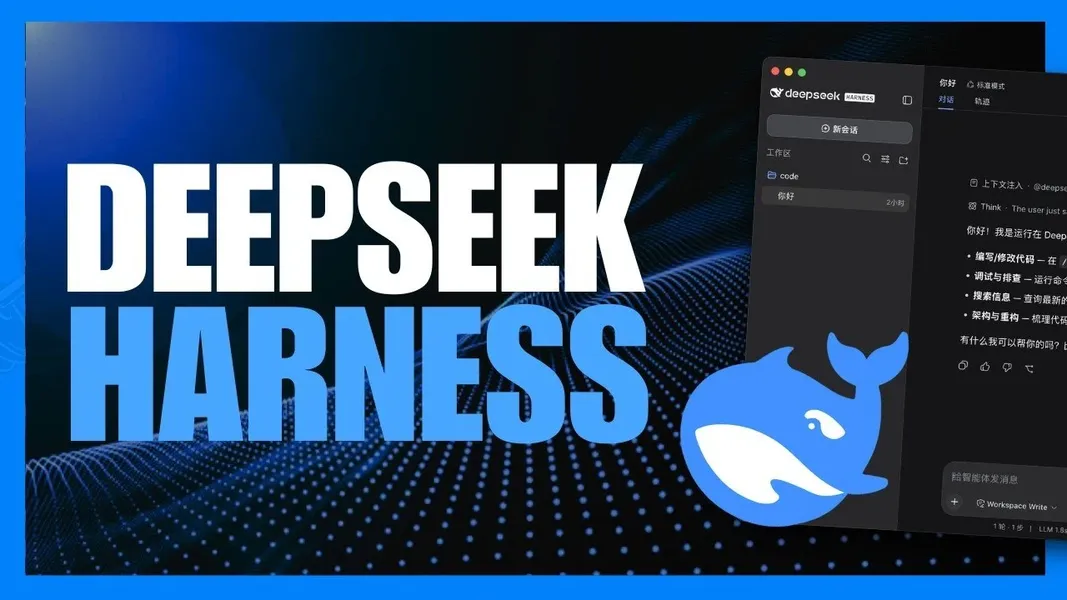
DeepSeek Harness, an open source AI development framework built on the Cordis meta-framework, has launched under the MIT license, offering multi-workspace management, advanced debugging, and support for 3D mechanical simulations. With over 122,000 GitHub stars and 4,719 plugins reported within weeks, it positions itself as a flexible alternative to established platforms like Codex and Llama Code.
What the DeepSeek Harness Offers
The framework's modular architecture, powered by the Cordis meta-framework, emphasizes customization and adaptability. Developers can manage multiple workspaces, debug complex workflows, and integrate both local and remote AI models. A notable capability is executing 3D mechanical simulations, which opens applications in robotics, engineering, and virtual prototyping. The plugin ecosystem, already numbering thousands, allows developers to extend functionality and share tools. The entire project is released under the MIT license, enabling unrestricted modification and commercial use.
Why This Matters for AI Builders
For AI builders, the open source nature and modular design reduce barriers to experimentation. You can fork the codebase, create custom agent presets, and build tailored solutions without vendor lock-in. The rapid community adoption, as reported by World of AI, suggests strong interest, though these metrics should be treated as directional. Compared to Codex and Llama Code, DeepSeek Harness aims to offer a more flexible, community-driven alternative, but direct feature comparisons are not yet available from the provided sources.
Getting Started and Practical Use
Installation is designed to be straightforward: you need Node.js and a single NPX command. The web-based interface provides local and remote access, and Webline Axis enables cross-device management. This low-friction setup makes the framework accessible to developers at varying skill levels. Practical applications already demonstrated include 3D simulations that require spatial reasoning, which could be valuable for engineering teams building AI-driven design tools or robotic control systems.
Limitations and What to Watch
All information in this article is based on a single source, the Geeky Gadgets report, which itself cites World of AI for GitHub star and plugin counts. No independent verification of these numbers is available in the provided research pack. The competitive positioning against Codex and Llama Code is speculative and depends on continued community growth and backend improvements. Future capabilities, such as enhanced plugin libraries and performance optimizations, are not yet confirmed. For now, DeepSeek Harness is worth evaluating if you need a modular, open source framework for AI coding and simulation tasks, but treat the community metrics as directional until independently confirmed.