ChatGPT Leads Identifiable AI Spending in the US House
Published by AINave Editorial • Reviewed by Ramit
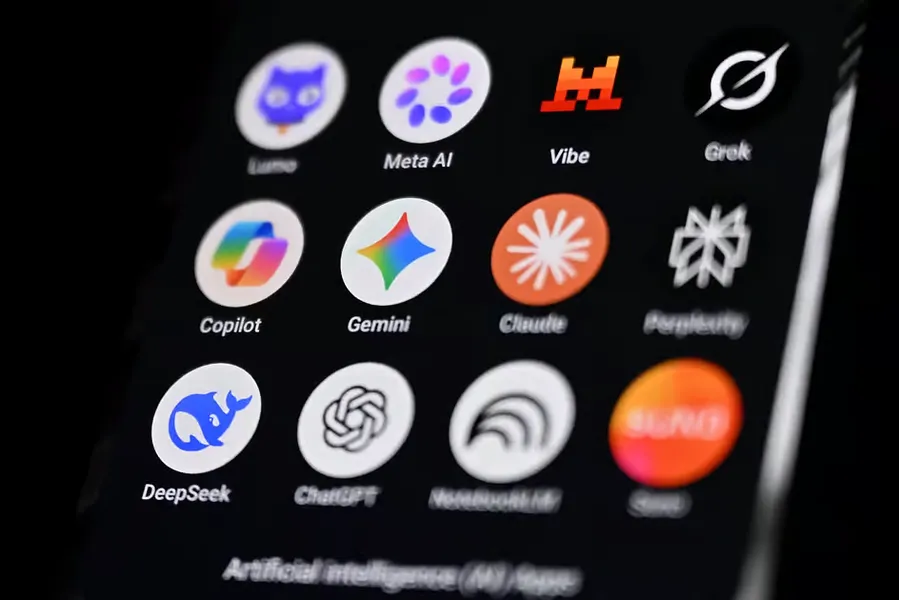
ChatGPT dominated identifiable AI spending in the US House between April 2025 and March 2026, taking $100,580 of at least $113,740 across 798 transactions. Anthropic Claude was a distant second at $13,160 across 37 transactions. For builders, the more useful signal is that congressional teams are paying for ordinary knowledge-work automation, while the data also exposes how difficult government AI adoption is to measure.
ChatGPT has an early lead in House AI procurement
The spending analysis covers House offices, committees, and institutional accounts whose records named a specific AI vendor. ChatGPT represented roughly 88% of the identified dollars and 96% of the transactions reviewed. The House Digital Service reportedly distributed 40 ChatGPT Plus licenses to a bipartisan group of staff in 2023, followed by an OpenAI-linked training program. That early distribution may have helped create familiarity before broader procurement began.
The figures should not be read as a complete market-share measurement. They describe visible purchases, not every AI interaction or contract.
The use cases look like workflow infrastructure
Reported congressional use cases include summarizing legislation, drafting memos, preparing hearing materials, and responding to constituents. These are familiar entry points for enterprise AI because they combine repetitive text work with a human review step.
That matters for product teams building AI for government or regulated organizations. The opportunity is less about adding a generic chatbot and more about fitting assistance into controlled workflows: document provenance, review queues, permissions, retention rules, and clear boundaries around sensitive material. A tool that produces a draft is easier to adopt when staff can verify its source documents and approve the final output.
Adoption is uneven, and vendor concentration creates risk
Democratic offices accounted for $54,165 in identified spending, compared with $15,782 for Republican offices. ChatGPT purchases appeared in 44 Democratic offices and 27 Republican offices, while Claude appeared in five Democratic offices and one Republican office. These figures show a partisan difference in visible adoption, but they do not establish why the difference exists.
For AI builders, concentration around OpenAI ChatGPT has two practical effects. It can reduce onboarding friction when users already know the product, but it can also increase dependence on one vendor's access policies, pricing, data controls, and model behavior. Government buyers may therefore value portability, audit logs, and model switching even when end users prefer a familiar interface.
The records leave important gaps
The analysis excludes free tools and AI features bundled into broader software contracts, including products such as Microsoft Copilot. The Senate is also excluded because its spending reports do not identify software vendors in the same way. As a result, House AI expenditures for 2025-2026 are a useful lower-bound view of paid, named-vendor adoption, not a census of congressional use.
The decision rule for builders is straightforward: treat this as evidence that government teams are paying for AI-assisted document workflows, not proof that one model wins every evaluation. Products entering this market need measurable provenance and governance alongside generation quality. Without those controls, procurement visibility may improve while operational accountability remains unclear.
Sources
- ChatGPT dominates early AI spending by US Congress
- ChatGPT dominates early AI spending in Congress as lawmakers...
- ChatGPT Dominates AI Spending in US Congressional... - #Mezha
- Congress' favorite AI tool? ChatGPT | TechCrunch
- ChatGPT dominates commercial AI spending - Earnest Analytics
- AI Assistant Market 2025: ChatGPT Dominates as... | Windows Forum
- ChatGPT dominates early AI spending in Congress as lawmakers weigh regulation
- ChatGPT dominates House office AI spending, CNBC finds
- Congress’s favorite AI tool? ChatGPT
- Congress hasn’t written AI’s rules yet. It already spends nine of every ten AI dollars with OpenAI.
- ChatGPT dominates early AI spending in Congress as lawmakers...
- ChatGPT Dominates Congress AI Spending at $100,580
- What Is Congress’s Favorite AI Tool?
- ChatGPT accounts for 80% of identifiable House AI spending
- ChatGPT dominates Congress's AI spending, capturing roughly ...