OpenAI Apple Trade Secrets Lawsuit Moves Into Public View
Published by AINave Editorial • Reviewed by Ramit
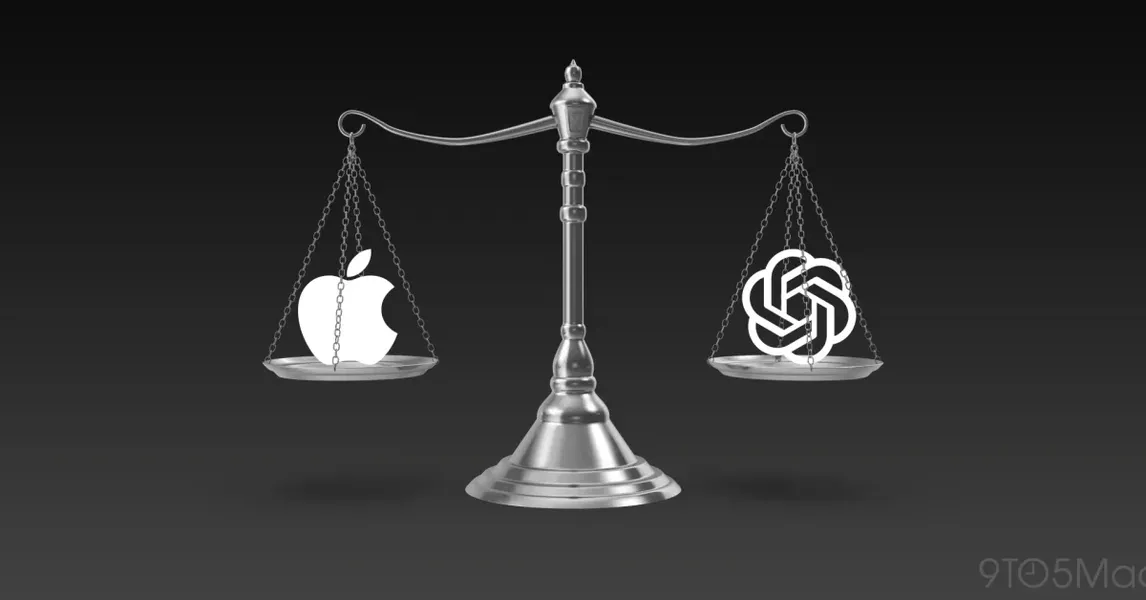
The OpenAI Apple trade secrets lawsuit has escalated from a court filing into a public fight over evidence. Apple is seeking a preliminary injunction and expedited discovery against OpenAI, io Products, and former Apple employees Chang Liu and Tang Yew Tan. OpenAI responded with a post titled “Apple is getting this wrong”, publishing emails and iMessage exchanges that it says contradict Apple's account. For AI builders, the practical lesson is clear: talent mobility creates an information-governance problem, not only a hiring opportunity.
Apple wants restrictions before the case reaches trial
Apple alleges that former employees transferred or used confidential information for OpenAI's hardware work. Its motion asks the court to prevent OpenAI and the individuals from accessing, acquiring, using, or disclosing the disputed material, while also seeking expedited discovery and depositions. The request is aimed at preventing alleged irreparable harm before a full resolution.
A hearing date had not been scheduled at the time of reporting. That means the current claims remain allegations and rebuttals, not findings that either side has proved in court.
OpenAI's rebuttal focuses on the paper trail
OpenAI says Apple's outside counsel initially contacted the wrong person after confusing two Asian surnames. It also says the company heard nothing further about the specific allegations for five months before the lawsuit. Those points matter because pre-litigation communications and timing can shape how a court evaluates urgency and credibility, although OpenAI's interpretation is itself a party's claim.
The company also published messages involving Chang Liu, a former Apple iPhone engineer. OpenAI says the exchanges show Apple employees asking Liu for help locating files and technical information after his January 22 departure. One participant described the exchanges as “highly irregular,” while another message reportedly asked about internal files as late as March 5. The published messages are central to OpenAI's public rebuttal, but their legal significance will depend on the complete record and the court's interpretation.
OpenAI separately defended Tang Yew Tan, a former Apple executive who spent 24 years at the company before joining io Products. The hardware startup later merged with OpenAI in 2025. OpenAI says Tan told his team not to use confidential information from other companies. That is a stated policy position, not an independent determination that no information was misused.
Why this matters to AI builders
The Apple vs OpenAI dispute is a warning for companies building AI hardware, agents, developer tools, or enterprise workflows. NDAs and trade secrets in tech are only one part of the control system. Teams also need documented offboarding, access revocation, clean-room practices, restricted recruiting conversations, and a clear record of what new hires can and cannot bring into a project.
The Liu allegations show why post-employment contact can become complicated. A former employee may be asked by a previous employer to help recover or identify files, while the new employer must ensure that interaction does not become unauthorized access or knowledge transfer. A simple rule for founders is to route these requests through legal or security staff rather than leaving them to informal messages.
The dispute also shows how public communications now function as part of IP litigation strategy. OpenAI released receipts to influence the court of public opinion, but publishing internal communications can create additional privacy, discovery, and credibility risks. Builders should assume that messages about proprietary systems, suppliers, architecture, and access procedures may later be reviewed outside their original context.
What remains unresolved
The case does not establish whether Apple trade secrets reached OpenAI products, whether any employee violated obligations, or whether the requested injunction is justified. Reporting also says Apple's complaint referenced more than 400 former Apple employees now working at OpenAI, but that figure comes from the litigation record and may
Sources
- OpenAI Posts Public Rebuttal to Apple's Trade Secrets Lawsuit
- OpenAI says Apple's trade secrets lawsuit is "aggressive and oddly personal"
- OpenAI takes Apple lawsuit to court of public opinion, posts texts
- Apple is seeking an emergency court order against OpenAI as its trade secrets fight escalates
- OpenAI Fires Back at Apple's Trade Secret Lawsuit in Detailed ...
- OpenAI rebuts Apple trade secrets allegations in new response ...
- OpenAI Responds To Apple Lawsuit—Says It Doesn’t Have Nor ...
- OpenAI rebuts Apple's trade secrets lawsuit as baseless
- OpenAI drags Apple's lawsuit into the court of public opinion
- OpenAI Is Trying to Shame Apple Into Backing Down From Its Lawsuit
- OpenAI Says Apple 'Is Getting This Wrong' In Trade Secrets Dispute
- OpenAI Answers Apple's Trade Secrets Suit By Publishing... | Yellow
- OpenAI hits back: 'We do not have, nor want' Apple's trade secret...
- Apple says more ex-employees may have taken confidential data to OpenAI
- Apple demands OpenAI injunction, discovery, testimony now to prevent more harm
- OpenAI fires back at Apple’s trade secret lawsuit: "No evidence this complaint has merit"
- OpenAI President Brushes Off Apple Lawsuit: We Have No Interest in Your Secrets