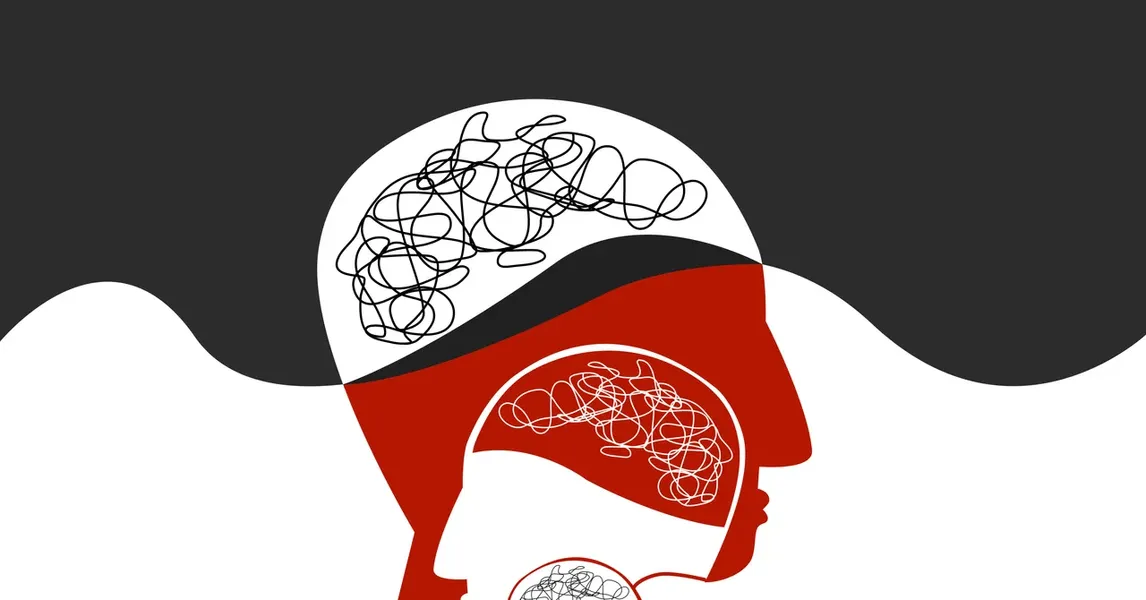
AI maps schizophrenia genetics as a gene network, not a single-gene puzzle
Published by AINave Editorial • Reviewed by Ramit
A new Nature Genetics study used AI-based computational models to identify 766 genes associated with schizophrenia, including 641 not seen in previous transcriptomic analyses. The finding reframes schizophrenia genetics as a coordinated network of interacting processes rather than a single-gene cause, giving researchers a much larger map for studying disease behavior and potential treatments.
A Nature Genetics study maps 766 schizophrenia genes
Schizophrenia has been a hard problem for genetics because it does not follow a single-mutation pattern. The disorder appears to arise from hundreds of genetic variants, each with small effects on different brain processes. Some influence neural development, others alter communication between neurons, and still others shape the organization of brain connections.
The study analyzed genetic data from more than 102,000 people plus brain tissue samples from six brain regions collected from hundreds of donors. Researchers from the Lieber Institute for Brain Development, the University of Bari, and dozens of psychiatric centers across multiple countries participated in the project.
Many of the newly identified genes were found through long-range regulatory signals, which are DNA elements that control gene activity from a distance. That is the key evidence for the network view: the genes involved appear to coordinate with one another rather than act as isolated elements.
Why the network view changes schizophrenia genetics
The researchers compare the finding to turning on the lights in an entire neighborhood. Previously they could observe only a few lit houses. Now they can see a much larger portion of the disease's genetic map.
This matters because the genetic architecture of schizophrenia has been described as a network of interacting processes. The World Health Organization estimates schizophrenia affects about 23 million people worldwide, roughly one in every 345. Family history raises risk but does not determine it: some people with close relatives who have the condition never develop it, while others are diagnosed without any known family history.
The diversity of symptoms, from hallucinations and delusions to social isolation, motivation problems, and memory difficulties, reflects the complexity of the underlying biology. There does not appear to be a single responsible gene, but rather an extensive network of interacting processes.
What this means for AI builders in genomics
For teams building AI products in genomics, neuroscience, or healthcare research, this study is a useful reference point for what large-scale regulatory modeling can do. The work demonstrates how AI-based computational models can reconstruct coordinated gene activity across thousands of genes in the human brain, which is exactly the kind of problem that does not yield to simpler statistical approaches.
The scale is worth noting. Integrating genetic data from more than 102,000 people with brain tissue expression data across six regions is a substantial data engineering effort. The long-range regulatory signals that drove many of the new gene identifications required models capable of learning relationships between distant genomic elements and gene expression.
That said, the study is a research advance, not a product. The practical value for builders is in the methodological pattern: combining GWAS data with transcriptomic data and regulatory information to infer network structure. Similar approaches could apply to other complex disorders where single-gene models have failed.
Where the evidence stops short
The findings are promising, but AI is not solving schizophrenia on its own. The challenge remains extraordinarily complex, and AI systems are only as useful as the quality of the biological data they receive.
Several caveats apply. The 766-gene list comes from a single study, and the 641 "novel" genes are novel in the context of prior transcriptomic analyses, not necessarily novel to all genetic research. The study identifies associations, not causal mechanisms. Translating this genetic map into therapies will require substantial additional work, and the researchers themselves frame the finding as a foundation for more precise investigation rather than a treatment breakthrough.
For builders, the lesson is to treat AI-derived genetic mappings as hypotheses to validate rather than established ground truth. The models are powerful, but they depend entirely on the quality and completeness of the underlying biological data.
Sources
- AI Is Helping Solve the Intricate Genetic Puzzle of Schizophrenia
- AI Is Facilitating Resolve the Complex Genetic Puzzle of ...
- AI Is Helping Scientists Untangle the Genetic Puzzle of ...
- AI helps solve the intricate genetic puzzle of schizophrenia ...
- Treat Schizophrenia: AI and Genetic Approaches - The Stem Cellar
- AI Puzzle Solver | Solve Word Searches, Sudoku & More Instantly
- Biological Explanations for Schizophrenia and Other Psychotic...
- Schizophrenia: Definition, Symptoms, Causes, Diagnosis, Treatment
- Schizophrenia - National Institute of Mental Health (NIMH)
- Integrating AI and genomics: predictive CNN models for schizophrenia ...