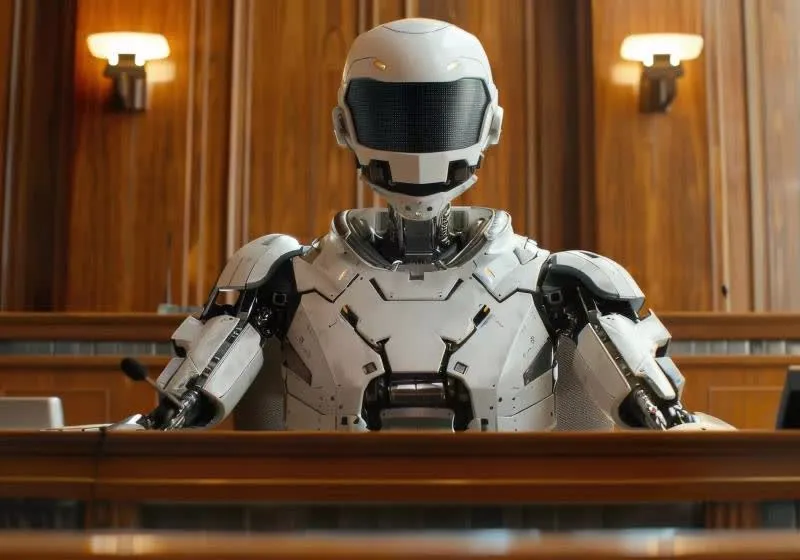
Your ChatGPT conversations can end up in court as evidence
Published by AINave Editorial • Reviewed by Ramit
Your ChatGPT conversations can end up in court as evidence, and they don't have the legal protections of a conversation with a lawyer or therapist. A Washington Post review found chatbot conversations cited in 12 public court cases over two years, with likely more in private investigations. For AI builders and product teams, this means the chat histories your users generate can be subpoenaed, discovered, or even voluntarily reported to law enforcement.
How AI chats are ending up in court
The cases span civil lawsuits and criminal investigations. In one, a teenager identified as R.K.C. sued Meta, Snap, TikTok, and YouTube over social media addiction. Defense lawyers obtained his ChatGPT history, including a conversation where he asked about a settlement. In another, OpenAI contacted the FBI after a user repeatedly described plans to harm an ex-girlfriend. The chats were used to support the credibility of threats, and the user was arrested. A Missouri State University student agreed to a phone search after vandalizing cars; officers found ChatGPT messages where he asked "How f----d am i bro" and "Is there any way they could know it was me." He later pleaded guilty.
Why this matters for AI product teams
AI conversations generally do not receive the privilege that protects lawyer-client or doctor-patient communications. A federal judge in New York ruled that chats with Anthropic's Claude were not protected because Claude is not a lawyer and the user's attorneys had not directed him to consult the chatbot. OpenAI CEO Sam Altman has warned that the company cannot block conversations from being used as evidence. For builders, this means any product that handles sensitive topics legal advice, mental health, personal confessions creates a risk that users may not understand. Your data retention policies, consent flows, and terms of service need to account for the possibility that chat logs will be requested by courts or law enforcement.
Practical risks: subpoenas, phone searches, and data retention
Police often find chat histories on phones during searches, and many people consent to phone searches without realizing the risk. OpenAI's transparency data shows a sharp increase in government and law enforcement requests for user information, with data from more than 80 accounts disclosed in the second half of 2025. OpenAI also uses software to detect conversations that may involve imminent harm and may report those to law enforcement. For product teams, this means you should consider how long you store chat logs, whether you can comply with subpoenas, and how you communicate these risks to users. If your product allows users to delete chats, note that courts have ordered preservation of deleted chats in some cases.
What remains uncertain
There is no universal privacy protection for AI chats. Outcomes vary by jurisdiction and specific case. A Texas Business Court recently ruled that work product protection could extend to AI conversations in limited circumstances, but that is not yet a broad precedent. Many cases are sealed or never become public, so the true scope of AI chat evidence is unknown. Laws and court rulings are evolving, and builders should monitor developments in their relevant jurisdictions.
FAQs
Sources
- Your ChatGPT conversations could end up in court, and they're not protected
- Your ChatGPT Conversations Could End Up in Court—Without Your Permission
- Personal chats with ChatGPT are increasingly appearing in courts. You should be wary - Digital Trends
- ChatGPT Can’t Keep a Secret: Why Your AI Conversations Aren’t Private - Hammerle Morris Law Firm
- Altman Warns That Your ChatGPT Conversations Can (and Will) Be Used Against You in Court | PCMag
- Personal chats with ChatGPT are increasingly appearing in courts. You should be wary
- ChatGPT chats may not stay private. AI conversations are showing up in court.
- They confided in ChatGPT. Their secrets ended up in court.
- Texas Business Court: Work Product Protection Can Extend to a Litigant’s AI “Conversations” — but With Important Limits
- Deleted ChatGPT Conversations Can Be Preserved by Court Order: What Users Need to Know — You're the Expert Now
- Did You Know Your ChatGPT Conversations Could End Up in Court?
- Sam Altman People Using Chatgpt | TikTok
- Personal chats with ChatGPT are increasingly appearing in courts.
- Mom Claims ChatGPT Encouraged Her 24-Year-Old Daughter's Suicidal Spiral: 'Maybe...