What Nadella’s enterprise AI thesis means for builders: architecture and learning loops over chasing a single model
Published by AINave Editorial • Reviewed by Ramit
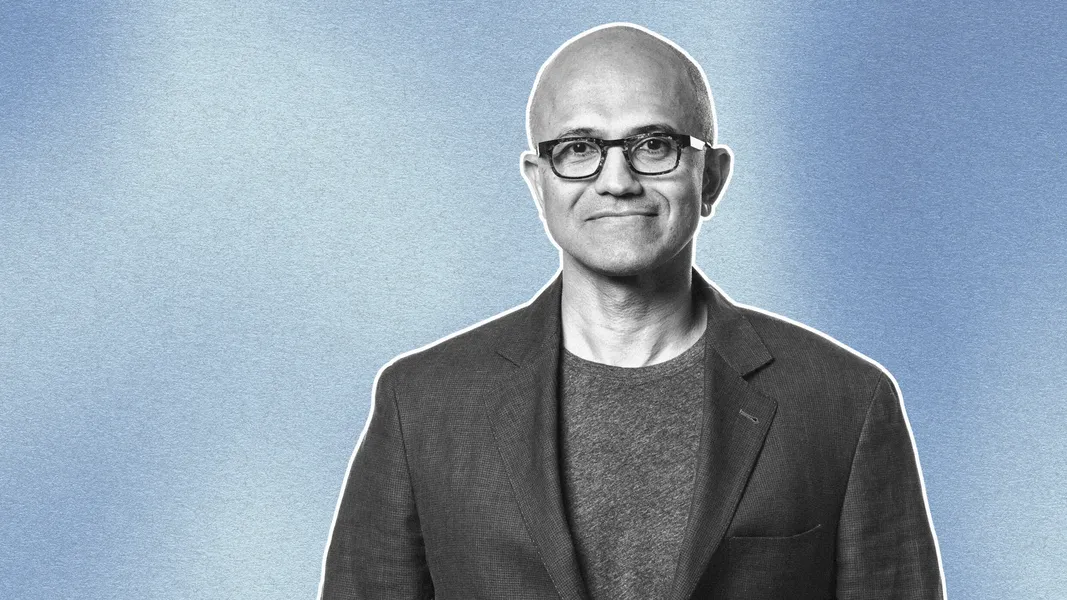
Satya Nadella’s recent essay argues that the future of enterprise AI depends on the learning loop between human capital and token capital, not on model performance alone. For AI builders, this shifts the strategic focus from chasing frontier models to designing architectures that capture organizational knowledge and improve with use.
What happened
In a short essay, Microsoft CEO Satya Nadella proposed that enterprise success hinges on the interaction between human capital (knowledge, judgment, relationships, ingenuity) and token capital (AI capabilities organizations build and own). He argues that the central challenge of enterprise AI is not intelligence itself but architecture: the system-level design that integrates people and AI into a continuous learning loop. The essay concludes that the future of enterprise AI is not the model but the learning loop.
This framing aligns with a broader industry debate about moving from AI answers to AI outcomes. Nadella’s thesis suggests that durable value comes from capturing unique organizational knowledge and workflow patterns, not from access to the latest model.
Why AI builders should care
For product teams, developers, and founders, Nadella’s argument has direct implications. A rival can buy access to the same model, test the same API, and copy product language by Friday afternoon. The more durable moat is whether your company is capturing its own customer knowledge, workflow patterns, decisions, failures, and domain judgment in a system that improves with use.
This means builders should prioritize investments in internal AI tools, data practices, and feedback loops that continuously improve work processes. The real competitive advantage comes from bespoke, learnable systems that encode proprietary knowledge, not from being first to deploy the latest frontier model.
Practical implications
Organizations should design learning-enabled architectures where human expertise and AI capabilities are co-constructed and owned internally. This involves embedding feedback from users and domain experts into AI-enabled processes, and owning the resulting data and models.
Nadella has also warned against over-reliance on frontier models for all problems, urging teams to match tasks to the right model. For builders, this means building internal workflows that evolve with use, rather than defaulting to the most powerful model for every task.
Caveats
The core thesis is synthesized from Nadella’s published ideas and related industry discussions rather than a single explicit definition. Evidence for these interpretations is drawn from the cited article descriptions and Nadella’s statements; there may be variations in how audiences apply the “learning loop” concept in practice. Additionally, the essay’s full text was not available in the source material, so some nuance may be missing.
FAQs
Sources
- Satya Nadella is asking the right AI question
- Satya Nadella says the real AI moat is a learning loop no one else can copy - Startup Fortune
- Satya Nadella: "We need to find something useful for AI" | Hacker News
- Techmeme: Satya Nadella says the public wouldn't tolerate a few AI labs “doing all of the learning for the world”, as Microsoft moves to provide low-cost models and tools (Wall Street Journal)
- Microsoft CEO Satya Nadella has a message for employees: Not every problem needs ... - The Times of India
- Nadella Names OpenAI and Anthropic: AI Giants Must Earn Societal Permission
- Microsoft CEO Satya Nadella has a message for employees: Not every problem needs ...
- Nadella Says Enterprise AI's Future May Depend Less on Frontier Models Than Learning Systems
- As Microsoft takes the stage, protesters take to the street
- OpenAI trial: Nadella says Musk never raised concerns to him about Microsoft investment
- New Memo: Microsoft’s Nadella Argues Learning ... - Forbes
- The right way to AI: what we’re learning from customers
- Satya Nadella and Rishi Sunak on the Future of Asking the ...
- Microsoft CEO Satya Nadella warns against AI overuse ... - MSN
- Microsoft CEO Satya Nadella has a message for employees: Not every problem needs ...