SpaceX Foundry Could Unlock Faster Gas Turbines for AI Data Centers - At a Cost
Published by AINave Editorial • Reviewed by Ramit
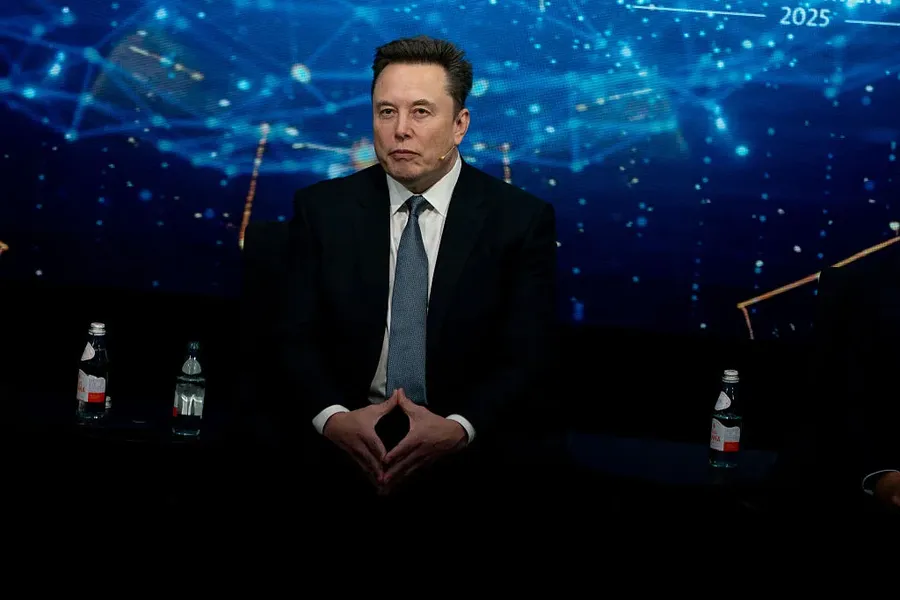
Elon Musk confirmed SpaceX is building a foundry in Bastrop, Texas to cast gas turbine blades in-house, aiming to cut the deployment timeline for natural gas turbines powering AI data centers by up to 18 months. The move targets a manufacturing bottleneck that has become a critical constraint for AI infrastructure, but it also intensifies already heated environmental and legal battles around gas turbine pollution.
The Bastrop Foundry and the Casting Bottleneck
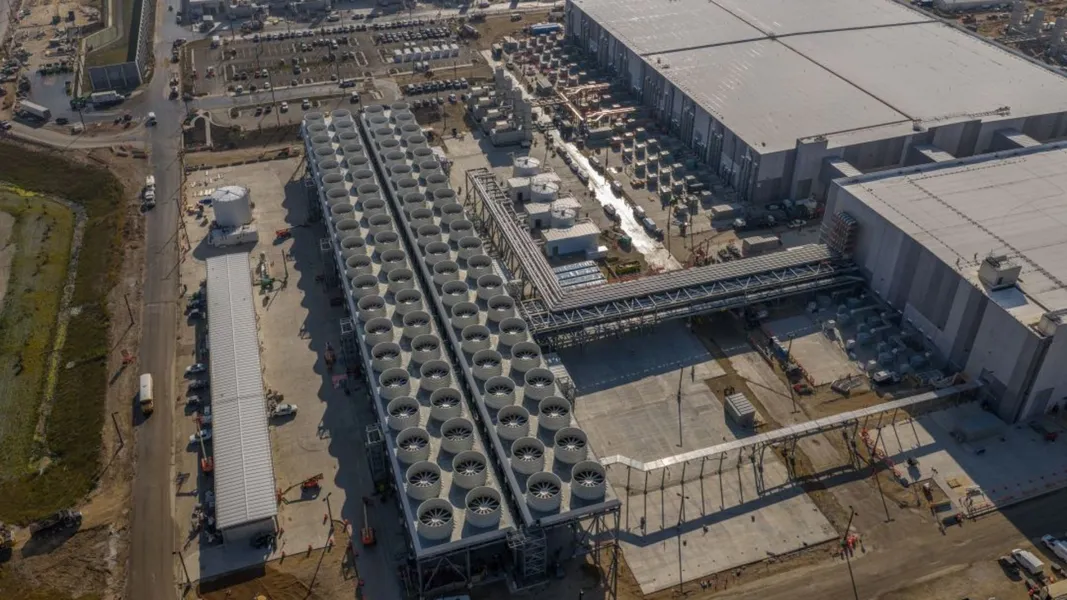
The foundry sits on roughly 830 acres near SpaceX’s existing Starlink factory in Bastrop, according to a report from The Information that cited job listings for a “blades and vanes foundry” and due-diligence research by newsletter author Corey Trinetti. Musk confirmed on X that the facility’s purpose is in-house casting of turbine blades and vanes, the limiting factor for natural gas turbine production.
Turbine blades in the hottest section operate at 3,000 to 3,600 degrees Fahrenheit, about 800 degrees hotter than the melting point of the alloy they are made from. Each blade must be cast as a single crystal inside a vacuum furnace, a process only four companies worldwide have mastered at industrial scale, and all four are at capacity. If SpaceX can replicate that capability, it would bypass a supply bottleneck that every other hyperscaler currently depends on.
What This Means for AI Infrastructure Builders
The AI industry faces a second constraint alongside GPU shortages: the physical power grid. The International Energy Agency projects global data center electricity use will roughly double by 2030, and turbine maker GE Vernova has sold out its production capacity through 2030 largely due to AI infrastructure demand. Hyperscalers including Amazon, Google, Meta, OpenAI, and Microsoft have all turned to private gas-fired plants near data centers to avoid grid delays.
A Musk-controlled entity that can cast its own turbine blades would gain a manufacturing capability that is extremely difficult for well-funded but non-manufacturing competitors to replicate quickly. This could accelerate power delivery for SpaceXAI’s own data center buildout and potentially give it a time-to-market advantage in training and inference capacity.
The Environmental and Legal Reality
Gas turbines emit smog-forming compounds and formaldehyde, pollutants linked to asthma, respiratory disease, and certain cancers. In Memphis, where xAI has run gas turbines since 2024, the NAACP has accused the company of operating without required federal permits and pollution controls. University of Memphis researchers found air pollution grew “slightly worse” due to the data center, though they described the analysis as limited.
The health impact extends beyond Memphis. A study commissioned by the Piedmont Environmental Council used the EPA’s COBRA model to estimate that emissions from a single Virginia facility’s eight full-time gas turbines could reach over 2.5 million people, causing an estimated 3.4 to 6.5 additional premature deaths per year and $53 million to $99 million in annual health-related damages, with the heaviest burden on marginalized communities. A U.S. House Democrat has also pressed Musk over the Memphis turbine pollution.
These realities mean that even if SpaceX succeeds in casting blades faster, regulatory approvals, permitting processes, and legal challenges could delay or constrain where and how turbines are deployed. Claims about speed gains from in-house casting should be interpreted within this broader context of fuel and pollution considerations.
Sources
- Musk’s faster path to more gas turbines comes with pollution problem
- Musk’s Rapid Push For Gas Turbines Sparks Pollution... - Newsgab
- Elon Musk's Secret SpaceX Foundry to Build Gas Turbines Faster...
- Elon Musk’s gas turbine strategy could give AI a power boost, but...
- "Profound Game-Changer": Musk Launching New Turbine Blade...
- Musk’s faster path to more gas turbines comes with pollution problem
- Musk pressed by House Democrat over XAI’s alleged unpermitted turbine pollution
- Musk’s faster path to more gas turbines comes with pollution problem
- Musk’s faster path to more gas turbines comes with pollution ...
- Pollution from Musk’s unpermitted xAI power project hits ...
- Elon Musk's xAI to remove 69 controversial turbines from ...
- Pollution From Musk’s Unpermitted XAI Power Project Hits ...