South Korea's $880B AI and chips mega-plan aims to reshape regional tech leadership
Published by AINave Editorial • Reviewed by Ramit
South Korea has announced its largest technology investment package: at least $880 billion over a decade to expand semiconductor capacity, build AI data centers, and develop humanoid robotics. The plan, called the "Three Mega Projects," was unveiled by President Lee Jae-myung and involves major private-sector commitments from Samsung, SK Hynix, SK Group, GS Group, and Naver source. For AI builders, this signals a sustained surge in memory chip supply, compute infrastructure, and robotics-friendly policy, though execution risks remain.
What happened
President Lee framed the spending as a matter of survival in the AI era, calling speed "the only way to survive" source. The three pillars of the plan are semiconductors, AI data centers, and physical AI (robotics). Samsung and SK Hynix will invest about 800 trillion won ($518 billion) in memory chips, each building two new fabs in the southwest region source. This creates a second chip cluster outside Seoul in the Gwangju and Jeolla area, with the government fast-tracking permits and expanding power and water supply.
The second pillar targets compute. SK Group, GS Group, and Naver will invest 550 trillion won to build 8.4 gigawatts of AI data center capacity by 2029, with 10 additional data centers planned by 2035 source. The government plans to develop a general-purpose "world model" for physical AI to understand real-world behavior.
The third pillar focuses on humanoid robotics. South Korea aims to raise its global humanoid market share from about 1% to 20%, with government purchases to seed demand in education, defense, and disaster response source. Samsung will site its robot work, including humanoids and in-house data centers, in Gumi.
Why AI builders should care
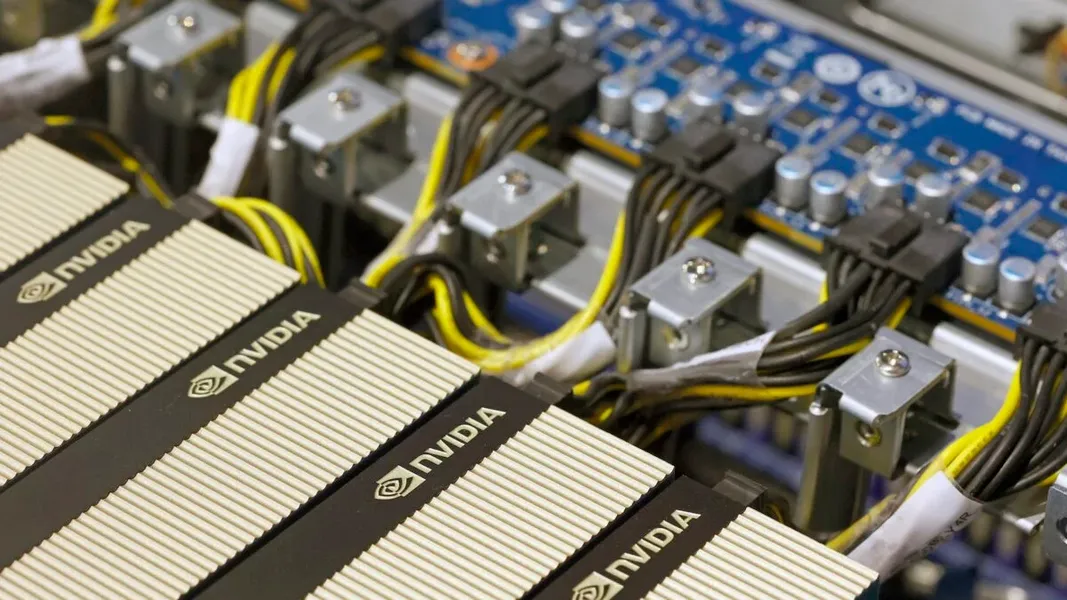
This plan directly affects anyone building AI products that depend on memory bandwidth, GPU availability, or data center capacity. Samsung and SK Hynix are the primary suppliers of HBM (high-bandwidth memory) for AI accelerators like Nvidia's GPUs. Expanding fab capacity by 12 years ahead of schedule means developers may face fewer memory shortages during training and inference deployment over the next decade.
The regional diversification also matters. The plan shifts chip production away from the congested Seoul metropolitan area to Chungcheong (packaging hub), Daegu, and North Gyeongsang (materials and equipment) source. This could lead to new talent pools and supply chain nodes outside the capital.
Practical implications
The most immediate impact for AI builders is on memory supply. The 800 trillion won investment in memory fabs aims to double output near the capital within five years and bring forward capacity planned for the late 2040s to the mid-2030s source. For teams deploying large models, this should reduce HBM pricing volatility and availability risk.
The data center buildout targets 8.4 GW by 2029 and 18.4 GW by 2035. For comparison, total U.S. data center capacity was around 20 GW in 2024. This creates room for colocation and cloud inference in Korea, especially for builders targeting Asian markets.
The national "world model" initiative could standardize how physical AI systems are trained and deployed. If Seoul builds a shared foundation model for real-world interaction, it may reduce duplication for robotics startups while creating vendor lock-in risks.
Caveats
These figures come from announced statements and media reports. Timelines and totals may change as plans develop. Execution risk is significant. As a KAIST professor noted, money alone does not build leading fabs; the plan still needs power, water, talent, and project management source. Market reactions were cautious. Samsung shares fell nearly 5% after the announcement, and analysts flagged the danger of future oversupply if memory demand cools source.
The plan also lands alongside similar efforts from the US (CHIPS Act) and China ($295 billion AI buildout). South Korea's advantage in memory manufacturing is real, but geopolitical and supply-chain risks remain.
| Pillar | Investment | Key Companies | Target |
|---|---|---|---|
| Memory chips | 800 trillion won ($518B) | Samsung, SK Hynix | Two new fabs each, capacity accelerated by up to 12 years |
| AI data centers | 550 trillion won | SK Group, GS Group, Naver | 8.4 GW by 2029, 18.4 GW by 2035 |
| Humanoid robotics | Included in chip/DC investment | Samsung, government purchases | Market share from 1% to 20% |
For AI founders and developers, the key takeaway is that memory supply, compute infrastructure, and robotics policy will all shift meaningfully over the next decade, but near-term volatility and execution gaps remain real risks.
FAQs
What is South Korea's plan to invest in AI and semiconductors?
South Korea's government announced a multi-year plan called the "Three Mega Projects" to invest in semiconductors, AI data centers, and robotics. The plan totals at least $880 billion over about a decade, with private sector leaders like Samsung, SK Hynix, GS Group, and Naver involved source.
How much is the investment and which sectors are funded (chips, data centers, robotics)?
About $880 billion over ten years. The sectors funded are memory chips (semiconductor fabs), AI data centers (compute infrastructure), and humanoid robotics, plus related regulatory fast-tracking and infrastructure support for power and water source.
Which companies are leading the investment in memory fabs and AI data centers?
Samsung and SK Hynix are the primary memory-chip investors with about 800 trillion won allocated to memory fabs. SK Group, GS Group, and Naver are the lead investors for AI data centers, targeting 8.4 GW by 2029 and additional capacity by 2035 source.
How will the plan affect regional development outside Seoul?
The plan is designed to spread investment beyond the Seoul metropolitan area to the Chungcheong, Daegu, and North Gyeongsang regions. The Chungcheong region becomes a packaging hub, while Daegu and North Gyeongsang focus on materials, parts, and equipment. The government will fast-track permits and build power/water infrastructure to support the new fabs source.
Sources
- South Korea bets $880bn to win the AI era
- South Korea Bets $880B on AI Chips & Data Centers - YouTube
- Samsung, SK to Spend $880 Billion to Drive Korea’s AI... - Bloomberg
- South Korea unveils $1tn chip and AI investment plan
- South Korea unveils $880bn chip and AI investment plan - BBC News
- South Korean stocks plunge as traders scale back AI bets
- "Entering The Mega Investment Era": JPM Breaks Down South...
- South Korea's Bold Chip and AI Mega-Projects: A New Era of Innovation
- Samsung readies $648 billion bet, report says, as AI boom reshapes South Korea
- South Korea has announced a sweeping investment programme ...
- South Korea unveils $880bn chip and AI investment plan - Reddit
- Emerging markets are now an AI chip trade: Chart of the Day - AOL.com
- $900 Billion Just Vanished as Korean Chip Stocks Crater, but the Squawk ...
- The Price of High Margins - MarketScreener
- Nvidia's Huang arrives in South Korea with 'surprises', bets on robotics