Meituan open sources LongCat-2.0: a 1.6T agentic coding model trained on Chinese ASICs
Published by AINave Editorial • Reviewed by Ramit
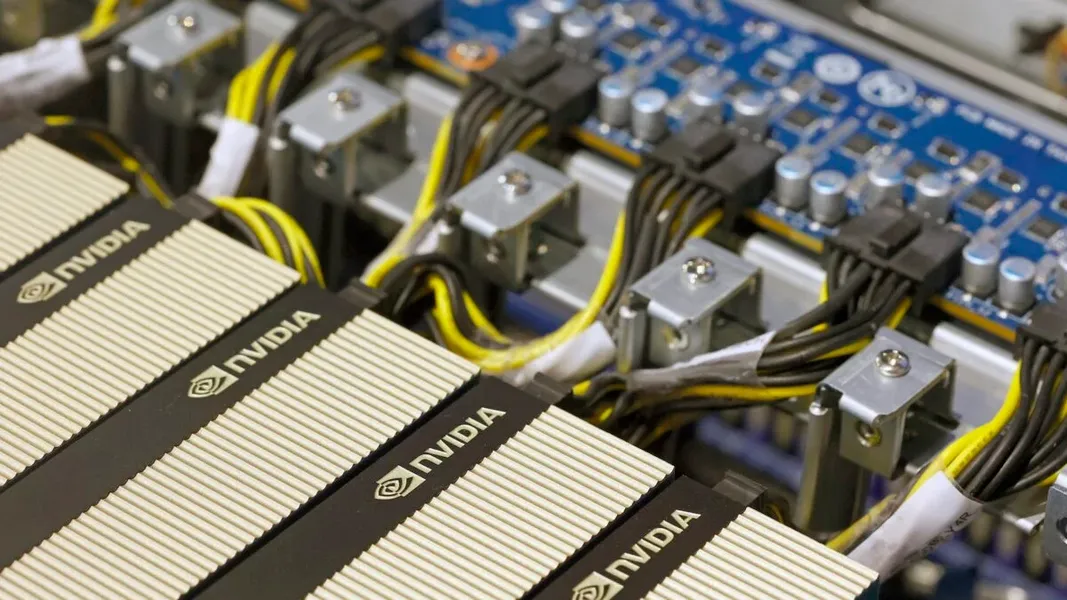
Meituan has open sourced LongCat-2.0, a 1.6 trillion-parameter Mixture-of-Experts model that was previously leading OpenRouter under the anonymous name Owl Alpha. The model is released under the MIT license and is available on GitHub and Hugging Face. What makes this release stand out is that it was trained entirely on a cluster of over 50,000 domestic Chinese ASICs, signaling a potential shift away from Nvidia GPU dependence for large-scale AI training.
What happened
Meituan, the Chinese super app company best known for food delivery, officially unveiled LongCat-2.0 on GitHub, Hugging Face, and its native platform. The model had been operating anonymously as "Owl Alpha" on OpenRouter for two months, where it accounted for approximately 10.1 trillion monthly tokens, averaging 559 billion tokens per day, and secured the top ranking on the Hermes Agent workspace and second place on Claude Code deployments.
LongCat-2.0 uses a Mixture-of-Experts architecture with 1.6 trillion total parameters but activates only 33 billion to 56 billion parameters per token, averaging 48 billion. This is achieved through a "Zero-Compute Experts" framework that routes routine execution through lighter subnetworks, eliminating idle computational overhead.
The model supports a native 1-million-token context window, enabled by LongCat Sparse Attention (LSA), an evolution of DeepSeek Sparse Attention. LSA uses three indexing strategies: Streaming-aware Indexing for coalesced memory access, Cross-Layer Indexing to amortize calculation costs across layers, and Hierarchical Indexing for coarse-to-fine token selection.
Why AI builders should care
For teams building AI products and agentic workflows, LongCat-2.0 offers several practical advantages. The MIT license means enterprises can fork, modify, and deploy the model in private stacks without copyleft obligations, making it suitable for closed-source commercial applications.
The hardware story is equally significant. Training on 50,000+ domestic Chinese ASICs demonstrates that near-frontier models can be built without Nvidia GPUs. This has implications for supply chain resilience and cost structures, especially as U.S. export controls restrict access to advanced Western chips.
Meituan's post-training regime, called Multi-Teacher Optimization via Mixture of Specialized Experts (MOPD), separates optimization into three independent expert clusters: Agent Experts for tool invocation and execution, Reasoning Experts for multi-hop logic and STEM problem-solving, and Interaction Experts for alignment and safety. A dynamic gate-routing mechanism fuses these behaviors at runtime, which could enable more predictable and auditable agent behavior in enterprise deployments.
Practical implications
LongCat-2.0 is designed for autonomous software engineering tasks. In benchmarks, it scores 59.5 on SWE-bench Pro, surpassing GPT-5.5's 58.6. It also scores 70.8 on Terminal-Bench 2.1, 77.3 on SWE-bench Multilingual, and 73.2 on the FORTE corporate workflow simulator.
Pricing is aggressive. Standard pay-as-you-go rates are $0.75 per million input tokens and $2.95 per million output tokens. A limited-time promotional discount drops this to $0.30 and $1.20 respectively. Meituan also offers a Token Pack system with zero-charge context cache hits, meaning repeated reads of the same code repository during long agent sessions do not consume quota. Token packs are released via flash sales four times daily at 10:00, 16:00, 21:00, and 23:00 Beijing Time.
For enterprise teams, this means they can pass entire code repositories into the 1-million-token context window, have the model map dependencies, execute repository-level updates, compile the new codebase, and generate pull requests, all within a private sandbox environment.
Caveats
Most technical claims in this article come from VentureBeat coverage and Meituan's announcements. Independent verification of benchmark results, hardware claims, and real-world performance is not yet available. The model trails premium frontier systems like Claude Opus 4.8 on broader general-agent benchmarks such as FORTE and BrowseComp. Deployment feasibility on non-ASIC hardware is not detailed in the available sources. The promotional pricing is time-limited, and the Token Pack flash sale model may not suit all usage patterns.
FAQs
What is LongCat-2.0 and who released it?
LongCat-2.0 is a 1.6 trillion-parameter Mixture-of-Experts model released by Meituan, the Chinese super app company. It previously operated anonymously as Owl Alpha on OpenRouter. The model is released under the MIT license and is available on GitHub and Hugging Face.
What are the key features of LongCat-2.0 (1.6T parameters, 1-million-token context)?
LongCat-2.0 features 1.6 trillion total parameters with 33-56 billion activated per token via a Zero-Compute Experts framework. It supports a native 1-million-token context window using LongCat Sparse Attention (LSA) with Streaming-aware, Cross-Layer, and Hierarchical Indexing. It also includes an N-gram Embedding module with 135 billion additional parameters.
Under what license is LongCat-2.0 released and where can I access it?
LongCat-2.0 is released under the MIT license, which permits unrestricted use, modification, and commercial deployment without copyleft obligations. The model is available on GitHub, Hugging Face, and Meituan's platform.
What hardware does LongCat-2.0 require (Chinese ASICs vs GPUs)?
LongCat-2.0 was trained entirely on a cluster of over 50,000 domestic Chinese ASICs, demonstrating that near-frontier models can be built without Nvidia GPUs. The model can be deployed on compatible hardware, though specific inference hardware requirements are not detailed in available sources.
Sources
- Meituan open sources LongCat-2.0, the 1.6T, near-frontier agentic coding model that's been leading OpenRouter — trained entirely on Chinese chips
- Meituan open sources LongCat-2.0, the 1.6T, near-frontier agentic ...
- Meituan Open Sources LongCat-2.0 Under MIT License
- Meituan Open Sources LongCat-2.0, the 1.6T, Near-Frontier Agentic ...
- Introducing LongCat-2.0 - , a large-scale MoE language model ...