Samsung SDI data-center batteries supply shift via Simplo Technology
Published by AINave Editorial • Reviewed by Ramit
Samsung SDI is supplying cylindrical nickel-cobalt-aluminum (NCA) battery cells for AI data-center battery packs through Simplo Technology, a Taiwanese pack maker. The deal is expected to lift Samsung SDI's small-format battery results as orders grow into the hundreds of billions of won and could surpass 1 trillion won annually. This supply chain shift matters for AI builders because it signals a move away from Chinese cells for U.S. data-center infrastructure, driven by the updated 1260H List and a broader commercial preference for non-Chinese suppliers.
What happened
Samsung SDI is providing cylindrical NCA cells to Simplo Technology, which assembles them into battery backup units (BBUs) and data-center battery packs for North American technology companies. According to industry sources, the end customers are reported to include Amazon and Meta, though neither Samsung SDI nor Simplo has confirmed these names. Samsung SDI's official statement is narrower: "As BBU sales increase due to expanded data-center investment, cylindrical battery production is rising, and utilization rates are high," a company official said, declining to name specific clients.
Simplo, a publicly listed Taiwanese firm, spun off Trend Power in 2014 to grow its data-center and storage businesses and has supplied BBUs to large cloud operators since 2019. The cells are produced at Samsung SDI's Cheonan (South Korea) and Malaysia plants to serve non-Chinese demand. The broader data-center push spans BBUs, UPS systems, and containerized energy storage (SBB 2.0), with Samsung SDI also leading the high-output UPS battery market using a lithium-manganese-oxide chemistry rated for up to 15 years.
Why AI builders should care
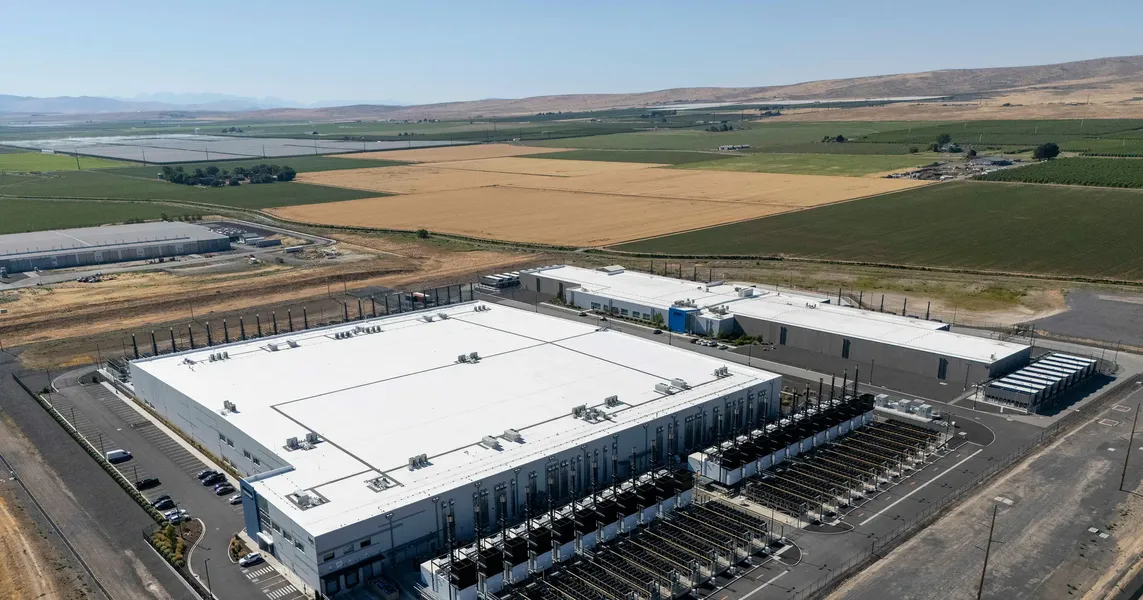
AI servers run many GPUs simultaneously, drawing large amounts of power in short bursts that can destabilize voltage. A BBU attached to each server rack offsets those momentary shortfalls and supplies power instantly during an outage to prevent data loss. Because a BBU must fit inside a confined rack, its cells need to be compact yet capable of high instantaneous output. That requirement selects the chemistry: Samsung SDI's cylindrical BBU cells use a high-nickel NCA cathode with a silicon-carbon composite anode for high capacity and fast charging. Lithium iron phosphate (LFP) cells of the same size offer lower energy density and a lower voltage (3.2V vs. NCA's 3.6-3.7V), making them generally unsuitable for BBUs.
The U.S. policy shift is accelerating this supply change. The Defense Department updated its 1260H List of Chinese military companies in June 2026, and as of June 30, U.S. government agencies are prohibited from procuring directly from listed entities. While that legal bar applies to federal procurement, technology firms are also keeping Chinese cells out of their U.S. facilities, weighting stability and long-term maintenance over price. Korean and Japanese suppliers are the clearest beneficiaries.
Practical implications
For AI builders and cloud operators, this means sourcing decisions for data-center battery packs will increasingly favor non-Chinese suppliers. Samsung SDI and Panasonic are the two main rivals in BBU cells, and both are reported to be supply-constrained as demand climbs. If you are planning new AI infrastructure, expect longer lead times for high-output cylindrical cells and a premium on NCA chemistry over LFP for rack-level backup.
The shift also affects UPS systems and containerized energy storage. Samsung SDI's containerized SBB 2.0 uses LFP chemistry for grid-connected storage outside the data center, while BBUs and UPS remain chemistry-specific. The company signed a 2 trillion won ($1.3 billion) contract in December for SBB 2.0 with a large U.S. energy company, followed by a 1.5 trillion won ($980 million) deal in March bundling three SBB models. These deals indicate growing demand for integrated energy storage alongside AI compute.
Caveats
The claims in this article rely on industry sources and a single external report. Samsung SDI has not confirmed specific customers or order volumes. The reported end customers (Amazon, Meta) are described by sources rather than confirmed by the companies. Order volume projections (hundreds of billions of won, potentially over 1 trillion won annually) are based on The Elec's reporting and are not official guidance. Analysts project Samsung SDI's Q2 revenue at about 3.64 trillion won with operating profit of 21.2 billion won, but these are forecasts, not reported results. The 1260H List restrictions apply to federal procurement, not all commercial transactions, though the broader commercial shift is real. Verify current supplier availability and lead times directly with Samsung SDI or Simplo before making procurement decisions.