Samsung and Broadcom sign $200B AI chip partnership spanning memory, foundry, and packaging through 2030
Published by AINave Editorial • Reviewed by Ramit
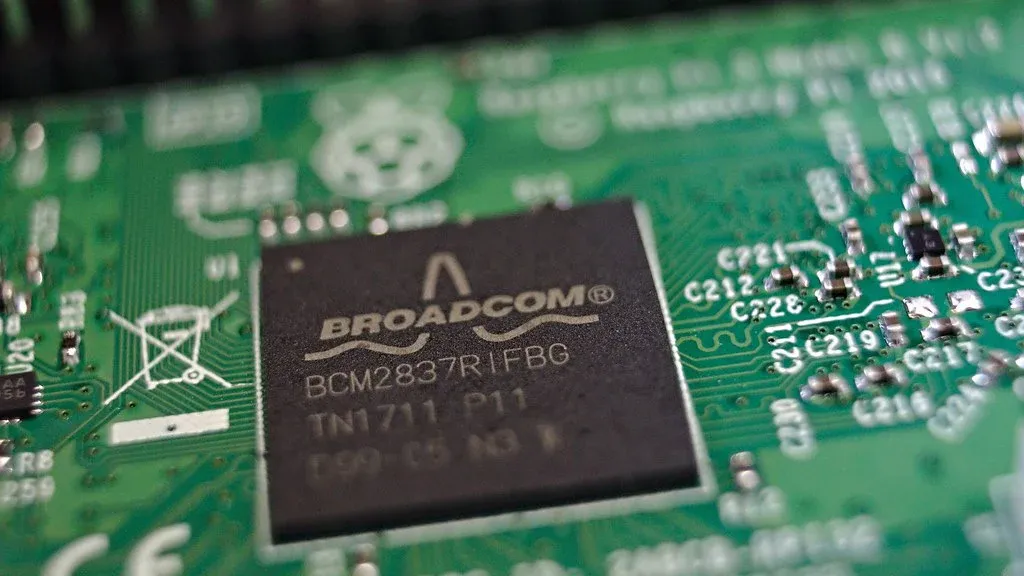
Samsung Electronics and Broadcom have signed a memorandum of understanding worth more than $200 billion to collaborate across memory, foundry, and advanced packaging for AI semiconductors through 2030. For AI builders and hyperscalers relying on custom silicon, this deal signals a potential diversification of the supply chain away from TSMC and a major commitment to Samsung's leading-edge manufacturing.
What happened
The MOU, announced at an AI summit in San Francisco hosted by South Korean President Lee Jae Myung, covers three critical layers of the AI chip stack. On the memory side, Samsung will supply Broadcom with next-generation high-bandwidth memory, including HBM4 and HBM4E chips, for use in Broadcom's AI accelerators. In foundry, Samsung will manufacture Broadcom products using two-nanometer and smaller process technologies at its campus in Pyeongtaek, South Korea. The collaboration also extends to advanced packaging that integrates memory and logic more tightly, a technique increasingly central to squeezing more performance out of AI silicon.
The agreement runs for five years through 2030 and is one of the largest semiconductor partnerships ever disclosed, though as an MOU it represents a statement of intent rather than a binding contract. The signing took place alongside a broader package of semiconductor deals worth roughly $950 billion between South Korean and American companies, including SK Hynix memory partnerships with Nvidia and supply agreements with Anthropic.
Why AI builders should care
Broadcom designs custom AI chips for hyperscalers including Google, Meta, and others that want silicon tailored to their specific workloads rather than buying off-the-shelf GPUs from Nvidia. By diversifying manufacturing to Samsung, Broadcom gains supply chain resilience beyond its existing reliance on TSMC, which controls more than 90 percent of leading-edge chip production. For AI builders, this could mean more reliable access to custom accelerators and potentially lower costs as competition in foundry services intensifies.
For Samsung, the deal addresses a persistent credibility gap in its foundry business, where its global market share has fallen to roughly seven percent while TSMC dominates. The company has struggled with yields on its two-nanometer process, but a $200 billion customer commitment from one of the industry's largest chip designers could change the calculus for investors who have questioned whether Samsung can compete at the leading edge.
Practical implications
Broadcom's custom AI chips will be produced on Samsung's 2nm+ process at Pyeongtaek, and memory components (HBM4/HBM4E) will be supplied by Samsung for Broadcom's accelerators, with integrated packaging designed to boost performance. This tight integration of memory, logic, and packaging is increasingly important for AI workloads that are memory-bandwidth bound. The deal also signals that hyperscalers are willing to invest in multi-sourcing strategies to avoid single points of failure in their AI hardware supply chains.
Caveats
As an MOU, the agreement represents intent rather than a binding contract; details may change as negotiations progress and market conditions evolve. Samsung's 2nm yields have been scrutinized, and the company's ability to deliver on the promised process technology at scale remains to be proven. Additionally, TSMC's dominant position and existing relationships with Broadcom's competitors mean the competitive landscape will not shift overnight. The $200 billion figure is an estimate of the total value over five years, not a guaranteed minimum purchase.
FAQs
Sources
- Samsung signs a $200 billion chip deal with Broadcom covering memory, foundry and advanced packaging through 2030
- Samsung Elec wins $200 billion Broadcom AI chip partnership, boosting ...
- Samsung Electronics and Broadcom Expand Strategic Collaboration Across ...
- Samsung, Broadcom ink $200‑billion AI chip pact while world faces ...
- Samsung Electronics wins $200 billion Broadcom AI chip partnership ...
- Samsung Electronics wins $200 billion Broadcom AI chip partnership, boosting foundry push
- Samsung Inks $200 Billion Chip Supply with Broadcom - Bloomberg
- Samsung and Broadcom Sign MOU Worth Over $200 Billion...
- Samsung Electronics lands $200B chip manufacturing deal with...
- Broadcom Inc. | Connecting Everything