techtimes.com
NVIDIA Revenue Sharing AI Cloud Program: What Builders Need to Know About the 210,000-GPU Financing Model
Tech News••
3 min read
Published by AINave Editorial • Reviewed by Ramit
TL;DRNVIDIA launched a revenue-sharing and credit-support model for AI cloud operators, backstopping up to 210,000 Grace Blackwell GB300 GPUs for Sharon AI and Firmus Technologies in exchange for a recurring share of cloud revenue.
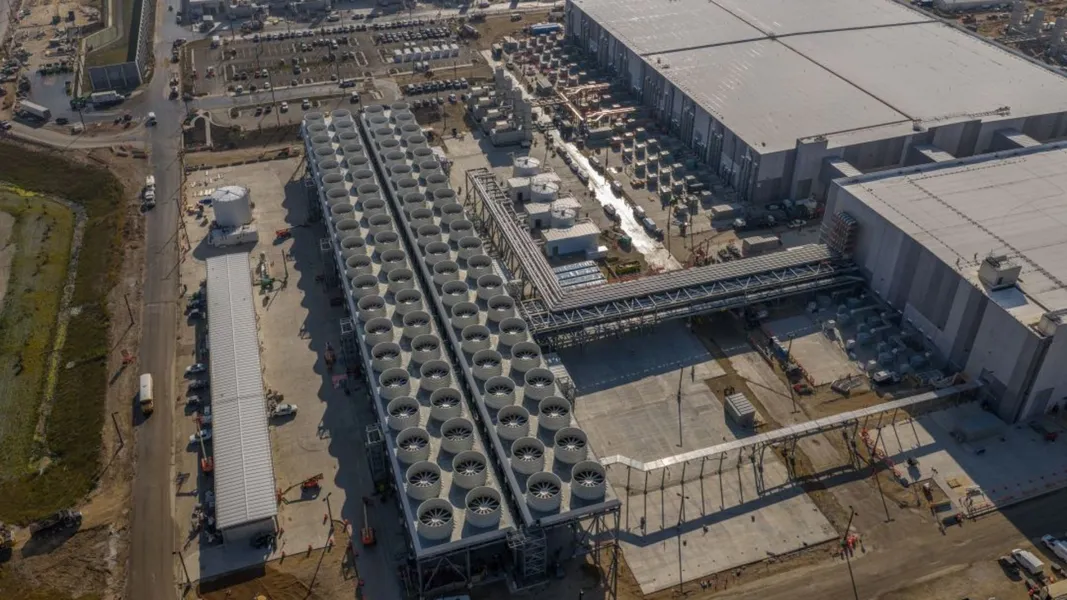
NVIDIA announced a formal revenue-sharing and credit-support model for AI cloud operators on July 1, 2026, backstopping GPU infrastructure buildouts for smaller cloud providers in exchange for a recurring share of the cloud revenue those GPUs generate. For AI builders, this program could unlock faster access to compute through token credits, but it also introduces a vendor-financing structure that investors and operators should watch closely.\n\n## What happened\n\nThe program operates on two mechanisms. Capital-constrained AI developers can draw token credits against future GPU capacity, allowing them to start training and deploying models immediately while NVIDIA collects on the back end as usage accrues. For larger cloud infrastructure partners, NVIDIA guarantees GPU capacity in exchange for a share of cloud service revenue or equity warrants. If a partner's GPUs sit idle, NVIDIA funds the rental of that unused computing power or buys back the capacity at a predetermined price.\n\nThe first two named partners are Sharon AI and Firmus Technologies, both Australian companies. Sharon AI plans to deploy up to 40,000 NVIDIA Grace Blackwell GB300 GPUs, while Firmus is building a 360-megawatt AI factory campus on Batam Island, Indonesia, expected to house up to 170,000 NVIDIA GPUs. Combined, the commitments total roughly 210,000 GPUs, a footprint that rivals mid-tier hyperscalers.\n\nNVIDIA earns standard upfront hardware revenue from selling GPUs to cloud partners, plus an ongoing percentage of the cloud revenue generated on that supported capacity. This transitions its revenue model from lumpy hardware sales toward recurring, usage-linked earnings. The program extends a model NVIDIA established with CoreWeave in September 2025, when the chipmaker committed to purchase all of CoreWeave's unsold computing capacity through 2032 under a $6.3 billion agreement.\n\n## Why AI builders should care\n\nFor AI builders, the most immediate benefit is access. Token credits let startups begin training and inference without waiting months to secure financing and procure hardware. This could accelerate deployment of large AI fabrics for companies that would otherwise be locked out by capital constraints.\n\nHowever, the program also raises questions about the sustainability of AI infrastructure spending. A Bain & Company analysis estimated the AI ecosystem needs $2 trillion in annual revenue by 2030 to justify current infrastructure spending, and the trajectory falls roughly $800 billion short. When NVIDIA provides the financing, sells the chips, backstops idle capacity, and collects revenue share on the output, some analysts have flagged this as a circular investment theme that could mask genuine end-user demand.\n\nBuilders should also note the GPU residual value problem. Traditional lenders struggle to collateralize GPU clusters because next-generation chips arrive every 12 to 18 months,
Sources
- NVIDIA Revenue Sharing AI Cloud Debuts With 210,000 GPUs: Flywheel or Vendor Finance Risk
- Nvidia Launches Revenue-Sharing Financing for AI Cloud | Let's Data Science
- Nvidia Ties AI Cloud Financing to Future Cloud Revenue
- Nvidia's Bold New Bet on AI Neoclouds: Brilliant Platform Strategy or Latest Sign of an AI Bubble? - 24/7 Wall St.
- Nvidia’s Bold New Bet on AI Neoclouds: Brilliant Platform Strategy or Latest Sign of an AI Bubble?
- Nvidia offers AI startups GPU access for revenue share: here’s what it means
- Why The Neocloud Gold Rush Is Now Vendor-Financed
- Nvidia offers AI startups compute now, payment later
- Nvidia offers start-up customers chance to swap compute power for revenue share
- Nvidia plans to offer start-up customers access to revenue ...
- Nvidia’s Bold New Bet on AI Neoclouds: Brilliant Platform ...
- Nvidia offers to take a cut of AI cloud revenue on top of ...
- NVIDIA Unlocks AI Compute at Scale, Inviting Partners to ...
- NVIDIA Disrupts Tech Supply Chain With New GPU Revenue Sharing Model