Microsoft Copilot Super App Puts Work, Code and Agents Together
Published by AINave Editorial • Reviewed by Ramit
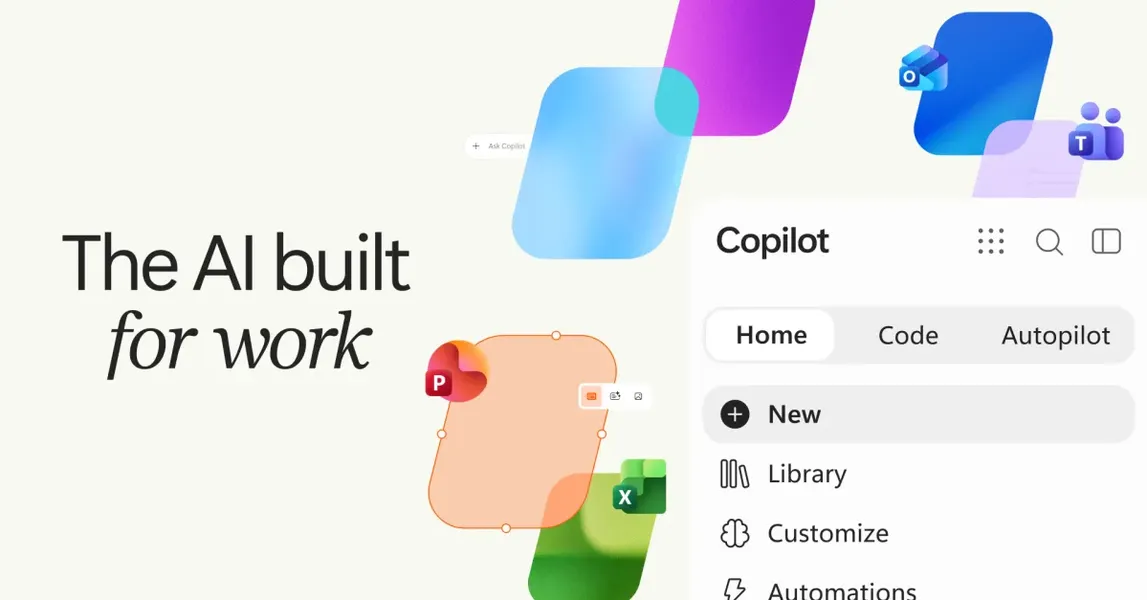
Microsoft’s Copilot super app brings three different kinds of work into one interface: asking questions, building small tools and delegating ongoing tasks. The redesign organizes Copilot around Home, Code and Autopilot, but its significance will depend on more than a unified screen: Code and agent use carry usage-based billing, and the features are still entering staged previews. Microsoft unveiled the redesigned app on September 25.
One app, three different jobs
Home combines Copilot Chat and Cowork as the default starting point. Microsoft also plans a Today dashboard to gather work context such as emails, meeting requests and Teams threads. That makes Home a proposed work hub, not just a new chat window, although Today is part of a plan rather than a generally available feature. Microsoft described Home and the planned dashboard.
Code and Autopilot extend the idea beyond answering prompts. With Code, users can describe an app, tracker, dashboard or automation in natural language; Microsoft says the tool uses technology underlying GitHub Copilot and can produce cloud-hosted internal apps that colleagues can share. It is aimed at making simple software creation accessible beyond professional developers, not at replacing a team’s full development environment. Microsoft outlined Code’s intended workflow and technical basis.
Autopilot, formerly called Scout, is designed for work that continues after a single request. Microsoft says it can monitor Teams channels, handle recurring tasks and follow up on work while a user is away. The proposed enterprise setup gives an agent its own identity, workspace and permissions in a company tenant, with audit and governance controls. Those safeguards matter because an agent that can keep acting across work systems also needs clear boundaries; their existence is a design claim, not proof that every deployment is risk-free. Microsoft described Autopilot’s tasks and controls.
A preview rollout, not a finished launch
The features are arriving in stages. Microsoft said Home and Code would begin rolling out to its Frontier early-access program in the coming weeks, while Autopilot would enter private preview later in September. Code was also expected to reach Microsoft 365 Premium and Pro subscribers through a preview later in the year. These are planned access windows, not confirmation that every customer can use every feature now. The reported rollout schedule distinguishes early access from private preview.
The pricing split is another practical dividing line. A regular Copilot user subscription covers Chat and access to Microsoft 365 apps, while Cowork, Code and Autopilot are billed based on usage. Microsoft has not provided rates or a final cost formula in the reporting, so the subscription price alone cannot tell a team what sustained agent or coding use will cost. Microsoft’s FinOps for AI tools are intended to help administrators manage that spend. The billing distinction and cost-management tools were described in the launch coverage.
The strategic bet is clear: Microsoft wants Copilot to become a place where employees can move from asking for help to making a tool or assigning work. Whether that feels like one coherent workflow will depend on how well the previews handle permissions, oversight and metered usage in real organizations, not on the number of tabs in the app.