AI Data Center Electricity Demand Becomes a Grid Bottleneck
Published by AINave Editorial • Reviewed by Ramit
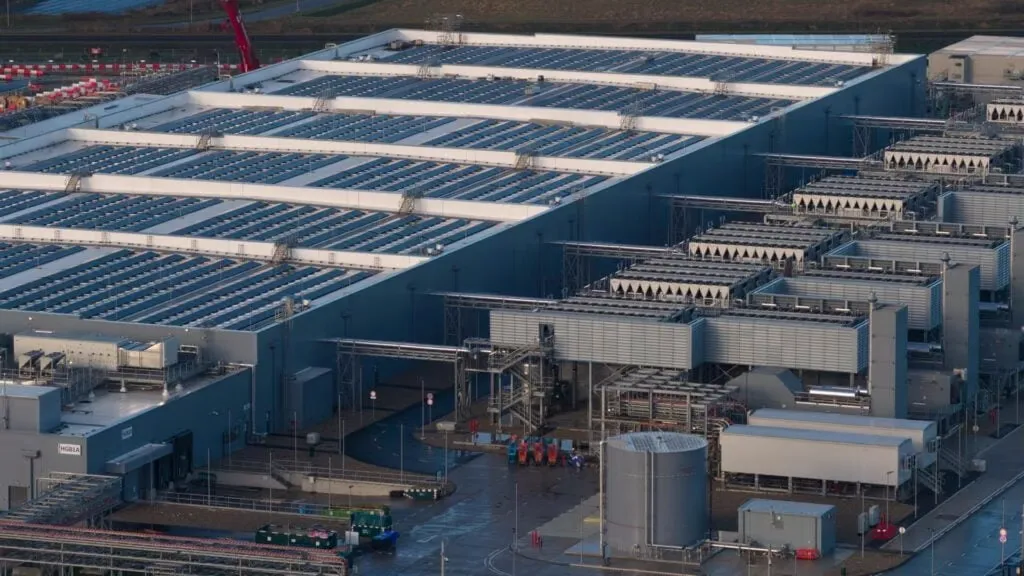
AI data center electricity demand is turning power access into a practical constraint on Big Tech’s buildout. A projection cited by Benzinga puts electricity demand from AI chips at roughly 315 gigawatts globally by 2033, more than 1,100% above 2025 levels. That is a forecast, not a measurement of future consumption, and it concerns AI chips rather than all data-center electricity use.
The operational challenge is not only how much electricity facilities consume over time. Benzinga reports that synchronized GPU activity can push usage as much as 50% above design capacity, a sharp swing that makes demand harder for grid operators to accommodate. The implication is that installed computing capacity does not automatically translate into usable capacity: the power system must deliver enough electricity when workloads need it.
Companies are pursuing different kinds of power support
The responses range from backup supply to efforts to add generation and adjust demand. Amazon signed an agreement with Generac involving an initial $2.4 billion in backup-generator deliveries in 2027 and 2028, with potential purchases reaching $8 billion. Those generators provide backup capacity; they do not, by themselves, resolve the challenge of supplying a data center’s routine electricity needs.
Google is backing upgrades at Georgia Power’s Vogtle and Hatch nuclear plants that could add about 96 megawatts. That is potential added capacity, not electricity already delivered. Google and NVIDIA are also working on technology that would let AI data centers adjust electricity consumption when grids are strained. Meta, meanwhile, has helped finance new natural-gas plants as it expands its data-center footprint, according to Benzinga.
These approaches address different parts of the problem. New generation may increase supply, backup systems support reliability, and adjustable demand could help a facility respond to grid conditions. The source does not establish that any one approach removes the need for the others.
Delayed power can become a project cost
Oracle’s Project Jupiter illustrates why the timing of electricity delivery matters as much as a campus’s planned computing capacity. Benzinga, citing the Financial Times, reports that the project carries $18 billion in construction debt, and that power-delivery delays could leave Oracle paying carry costs if operations cannot start on schedule. The project has also faced permitting delays and local opposition, so the account does not identify power as the sole cause of delay.
That timing risk sits alongside a broader question: who pays for the infrastructure needed to connect large new loads? Amazon, Google, Meta, Microsoft and Oracle have signed the Ratepayer Protection Pledge, agreeing to build, bring or buy new electricity and cover related grid-upgrade costs. Benzinga says the pledge covers utilities responsible for about 80% of electricity delivered to U.S. homes and businesses.
For data-center operators, the distinction is consequential: a site can be financed and under construction yet still lack power on the required schedule. Generation, grid upgrades, permitting and cost allocation therefore shape when planned compute becomes operational, not just how large the eventual campus can be.