How Formula 1 uses AI and data at the edge of human control
Published by AINave Editorial • Reviewed by Ramit
Formula 1 teams process massive data volumes and use AI to inform race strategy, but the final calls still come from people. At Aston Martin's first Technology Forum near Silverstone, partners like NetApp, Cohere, and ServiceNow described how data and AI underpin modern F1 operations while emphasizing that human expertise remains the ultimate differentiator.
What happened
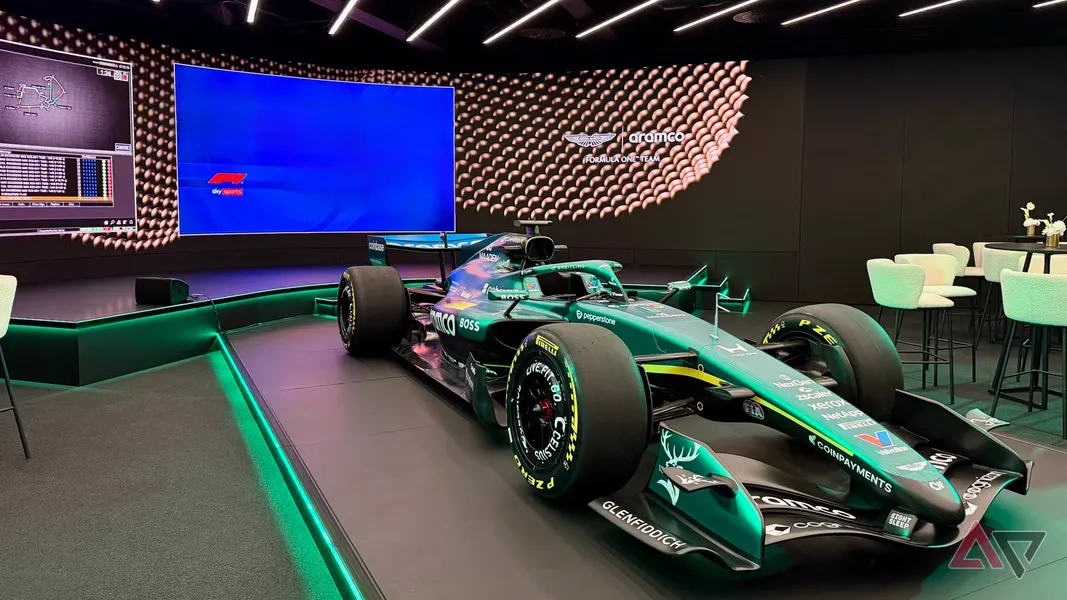
Aston Martin hosted its first Technology Forum at its Technology Campus outside Silverstone during the July 4 weekend. The event brought together key tech partners to discuss how data and AI are reshaping Formula One. NetApp's Tara Mulcahy revealed that Aston Martin processes about 50 petabytes of data on race day. Cohere's Ryan Lewis noted that much of that data is hard to access and make sense of, calling it a really exciting opportunity for AI. ServiceNow's Simon Cox framed the relationship simply: the data shows the map, and the AI shows the trajectory.
Despite the heavy AI presence, human oversight remains central. Aston Martin's Technology Ambassador Eric Ernst said, "We can outsource intelligence, but we can't outsource experience." In Mission Control, a team of volunteers listens to radio messages from other teams instead of relying on AI transcription. Even the pit crew's wheel gun uses ARM processor architecture and machine learning, but it's people who wield it and achieve pit stops under two seconds.
CIO Fabrizio Pilotti explained that AI-driven race strategy is trained on historical data going back to the late 1970s, especially unusual scenarios that produced wins. He cited Lewis Hamilton's Barcelona win on June 14, 2026, as an example where reverse-engineering suggested AI was responsible for the unconventional strategy. But final calls remain with people. Pilotti reminded the audience that many unusual strategies fail, so AI's work always needs to be checked.
Why AI builders should care
The F1 approach offers a practical template for deploying AI in high-stakes environments. The core pattern is augmentation, not replacement. AI processes petabytes of data and suggests trajectories, but experienced operators translate those insights into action. This mirrors challenges in enterprise AI: making sense of vast datasets, ensuring recommendations are auditable, and keeping humans in the loop for final decisions.
Edge computing also plays a role. The ARM-powered pit tools show how on-device ML can support time-critical operations without relying on cloud latency. For builders designing systems for manufacturing, logistics, or autonomous operations, the F1 model demonstrates a proven balance between automated analysis and human judgment.
Practical implications
For AI builders, several lessons emerge from the F1 playbook:
- Data pipelines matter first. Before AI can help, teams need clean access to massive datasets. NetApp's role highlights the infrastructure required to handle 50 petabytes per race day.
- Build human oversight into the loop. AI suggests strategies, but people make the call. Design systems that surface recommendations with interpretability so operators can audit why a particular action was proposed.
- Invest in edge hardware for speed. The ARM-based wheel gun shows that on-device ML can shave milliseconds in critical workflows. For real-time applications, edge inference reduces dependency on network round trips.
- Train on historical edge cases. The AI strategy model is trained on rare winning scenarios from decades of races. For any domain, feeding the model unusual but successful past decisions can unlock creative, non-obvious recommendations.
Caveats
This analysis is based on a single article covering Aston Martin's Technology Forum. Actual AI deployments and data scales may vary across F1 teamschers. The article provides a snapshot tied to a specific event and period (July 2026). While the human-in-the-loop pattern is consistent with broader industry practice, specific numbers and capabilities should not be generalized without additional sources.
FAQs
How is artificial intelligence used in Formula 1?
AI in F1 primarily informs race strategy, data analysis, and trajectory prediction. Partners like NetApp, Cohere, and ServiceNow describe AI as a tool that maps data to trajectories and aids decision-support. However, final strategic calls are made by human teams, not AI.
Who makes the final strategy decisions in F1 when AI is involved?
Final strategy decisions remain with people on the pit wall and team management. Aston Martin's CIO Fabrizio Pilotti emphasized that AI's work always needs to be checked and that humans make the ultimate call, even when AI suggests unconventional approaches.
What data scale is involved in modern F1 analytics?
Data volumes are enormous. NetApp's Tara Mulcahy cited about 50 petabytes of data processed on race day for Aston Martin's operations, reflecting the massive scale of modern F1 analytics.
Which companies are partnering with F1 on AI initiatives?
Key tech partners highlighted at the forum include NetApp for data storage, Cohere for enterprise AI, and ServiceNow for cloud computing and trajectory planning. These companies contribute to data handling, AI capabilities, and decision-support systems in F1.