Japan's plan to deploy 10 million AI-powered robots by 2040: what it means for AI builders
Published by AINave Editorial • Reviewed by Ramit
Japan has announced a national goal to produce and deploy roughly 10 million humanoid robots by 2040 to address labor shortages and an aging population. The effort places Noetra, a joint venture of SoftBank, NEC, Sony Group, and Honda, at the center of mass deployment and technology coordination across 18 sectors including eldercare, food manufacturing, and disaster response. For AI builders, this signals government-backed robotics acceleration, emerging standards, and collaboration opportunities, but timelines and deployment details remain fluid.
What happened
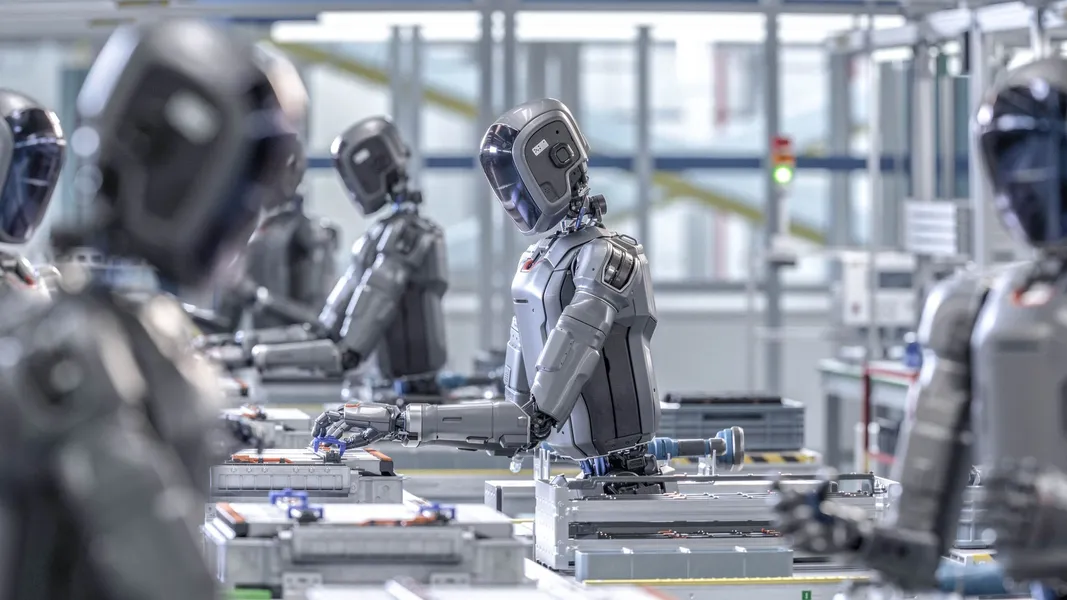
During a news conference, Ryosei Akazawa, Minister of Economy, Trade and Industry of Japan, announced the country's updated robotics strategy. The Japanese government has set a goal to produce and deploy approximately 10 million humanoid robots nationwide by 2040. To combat the challenges of an aging population and a shrinking workforce, Japan plans to strategically integrate these robots across 18 specific job sectors, including eldercare, food manufacturing, and disaster response. Beyond addressing workforce shortages, this initiative aims to make physical AI a normalized, widespread part of society.
The mass development of these robots has been entrusted to Noetra, a joint venture established by parent companies SoftBank, NEC, Sony Group, and Honda. To accelerate this rollout, the government will establish AI robotics core centers, which will serve as hubs for research and development, talent cultivation, and corporate integration support. Japan is leveraging accumulated data to highlight its competitive global advantage in four key areas: eldercare, disaster response, manufacturing, and the decommissioning of the Fukushima Daiichi Nuclear Power Plant.
Why AI builders should care
A coordinated, government-supported push could create shared standards, data collaboration, and pilot opportunities for AI-powered robotics. The 18-sector scope suggests opportunities for robotics suppliers, software platforms, and service providers to engage with public-private initiatives. International context shows multiple nations pursuing humanoid robotics to offset labor shortages, signaling a broader market and potential collaboration or competition for vendors, integrators, and talent. China is targeting a national goal of deploying 10,000 robots into commercial use by the end of 2026 across 100 real-world scenarios. South Korea's Hyundai Motor Group announced plans to deploy humanoid robots at its U.S. manufacturing plant starting in 2028. Singapore, the United Arab Emirates, and Germany are also researching and investing in efforts to deploy humanoid robots across physical labor industries.
Practical implications
Noetra is positioned to lead mass development and deployment, which may influence supply chains, system integration, and regional AI talent pipelines. The 18-sector scope suggests opportunities for robotics suppliers, software platforms, and service providers to engage with public-private initiatives. For AI builders, this means potential demand for specialized AI models, simulation environments, and integration tools tailored to physical AI applications in sectors like healthcare robotics and food manufacturing robots. The government's plan to establish AI robotics core centers could create hubs for talent cultivation and corporate integration, potentially offering collaboration opportunities for startups and research teams.
Caveats
Evidence for the 10 million figure comes from multiple reports with varying detail; timelines, funding, and sector coverage may evolve. The plan's implementation depends on policy choices, technology readiness, and industrial partnerships, which may introduce delays or changes in scope. Specific budgets and organizational details are described as government-backed with Noetra as the lead, but exact start dates for pilot deployments or mass rollouts are not provided in the cited material. The figure of 10 million robots is a government target and Noetra is described as a lead implementer, but timelines and scope may evolve.
FAQs
Sources
- Japan plans to deploy 10 million robots by 2040 in push for 'physical AI' — healthcare, food manufacturing and more
- Japan wants 10 million more robots by 2040, some providing medical care
- Japan's answer to its worker shortage: An AI model for 10 million robots
- Japan plans to deploy 10 million robots by 2040 in push for 'physical AI' - healthcare, food manufacturing and more - ChinaTechNews.com
- Japan aims to deploy 10 million AI robots by 2040 | NHK WORLD-JAPAN News
- Japan plans 10 million robots by 2040 as 'physical AI' expands into healthcare and factories
- Japan plans to introduce 10 million robots by 2040 to address labor shortages
- Japan Plans AI-Driven Workforce with Millions of Robots
- Japan plans sovereign AI model, 10M AI robots
- Japan Wants 10 Million AI Robots Operating by 2040